


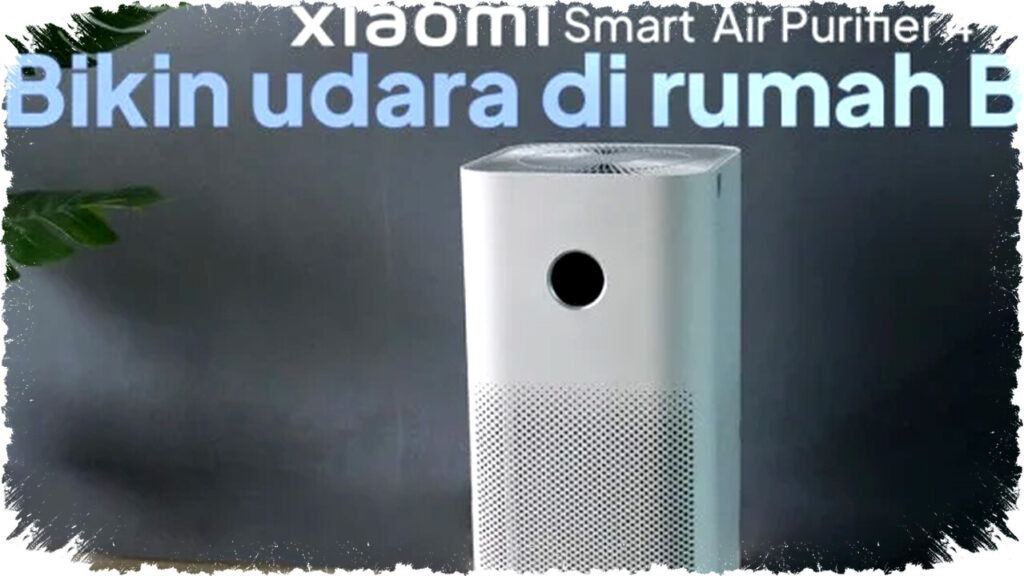
Xiaomi Air Purifier has undergone rigorous extreme testing involving various indoor pollution sources. These tests included burning paper, cooking spicy chili sauce (sambal), setting off smoke bombs, and running a motorcycle inside a closed environment. The experiments took place in a rented house specifically prepared to simulate harsh indoor air pollution conditions.
Jakarta’s air quality index (AQI) has reached unhealthy levels, such as 140 US AQI or 51.5 PM2.5, which can irritate respiratory tracts. For context, safe PM2.5 values range from 0 to 12, while values above 250 indicate fatal health risks. Indoor air without purification in the test room initially measured between 30 and 40 PM2.5, already borderline concerning levels.
Effectiveness in a Controlled Room Environment
In the 2×3.5 meter closed room environment, Xiaomi Air Purifier Light model demonstrated marked efficiency. Upon activation, PM2.5 levels quickly dropped from about 30-40 down to between 3 and 7, creating very clean and comfortable air. The Light model fits medium-sized rooms well, with Xiaomi’s Pro and Compact versions better suited for larger and smaller spaces respectively.
First Experiment: Burning Paper
The initial experiment involved burning paper to generate thick smoke pollution inside the sealed room. As smoke filled the air, PM2.5 levels peaked near 600 µg/m³, highlighting extremely hazardous conditions. Temperature and humidity were controlled at 31°C and 76%, respectively, to simulate extreme indoor environments.
After running the purifier continuously for 30 minutes, the air quality improved substantially, with PM2.5 levels dramatically decreasing and visible smoke cleared. Although some ash residue lingered, causing a faint smell, the air was much healthier and breathable.
Second Experiment: Cooking Sambal Terasi
Next, the purifier was tested against strong cooking odors, specifically sambal terasi, known for its pungent, lingering aroma. The pollutant concentration reached around 55 PM2.5, much lower than the burning paper test but still challenging for air purification due to odor intensity.
Xiaomi Air Purifier efficiently reduced particle concentration from 55 to 9 PM2.5 within 10 minutes. Its laser PM2.5 sensor, as well as temperature and humidity sensors, accurately monitored air changes in real-time. Power consumption ranged from 3 watts in night mode—highly energy-efficient—to a max of 35 watts on higher settings.
Third Experiment: Smoke Bombs
A more extreme scenario involved igniting 50 smoke pills (smoke bombs) simultaneously, filling the room with dense, inpenetrable smoke. This pushed PM2.5 concentrations again up to 600 µg/m³, representing a very dangerous pollution level.
Using Xiaomi’s Mi Home app, the purifier was remotely controlled with features like automatic, sleep, and scheduled modes. The child lock feature also prevented accidental button presses.
After one hour, the smoke cleared and PM2.5 dropped to 16-17, returning to a safe zone. However, residual odor from ashes persisted due to particles attached to surfaces.
Fourth Experiment: Indoor Motorcycle Emissions
The purifier’s capacity to handle vehicle emissions was tested by running a motorcycle in a semi-open indoor space. Pollutant levels surged to around 149 PM2.5, demonstrating the intense air contamination from combustion engines even indoors.
After 36 minutes, the purifier reduced PM2.5 back to green zone levels around 19-20, proving its effectiveness against vehicle exhaust pollution indoors as well. Noise pollution from the motorcycle was also noted but unrelated to the purifier’s function.
Advanced Three-Layer Filtration System
The Xiaomi Air Purifier features a sophisticated triple-layer filter system superior to standard HEPA filters. The outer layer serves as a primary dust filter, the middle layer is a high-efficiency particulate filter, and the innermost layer contains premium activated carbon to absorb odors and harmful gases.
Post-experiment inspection showed the filter visibly darkened with yellow dust and residues from smoke, ash, and cooking fumes. This confirms the purifier’s capability to trap a wide range of indoor pollutants effectively.
Performance Summary and Practical Insights
- Clean Air Delivery Rate (CADR) reaches 360 cubic meters per hour.
- Suitable for rooms up to 75 square meters, with an effective coverage range of 25 to 43 square meters.
- Power consumption varies from 3 watts (night mode) to 35 watts (maximum).
- Smartphone app control with remote operation and parental lock.
- Robust filtration capturing fine particles and odors from challenging indoor pollutants.
The Xiaomi Air Purifier shows strong potential not only for general home use but also for combating extreme indoor air pollution scenarios. Its compact yet powerful design, proven through demanding tests such as smoke bombs and indoor combustion engines, makes it a practical solution for tropical and urban environments where air quality may deteriorate indoors due to cooking fumes, smoke, or vehicle emissions.
Offering a competitive price estimated around $50-$70 USD depending on the model, it provides excellent value for efficient and reliable air purification, especially in dense urban settings like Jakarta where outdoor air pollution often infiltrates indoor spaces.
Consumers looking for affordable yet capable indoor air purifiers that handle high pollution loads can consider Xiaomi’s offerings as a compelling choice. The ability to maintain healthy indoor air despite extreme smoke and pollutants supports both comfort and health in challenging environments.