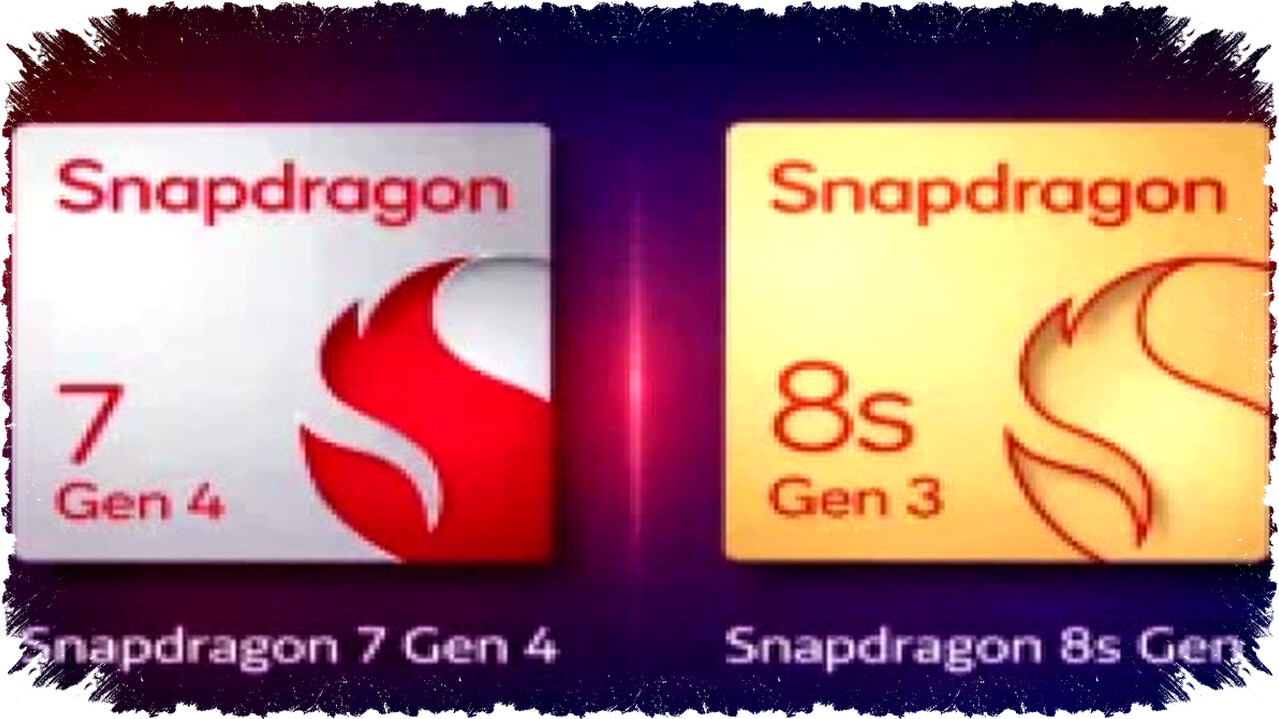
Snapdragon 8s Gen 3 and Snapdragon 7 Gen 4 are two prominent chipsets competing in the premium mid-range to affordable flagship smartphone market. Both launched recently, these chips often power devices priced similarly, posing a common dilemma for consumers: which chipset offers better performance and value?
This comparison dives into key technical specifications, benchmark results, and feature sets to clarify the strengths and weaknesses of Snapdragon 8s Gen 3 versus Snapdragon 7 Gen 4. Understanding these differences will help you make an informed choice tailored to your performance and usage priorities.
Architectural Differences: Cortex-X4 vs Cortex-A720
The primary distinction lies in the core architecture. Snapdragon 8s Gen 3 features a flagship-grade Cortex-X4 core clocked up to 3.0 GHz, complemented by four Cortex-A720 cores at 2.8 GHz and three power-efficient Cortex-A520 cores at 2.0 GHz. This configuration maximizes peak performance and multitasking efficiency.
In contrast, Snapdragon 7 Gen 4 lacks a Cortex-X4 core. Instead, it deploys one Cortex-A720 core at 2.8 GHz paired with four additional Cortex-A720 cores at a slightly reduced 2.4 GHz frequency and three Cortex-A520 cores running at 1.84 GHz. While still capable, this setup targets upper-mid-range performance rather than flagship speeds.
| Specification | Snapdragon 7 Gen 4 | Snapdragon 8s Gen 3 |
|---|---|---|
| Prime Core | 1x Cortex-A720 (2.8 GHz) | 1x Cortex-X4 (3.0 GHz) |
| Performance Cores | 4x Cortex-A720 (2.4 GHz) | 4x Cortex-A720 (2.8 GHz) |
| Efficiency Cores | 3x Cortex-A520 (1.84 GHz) | 3x Cortex-A520 (2.0 GHz) |
| GPU | Adreno 722 | Adreno 735 |
| 5G Modem | Snapdragon X55 (4.2 Gbps DL) | Snapdragon X70 (6.5 Gbps DL) |
| Camera ISP | 12-bit Triple AI ISP | 18-bit Triple ISP |
This difference in core types leads to a significant edge in raw CPU performance for the 8s Gen 3, especially in tasks requiring maximum single-core speed and intensive parallel processing.
Benchmark Performance: Clear Lead for Snapdragon 8s Gen 3
Various benchmark tests confirm the architectural advantage of Snapdragon 8s Gen 3. Using Geekbench to assess CPU strength, the 8s Gen 3 scores approximately 54% higher in single-core performance and about 38% higher in multi-core tasks compared to the 7 Gen 4. These figures reflect faster response times in demanding applications and more efficient multitasking capabilities.
| Geekbench Score | Snapdragon 7 Gen 4 | Snapdragon 8s Gen 3 |
|---|---|---|
| Single-Core | 1,252 | 1,932 |
| Multi-Core | 3,620 | 4,986 |
AnTuTu benchmarks further illustrate this gap. Snapdragon 8s Gen 3 achieves over 1.5 million points, far outscoring the roughly 1 million scored by the 7 Gen 4. The GPU performance accounts for a large portion of this advantage, with the 8s Gen 3’s Adreno 735 delivering a 60% higher GPU score than the 7 Gen 4’s Adreno 722. This translates to smoother graphics, higher frame rates, and better experiences in graphically intensive games.
| AnTuTu Category | Snapdragon 7 Gen 4 | Snapdragon 8s Gen 3 |
|---|---|---|
| Total Score | 1,010,864 | 1,505,656 |
| CPU Score | 309,273 | 391,859 |
| GPU Score | 323,797 | 517,257 |
Everyday tasks like browsing and media playback remain fluid on both chipsets. Yet, the 8s Gen 3 pulls ahead in heavy workloads such as gaming, video editing, and extensive multitasking.
Camera and Connectivity Advantages
Beyond raw computing power, Snapdragon 8s Gen 3 offers advancements in imaging and network capabilities. Its 18-bit Triple ISP processes richer image data compared to the 12-bit ISP on the 7 Gen 4. This allows enhanced dynamic range, faster shutter response, and improved video stabilization. Photographers and videographers benefit from sharper details and better low-light performance.
The modem in Snapdragon 8s Gen 3 is also more capable. The Snapdragon X70 modem supports peak 5G download speeds of up to 6.5 Gbps, compared to 4.2 Gbps on the X55 modem found in the 7 Gen 4. Both chipsets support the latest Wi-Fi 7 standard, ensuring fast wireless connections, but cellular speeds are notably better with the 8s Gen 3.
Value Proposition and Pricing Considerations
Interestingly, many devices powered by Snapdragon 7 Gen 4 are priced in the same range or even higher than those using Snapdragon 8s Gen 3. This creates a strong value argument for the 8s Gen 3, which delivers flagship-caliber performance at competitive prices.
Consumers who prioritize raw power, gaming experience, and advanced camera features will find Snapdragon 8s Gen 3 the superior option. Meanwhile, Snapdragon 7 Gen 4 still provides solid performance for users with moderate needs or tighter budgets.
Summary of Key Differences
- CPU Architecture: 8s Gen 3 uses flagship Cortex-X4 core; 7 Gen 4 does not.
- Performance Gap: Benchmarks show 8s Gen 3 outperforms up to 50% in total scores.
- GPU Strength: Adreno 735 surpasses Adreno 722 by up to 60% in graphics performance.
- ISP Technology: 18-bit Triple ISP on 8s Gen 3 versus 12-bit on 7 Gen 4.
- Modem Capability: Snapdragon X70 supports max 6.5 Gbps vs. 4.2 Gbps on X55.
- Pricing: Overlapping price ranges mean 8s Gen 3 offers better value.
Both chipsets are based on a mature 4nm manufacturing process by TSMC, ensuring energy efficiency and thermal regulation. The design choices and feature sets ultimately cater to different user priorities but place Snapdragon 8s Gen 3 distinctly in a higher performance bracket.
For buyers focused on cutting-edge performance, gaming, photography, and future-proof connectivity, Snapdragon 8s Gen 3 presents a compelling proposition. Meanwhile, Snapdragon 7 Gen 4 remains a capable choice for users seeking respectable performance without flagship-level demands.
Assessing your personal use cases against these technical differences and real-world performance metrics will guide the optimal chipset choice for your next smartphone purchase.
-

-

-

-