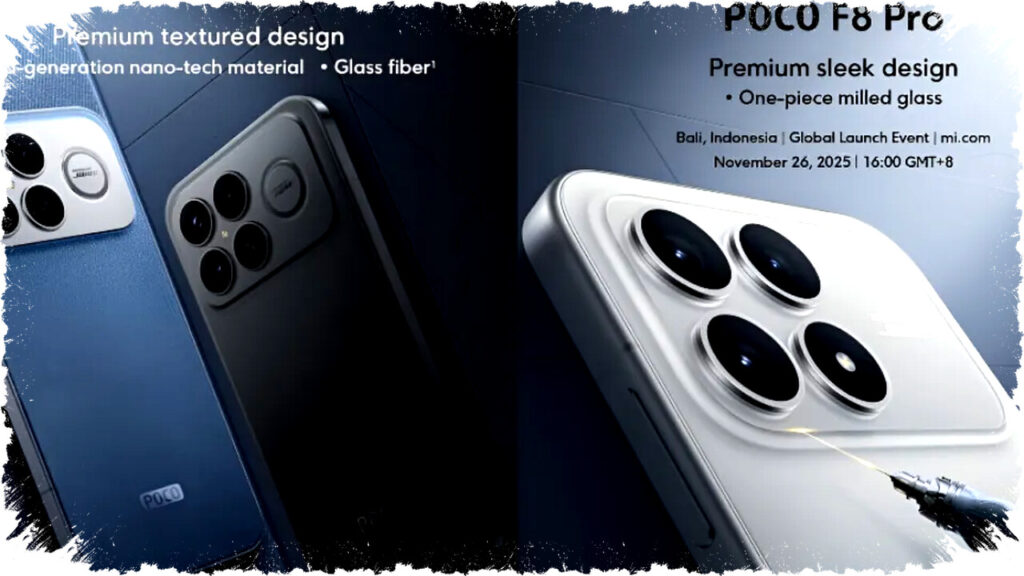
POCO has officially launched its latest flagship lineup, the POCO F8 Pro and POCO F8 Ultra, in Indonesia as of February 4, 2026. This debut immediately stirred considerable discussion within tech communities due to a notable 20% price increase compared to their predecessors. The move signals POCO’s strategic shift from being a “Flagship Killer” brand to establishing itself as a “True Flagship” contender in the premium smartphone market.
In Indonesia, the POCO F8 Pro is priced at IDR 8,999,000 (approximately $575) for the 12GB RAM and 512GB storage variant. This marks a significant jump from the POCO F7 Pro’s initial release price of IDR 7,499,000 ($480). Meanwhile, the top-tier POCO F8 Ultra is valued at IDR 11,999,000 ($765) for the 16GB RAM and 512GB storage option. Such pricing reflects increased production costs driven by advanced chipset integration and premium audio technology.
Reasons Behind the Price Increase
Novita Krisutami, Public Relations Manager for POCO Indonesia, clarified that the price hike results from the use of top-tier components unprecedented in previous series. A primary contributor is the incorporation of cutting-edge chipsets: the Snapdragon 8 Elite Gen 5 for the Ultra model and Snapdragon 8 Elite for the Pro version. These chipsets, fabricated using the 3nm process, entail substantially higher material costs than former generations.
Besides processing power, audio and display technology also heavily influence pricing. POCO partnered with Bose to integrate a triple speaker 2.1 channel audio system, enhancing the sound experience significantly. The display features a 6.9-inch M10 AMOLED panel on the Ultra, capable of reaching peak brightness up to 3,500 nits. This level of screen luminosity is typically exclusive to ultra-premium smartphones costing well over $1,000 in other global markets.
Specifications That Justify the Pricing
Despite the steep price increase, both devices boast highly competitive specifications tailored to justify the premium:
POCO F8 Ultra
- 6.9-inch AMOLED display with 3,500 nits peak brightness
- Massive 6,500 mAh battery with 100W HyperCharge fast charging
- Triple 50 MP camera array featuring a periscope lens supporting 5x optical zoom
- POCO F8 Pro
- Slightly more compact with a 6.59-inch AMOLED screen
- Latest generation IceLoop cooling system for sustained performance
- Light Fusion 800 main camera optimized for low-light photography
Both models carry IP68 certification, ensuring protection against water and dust exposure. POCO also commits to an extended support cycle with Android 16 based on HyperOS 3, guaranteeing up to four years of system updates. This long-term software promise reinforces these devices as solid investments for consumers seeking durability alongside innovation.
POCO’s New Market Strategy
This 20% price increase symbolizes the end of an era in which POCO primarily competed as a provider of affordable high-end phones. Instead, the brand positions itself to challenge leading premium manufacturers such as Samsung and Apple directly. However, when compared with competitors’ devices featuring similar chipsets, which retail above IDR 15,000,000 (~$960), POCO’s pricing still reflects its core philosophy: “Extreme Performance, Extreme Price.”
The initial sales launch began on February 5, 2026, through official digital channels. To ease consumer hesitation, especially amid the new pricing structure, POCO offers promotional discounts of up to IDR 400,000 (~$25) during the first sale period.
Technological Innovations Driving Costs
A major factor behind the jump in production costs is the adoption of the Snapdragon 8 Elite Gen 5 processor. Built on a 3nm fabrication process, it offers enhanced efficiency and performance but at a significantly higher manufacturing expense compared to previous generations. The Ultra variant’s integration of a periscope lens with 5x optical zoom also increases component complexity and cost.
The partnership with Bose distinguishes POCO in terms of audio quality. Triple speakers configured in a 2.1 channel setup deliver sound clarity and depth uncommon in this segment. Meanwhile, the 3,500-nit brightness of the F8 Ultra’s AMOLED panel ranks it among the brightest displays available today, benefiting daylight visibility and overall user experience.
Consumer Impact and Market Reception
The price hike has drawn mixed reactions. Enthusiasts appreciate POCO’s upgrade to true flagship characteristics, citing improved hardware and longevity. Others question whether the premium pricing deters POCO’s traditional core audience searching for budget-friendly performance phones. Industry analysts suggest the strategy positions POCO as a serious contender in Indonesia’s premium smartphone niche, balancing value and high-end features.
With certifications for water and dust resistance and guaranteed Android updates until 2030, the devices serve users prioritizing reliability and long-term software security. These features had been largely absent or limited in previous POCO offerings.
Summary of Key POCO F8 Series Features
| Feature | POCO F8 Pro | POCO F8 Ultra |
|---|---|---|
| Display | 6.59-inch AMOLED | 6.9-inch M10 AMOLED |
| Peak Brightness | Not specified | 3,500 nits |
| Processor | Snapdragon 8 Elite | Snapdragon 8 Elite Gen 5 |
| RAM and Storage | 12GB / 512GB | 16GB / 512GB |
| Battery | Not specified | 6,500 mAh, 100W HyperCharge |
| Camera System | Light Fusion 800 main camera | Triple 50MP with 5x periscope lens |
| Cooling System | IceLoop latest generation | Not specified |
| Audio | Unknown | Bose triple speaker 2.1 channel |
| Water/Dust Resistance | IP68 | IP68 |
| Software Support | Up to Android 16 / HyperOS 3 | Up to Android 16 / HyperOS 3 |
| Launch Price (Indonesia) | IDR 8,999,000 (~$575) | IDR 11,999,000 (~$765) |
POCO’s transition to a true flagship brand signals an important shift in Indonesia’s smartphone landscape. Consumers now have the option to consider performance, premium features, and extended software support, all integrated into a single package. While the price increase is substantial, the enhancements in chipset technology, display brightness, audio quality, camera systems, and build durability are substantial factors shaping this new identity for POCO.
As the official sales period continues, observing POCO’s ability to capture market share amid premium competition will offer further insights into how this bold move reshapes technology preferences among discerning consumers.