


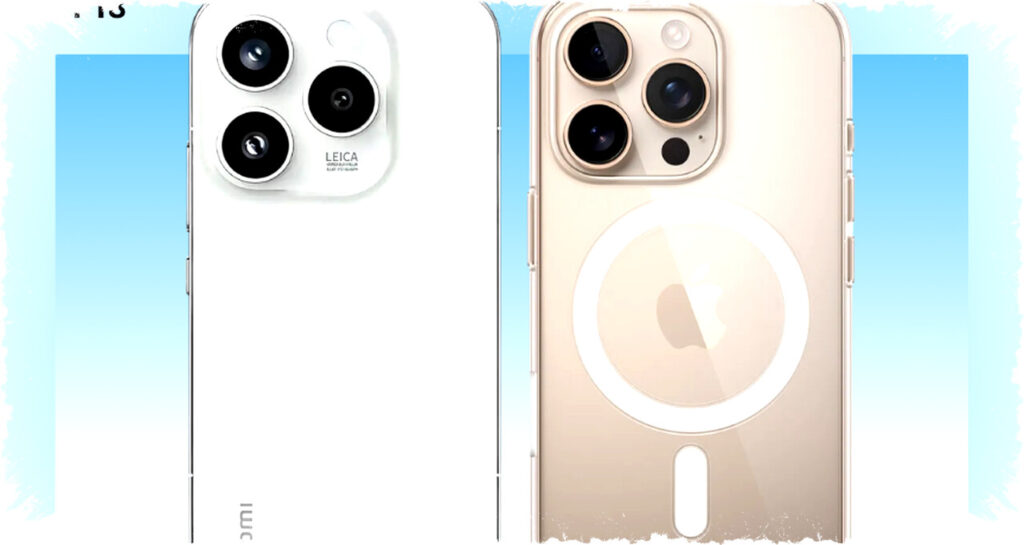
A recently leaked render of the Xiaomi 18 has stirred debates in China due to its striking resemblance to the upcoming iPhone 16 Pro. Although the Xiaomi 18 is scheduled for launch in September, the similarity in design has caught the attention of tech enthusiasts and industry observers alike. The render reveals a rear camera module and rounded corners that closely mirror those of the iPhone 16 Pro.
The camera housing on the Xiaomi 18 appears slightly larger but shares the same overall layout found on Apple’s latest flagship. Without visible Xiaomi or Leica branding, the device could easily be mistaken for the newest iPhone. This design parallel is not unprecedented—Chinese smartphone manufacturers have often drawn inspiration from Apple, maintaining a trend that continues in the Xiaomi 18.
Key Design Similarities and Differences
- Camera Module: Xiaomi 18’s triple camera array resembles the iPhone 16 Pro’s layout, with primary, ultrawide, and telephoto sensors arranged in a familiar square module.
- Body Shape: Both phones have gently rounded edges and similar proportions, contributing to their near-identical visual appeal.
- Branding Absence: The render omits brand logos, making it harder to distinguish Xiaomi’s device at a glance.
This apparent design convergence invites questions about whether Xiaomi intends to capitalize on Apple’s aesthetic or if the similarity is coincidental. Given the norms in smartphone design evolution, it is plausible that Xiaomi is adapting successful styling cues to appeal to a broad consumer base.
Xiaomi 18’s Expected Specifications
Beyond aesthetics, the Xiaomi 18 is projected to be a true flagship in terms of hardware. Rumors point to a 6.4-inch OLED display providing vibrant visuals and deep contrasts. The camera system is rumored to feature:
- A 50MP main sensor for crisp photos
- A 50MP ultrawide lens to capture wider scenes
- An unprecedented 200MP periscope telephoto lens aimed at delivering superior zoom quality
Under the hood, the Xiaomi 18 will reportedly utilize the Qualcomm Snapdragon 8 Elite Gen 6 chipset. This efficient and powerful processor aligns the device with the top-tier performance expected in 2026’s flagship segment.
Chipset Strategy and Variants
Interestingly, higher-end models such as the Xiaomi 18 Pro and Pro Max are said to be equipped with the more advanced Snapdragon 8 Elite Gen 6 Pro chipset. This processor is positioned as Qualcomm’s premium offering for the year and comes at a significant price premium. Xiaomi’s tactic to reserve this top-end chip for premium variants helps maintain a more competitive price point for the base Xiaomi 18 while offering flagship power in its upper-tier models.
Implications of Design and Market Timing
Since the Xiaomi 18’s launch remains months away, the current render and specifications should be treated as provisional. Both features and design could be adjusted ahead of the official unveiling. Nevertheless, the visual resemblance to Apple’s iPhone indicates Xiaomi might again be pursuing a design language closely inspired by established premium competitors.
Industry analyst Ros Diana, writing for Prabumulih Pos, highlights that this design influence is not isolated. It suggests Xiaomi’s continuous effort to blend recognition and sophisticated styling to grab market share. The Xiaomi 18, therefore, may represent a strategic gesture towards combining innovation with familiar aesthetics.
Comparison Table: Xiaomi 18 vs. iPhone 16 Pro (Based on Available Data)
| Feature | Xiaomi 18 | iPhone 16 Pro |
|---|---|---|
| Display | 6.4-inch OLED | ~6.1 to 6.7-inch (varies by model) |
| Rear Cameras | 50MP (main), 50MP (ultrawide), 200MP (periscope telephoto) | Expected triple-lens system with advanced sensors |
| Processor | Snapdragon 8 Elite Gen 6 (base); Gen 6 Pro (Pro/Max) | Apple A18 Bionic (expected) |
| Body Design | Rounded corners, camera module similar to iPhone 16 Pro | Similar refined rounded edges and camera layout |
| Launch Date | September 2026 (rumored) | Expected September 2026 |
This comparison illustrates both convergence and differentiation between the two brands for their forthcoming models.
Understanding the dynamics between Xiaomi’s design choices and Apple’s established benchmarks offers insight into broader industry trends. As manufacturers seek to blend innovation, brand identity, and consumer expectations, visual parallels like this are likely to continue sparking discussion.
While the final Xiaomi 18 design and specs await official confirmation, the current leak fuels anticipation and speculation. It also emphasizes how much Apple’s influence persists in smartphone aesthetics, particularly in the competitive flagship segment. Observers should watch closely for how Xiaomi balances these influences with its own technological advancements upon the device’s formal launch later this year.