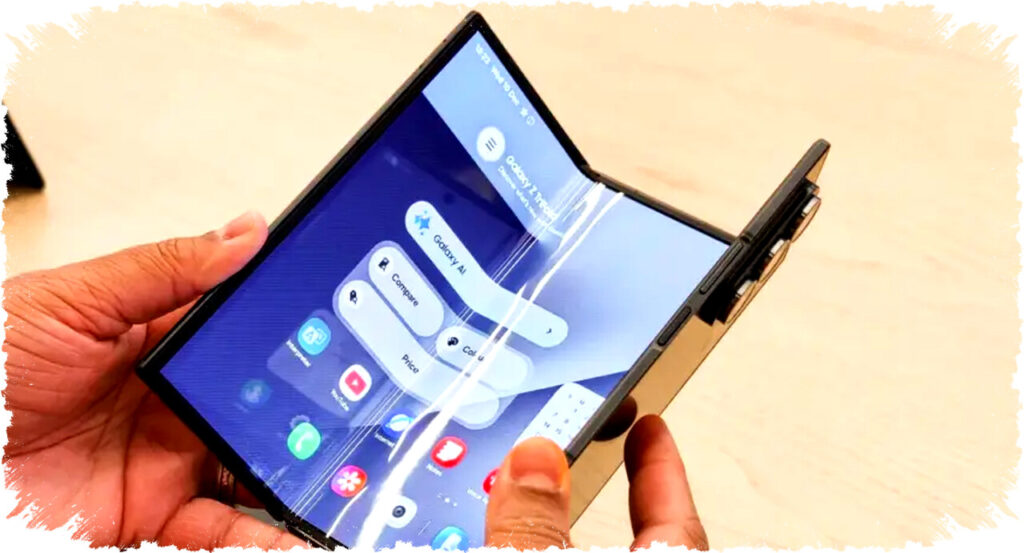
Samsung recently launched the Galaxy Z TriFold, a smartphone featuring an innovative triple-fold design. This device aims to combine a large internal screen with a compact form factor when folded. However, shortly after its limited-market release at the end of 2025, several users and independent reviewers reported technical problems affecting the device’s core functions.
The primary issues reported involve the display and the folding mechanism. Multiple users experienced display failures within a short period after purchase. These failures have raised questions about the durability and reliability of this first-generation tri-fold phone. Independent technical evaluations further indicate concerns beyond the screen, focusing on the durability of the hinges.
Display Failures and Folding Mechanism Concerns
Users described the Galaxy Z TriFold’s screen as prone to malfunction, which is critical given that the device’s appeal relies heavily on its expansive flexible display. Reports reveal that certain units fail to maintain display functionality consistently from early use stages. This suggests potential manufacturing or design weaknesses in the screen assembly.
The folding mechanism consists of two hinges connecting three screen segments. Samsung claims the hinges use Armor FlexHinge technology layered with titanium to enhance strength and durability. The company states that the phone can endure up to 200,000 folding cycles based on their internal durability tests.
However, an independent durability test highlights a contrasting outcome. In these tests, the hinges showed signs of wear and operational degradation after tens of thousands of folds, well below Samsung’s claimed lifespan. Notably, after approximately 144,000 folds, the hinges became less stable, making the phone increasingly difficult to open and close smoothly.
Technical Challenges of the Triple-Fold Design
The Galaxy Z TriFold’s multi-hinge construction offers convenience and a large display but also presents significant engineering challenges. Three folding segments require complex hinge mechanisms that must balance flexibility, strength, and long-term reliability.
Flexible display technology is essential for foldable phones but remains vulnerable to stresses from bending, particularly in multi-fold configurations. The flexible screen layer tends to develop fold marks or weakened areas faster than traditional flat displays. The triple-fold design amplifies these risks as it introduces two folding axes.
Samsung’s attempt to mitigate these issues through advanced hinge materials and rigorous testing aims to ensure daily usability. Still, independent assessments underscore that real-world use patterns might accelerate wear beyond controlled lab conditions. This is a common hurdle in foldable phone development, where early adopters face the brunt of reliability challenges.
Market Demand and Consumer Reception
Despite reported technical problems, demand for the Galaxy Z TriFold has been robust in initial markets such as the United States and South Korea. Units sold out quickly during limited releases, indicating strong consumer interest in novel foldable form factors.
This enthusiasm exists even as independent reports circulate about possible mechanical durability shortcomings. It parallels earlier generations of foldable devices where innovation was met with mixed reliability results initially.
Consumers and critics emphasize the need for extended usage testing to set accurate durability standards. Phones like the Galaxy Z TriFold represent a frontier for smartphone technology but also highlight risks inherent to pioneering designs.
Samsung’s Position and Industry Implications
As of now, Samsung has not publicly addressed the independent durability findings or detailed potential durability parameter discrepancies with external testing. The company reinforces that each unit passes stringent in-house tests before shipment.
Samsung’s handling of the Galaxy Z TriFold’s technical feedback will be closely watched. The device represents a key step in foldable phone evolution, and its performance could influence confidence as other tech giants, including Apple, prepare to enter the foldable smartphone market.
The broader industry impact lies in how manufacturers balance innovation pace with reliability assurance. The Galaxy Z TriFold case illustrates the complexities of bringing cutting-edge hardware with novel form factors to market while satisfying consumer expectations for durability.
Key Points on Galaxy Z TriFold Issues
- Display failures reported soon after device activation.
- Folding hinges lose stability after tens of thousands of folds.
- Independent tests showed performance below Samsung’s claimed 200,000-fold durability.
- Flexible screen technology prominently challenged by triple-fold design.
- Strong initial market demand despite known technical concerns.
- Samsung has yet to issue a detailed response to independent durability test results.
- Device lacks “Flex Mode” found in previous Galaxy Z foldables, changing user interaction.
- Industry closely watching Samsung’s next steps amid rising foldable phone competition.
The Samsung Galaxy Z TriFold brings exciting innovation in smartphone design, yet it also exposes the technical complexities and durability risks associated with such advancements. Ongoing monitoring of user experiences and manufacturer responses will be critical to understanding how foldable phones evolve and meet reliability standards in the future.