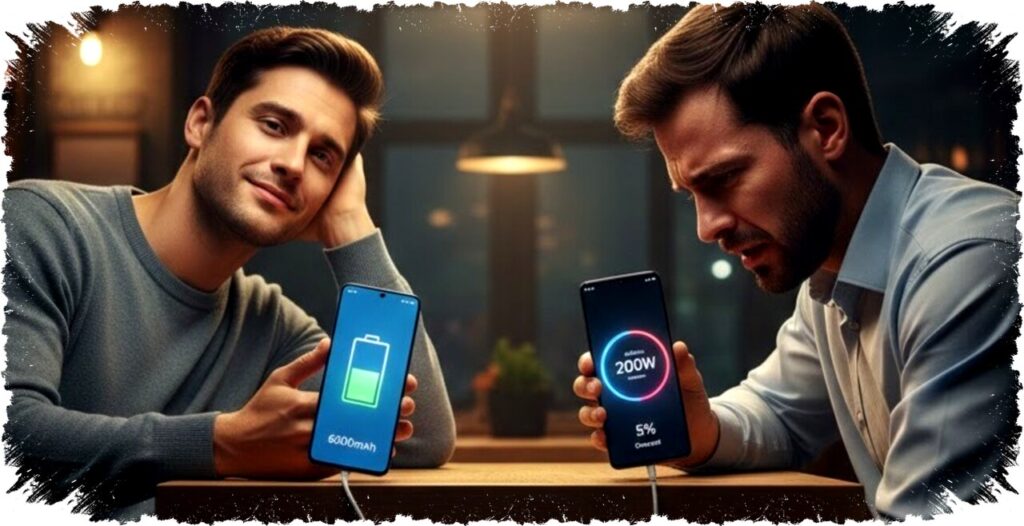
Smartphone users in 2026 face a common dilemma: choosing between larger battery capacity or faster charging technology. Specifically, 6,000 mAh batteries versus 5,000 mAh batteries equipped with 200W fast charging are attracting attention. The core question goes beyond just battery size or charging speed—it focuses on which option offers better all-day battery life without needing to plug in frequently.
A 6,000 mAh battery inherently promises longer usage times. Devices with this capacity are typically designed for intensive activities like gaming, high-resolution video recording, and heavy multitasking. Laboratory tests on mobile devices show that each additional 1,000 mAh can translate to 2-4 extra hours of usage, depending on factors like chipset efficiency and screen technology. In moderate daily scenarios such as browsing social media and messaging, smartphones with 6,000 mAh batteries can last up to two full days.
Impact of 200W Fast Charging in 5,000 mAh Batteries
On the other hand, smartphones with 5,000 mAh batteries paired with ultra-fast 200W charging systems pursue a different strategy. According to leading component manufacturers, these technologies allow a full charge in less than 15 minutes under optimal conditions. This drastic reduction in charging time changes user habits: just a few minutes of charging can provide several hours of usage. However, charging speed alone doesn’t guarantee better endurance during active use.
Fast charging at such high wattage generates more heat, which could potentially degrade battery health if not properly managed. Smartphone makers counter this by implementing advanced thermal management and splitting the charging current across multiple cells to maintain safe temperatures. This ensures the battery remains safe and longevity is preserved despite rapid charging cycles.
Efficiency Matters as Much as Capacity
Battery capacity is only part of the overall energy equation. Chipset efficiency dramatically influences how long a smartphone lasts on a single charge. Recent semiconductor reports highlight that processors built on smaller nanometer fabrication nodes reduce power consumption by significant margins compared to older models. This means a 5,000 mAh battery running on an optimized chipset with smart power management can rival a 6,000 mAh battery in real-life endurance.
Screen technology also affects battery life. AMOLED displays with adaptive refresh rates help cut power consumption by adjusting screen refresh based on content. Tests show adaptive refresh rate panels can save up to 20% in energy usage during typical daily use, narrowing the endurance gap between the two battery capacities.
Daily Usage Scenarios and Connectivity Influence
Heavy usage scenarios, especially gaming with complex graphics and persistent 5G connectivity, drain batteries faster. 5G’s higher energy demand, particularly in areas with weak signals, stresses the battery significantly. In such contexts, a larger 6,000 mAh battery provides a tangible advantage by extending usable hours without recharge.
For users spending extended periods outdoors or traveling without easy access to power outlets, the greater capacity stands out. Conversely, users who have frequent access to fast chargers benefit from the quick top-ups enabled by 200W charging, making a smaller battery more practical.
Choosing the Right Battery Setup:
6,000 mAh Battery:
- Ideal for prolonged, heavy usage without charging opportunities.
- Suits outdoor activities, long trips, and gamers requiring endurance.
- Supports moderate to heavy daily workloads with fewer recharge interruptions.
- 5,000 mAh Battery with 200W Fast Charging:
- Best for users with fast and frequent access to charging points.
- Enables quick battery refills in under 15 minutes, allowing flexible usage.
- Benefits users with variable schedules who prioritize convenience over raw capacity.
Future Trends in Smartphone Battery Technology
The convergence of large capacity batteries and super-fast charging technologies is expected. Innovations in battery materials and power management aim to increase energy density while safeguarding device safety and longevity. Moreover, enhanced hardware-software integration will improve overall efficiency, further blurring the lines between capacity and charging speed advantages.
Manufacturers are also focusing on thermal solutions that sustain high charging speeds without degrading performance or battery health. This dual emphasis on capacity and rapid recharge will likely define smartphone battery innovation as users demand both endurance and convenience.
Understanding the trade-offs between battery capacity and charging speed helps users make informed decisions. Whether prioritizing all-day power or ultra-fast recharging, the choice depends heavily on lifestyle and usage patterns. The trend towards smarter, more balanced battery technologies promises to meet diverse user needs without forcing sacrifices in performance or reliability.