


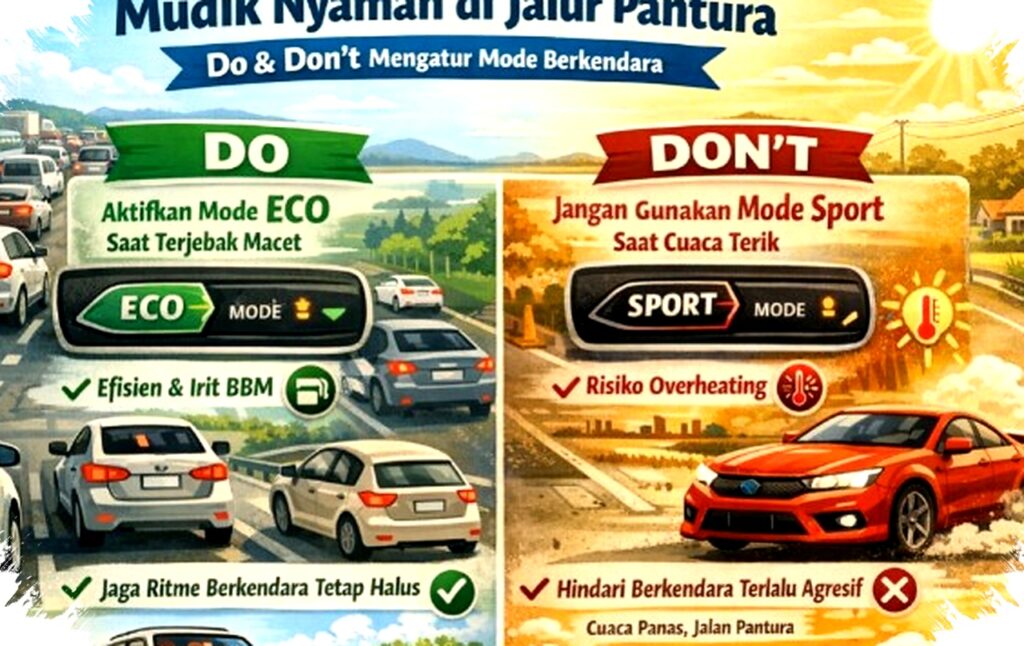
Congested traffic on the northern route of Java Island, known as Pantura, is a common challenge during the Lebaran homecoming season. Travelers often face long traffic jams, making it crucial to manage the vehicle’s driving mode effectively to ensure comfort and efficiency throughout the journey. Choosing the right mode can help save fuel, prevent engine overheating, and reduce driver fatigue.
Many modern vehicles offer selectable driving modes such as ECO, Normal, and Sport. Using these modes appropriately during traffic congestion can make significant differences in performance and comfort. Here is a detailed guide on the do’s and don’ts for managing driving modes while stuck in traffic on the Pantura route during the Lebaran mudik.
Do: Activate ECO Mode During Traffic Jams
ECO mode is designed to optimize fuel consumption by making the engine work more efficiently under stop-and-go traffic conditions. Activating ECO mode when facing slow-moving or halted traffic helps smooth out acceleration response and reduces fuel wasted on idling or sudden accelerations. This mode lowers the engine workload, which also helps maintain a stable operating temperature even in heavy congestion. As a result, drivers experience better fuel economy and less risk of engine overheating on long trips.
Do: Maintain Smooth Driving Rhythm
Beyond using ECO mode, maintaining a smooth and calm driving style is essential. Avoid sudden acceleration or hard braking, as aggressive driving can increase fuel consumption and place unnecessary strain on the engine. A steady rhythm not only conserves fuel but also enhances comfort for all passengers, reducing stress and fatigue on long journeys. Staying patient and attentive can improve overall safety and vehicle longevity during the mudik season.
Don’t: Use Sport Mode in Hot Weather or Traffic
Although Sport mode offers sharper acceleration and a more responsive throttle, it is not ideal for stop-and-go traffic or hot weather conditions common on the Pantura corridor during Lebaran. Sport mode causes the engine to work harder and heat up faster, which can lead to rapid engine temperature increases and potential overheating. Using this mode while stuck in a traffic jam under the sun risks compromising vehicle performance and durability.
Don’t: Drive Aggressively Amidst Congestion
High temperatures and dense traffic frequently cause driver fatigue and impatience. Aggressive maneuvers such as abrupt lane changes, tailgating, or speeding can increase accident risk and worsen fuel inefficiency. Safe distances between vehicles, gradual acceleration, and calm mindset protect both the driver and the vehicle. Utilizing appropriate driving modes combined with defensive driving habits ensures safer and smoother travel experience during the busy mudik period.
Balancing Efficiency and Comfort is Key
The primary goal of adjusting driving modes in heavy traffic is to balance fuel efficiency, engine health, and passenger comfort. ECO mode supports fuel savings and keeps the engine cool, making it the most suitable choice for dense Pantura traffic. Smooth driving techniques complement these benefits by reducing wear and tear on vehicle components. Conversely, Sport mode and aggressive driving create unnecessary mechanical stress and increase accident risk, therefore should be avoided during long traffic jams in hot weather.
Additional Tips for a Comfortable Mudik Journey on Pantura
To complement mode selection and driving style, travelers should keep the vehicle well-maintained before departure. Check coolant levels and tire pressure to optimize vehicle performance in heavy traffic. Use air conditioning wisely to maintain cabin comfort without overloading the engine. If stopped for long periods, avoid revving the engine excessively and consider turning it off to save fuel and reduce heat build-up.
| Summary of Driving Mode Tips for Lebaran Mudik on Pantura: | Do’s | Don’ts |
|---|---|---|
| Activate ECO mode in heavy traffic | Use Sport mode during congestion and hot weather | |
| Maintain smooth acceleration and braking | Drive aggressively or impatiently | |
| Monitor engine temperature and vehicle condition | Ignore signs of vehicle overheating or fatigue |
Following these guidelines can significantly improve the overall travel experience on one of Indonesia’s busiest mudik routes. Efficient fuel use reduces stops for refueling, while minimizing engine strain helps prevent breakdowns. Adopting a calm and responsible driving approach adds to safety, ensuring families arrive comfortably and on time at their destinations.
By understanding how to properly manage vehicle modes and adopting sensible driving habits, Lebaran travelers on the Pantura route can navigate the season’s notorious traffic jams with greater ease. This practical knowledge not only preserves vehicle condition but also contributes to a safer, smoother, and more enjoyable journey home during one of the year’s most important annual events.