


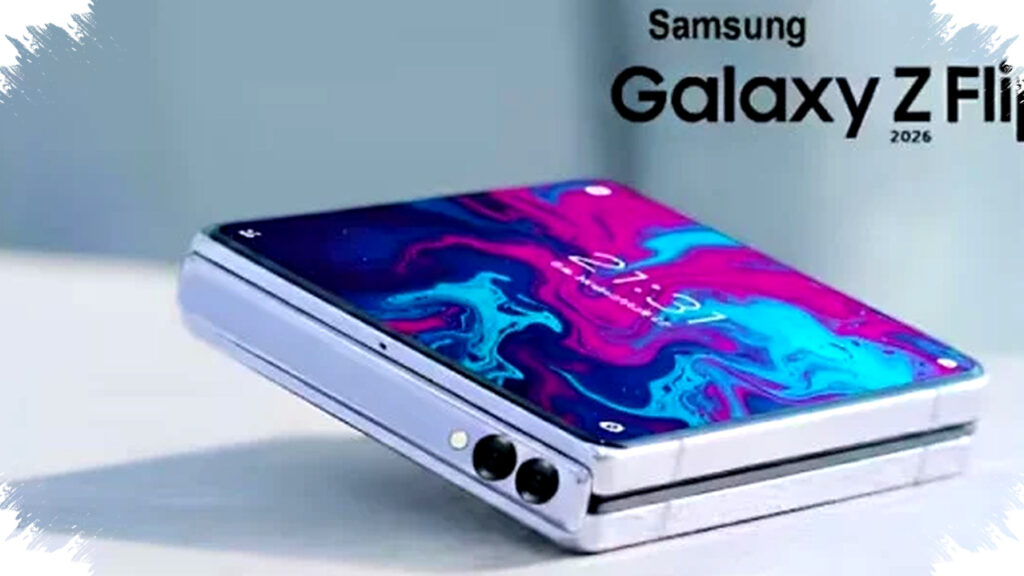
Samsung is set to launch its latest foldable smartphone, the Galaxy Z Flip 8, likely alongside the Galaxy Z Fold 8 during the company’s annual summer event. Previous launches suggest this event will occur around July, continuing the mid-year release cycle Samsung has established for its Galaxy Z lineup.
Recent leaks indicate that the Galaxy Z Flip 8 will keep the same battery capacity as its predecessor, focusing instead on improving device efficiency. The foldable will reportedly use a dual battery system consisting of two separate cells with capacities of approximately 1,150mAh and 3,024mAh. Combined, these yield around 4,174mAh, which is typically marketed as a 4,300mAh battery.
Battery Design and Capacity
Using dual batteries is common for foldable phones due to their unique form factor, allowing battery cells to be placed on each foldable half. Samsung’s decision to maintain the battery size from the Galaxy Z Flip 7 suggests confidence in the current capacity supporting daily use. However, the company appears to be focusing on optimizing battery performance rather than increasing raw capacity.
By improving software efficiency and hardware integration, Samsung aims to extend battery life without changing the physical cell size. This approach mirrors what was done with the Galaxy S26 Ultra, which reportedly outperforms the Galaxy S25 Ultra in battery endurance despite having the same battery capacity.
Next-Gen Exynos Chipset
A significant upgrade in the Galaxy Z Flip 8 is expected under the hood, with rumors pointing to a new Exynos 2600 chipset built using an advanced 2nm manufacturing process. This smaller fabrication node usually translates into better energy efficiency and enhanced performance compared to previous chips.
If these rumors hold true, the Exynos 2600 could offer improved processing power and lower power consumption, which complements the static battery capacity. This would help deliver smoother multitasking and longer screen-on time for users without increasing battery size.
Limited Changes in Camera and Design
While performance and efficiency are set to improve, the camera system on the Galaxy Z Flip 8 is not expected to see major revisions. Samsung appears to prioritize refining the overall design and system harmonization over introducing completely new hardware.
This suggests the device will retain the popular clamshell form factor with enhancements aimed at durability and usability rather than drastic redesigns. The evolutionary upgrade strategy may appeal to users who value a proven design with modernized internals.
Production Plans and Market Expectations
Samsung reportedly plans to produce around 3 million units of the Galaxy Z Flip 8 ahead of its official launch. This is slightly fewer than the roughly 3.5 million units slated for the Galaxy Z Fold 8. The smaller target reflects Samsung’s anticipation of stronger demand for the Fold model, which outperformed the Flip in sales throughout 2025.
Pricing is expected to remain consistent with the earlier generation. The Galaxy Z Flip 8 is anticipated to start at about €1,199 (approximately $1,280) for its 256GB version. This aligns with the current pricing of the Galaxy Z Flip 7 in markets such as India, where it sells around Rs. 109,999 (about $1,330) for the 12GB RAM and 256GB storage model.
Summary of Key Specifications:
| Feature | Detail |
|---|---|
| Battery Capacity | Dual cells: 1,150mAh + 3,024mAh (~4,300mAh typical) |
| Chipset | Exynos 2600 (2nm fabrication) |
| Expected Launch | July 2026 (along with Galaxy Z Fold 8) |
| Production Volume | Approximately 3 million units |
| Starting Price | Around €1,199 (~$1,280) for 256GB |
| Camera | Minimal upgrades from Galaxy Z Flip 7 |
Samsung’s Galaxy Z Flip 8 demonstrates the company’s commitment to refining foldable technology with a focus on efficiency upgrades rather than radical changes. By maintaining battery capacity and improving performance through a next-gen chipset and software optimization, the device targets users seeking enhanced reliability and everyday usability in a compact foldable form.
This balanced approach could help Samsung strengthen its position in the foldable segment by offering a well-rounded update that meets consumer demands for better battery endurance and smooth performance without compromising design familiarity. The upcoming release will be critical in gauging user response to incremental yet meaningful improvements in foldable smartphones.