


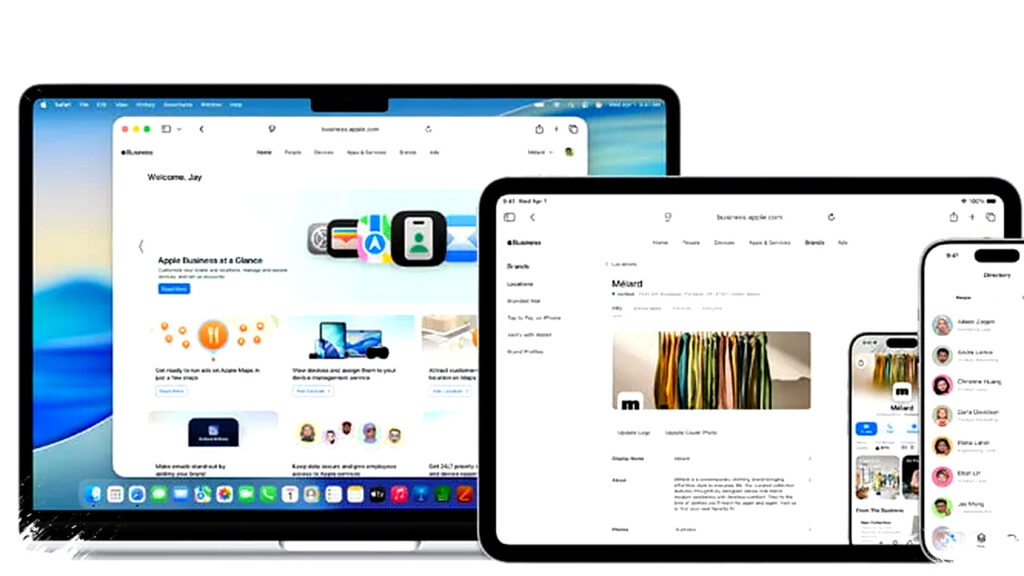
Apple has introduced Apple Business as a new all-in-one platform designed to simplify company operations. The service brings device management, app provisioning, business identity tools, and expert support into one system so teams can work faster and with less technical friction.
For many small and medium businesses, that matters because IT tasks often take time away from growth work. Apple says the platform will help organizations run more efficiently, securely, and at scale, while keeping the setup process simple for both IT teams and business owners.
A single hub for business IT
Apple Business combines several tools that companies usually manage separately. It offers built-in Mobile Device Management, or MDM, so IT teams can monitor Apple devices from one interface and apply security policies and app settings across the organization.
This setup is useful for businesses that use iPhone, iPad, or Mac across multiple employees. Instead of configuring each device one by one, administrators can roll out controls in bulk and keep device settings consistent across teams.
The new platform also reduces the need for complex third-party workflows. Apple positions it as a simpler entry point for businesses that want enterprise-style control without hiring a large IT department.
Quick setup with Blueprints
One of the most practical features in Apple Business is Blueprints. It allows companies to prepare devices automatically before employees even open the box.
That means a new hire can take a device, sign in, and immediately access the apps and settings already assigned for work. The process removes many manual steps that normally slow down onboarding.
For fast-moving companies, this can save hours during employee setup. It also helps businesses keep their rollout process standardized, especially when they are adding devices at scale.
Business email and identity in one place
Apple Business also extends beyond device management. It supports professional communication tools such as email, calendars, and business directories, all tied to a company’s own domain name.
That detail matters because a custom domain helps businesses present a more credible and consistent identity. It also makes internal communication cleaner, since contacts and schedules can stay synchronized across teams.
In a competitive digital environment, a unified business identity can improve how customers and partners view a company. Apple’s approach is to make that identity part of the same system that manages the devices behind it.
Privacy and access control remain central
Security is one of the strongest themes in Apple Business. The platform uses Managed Apple Accounts, which create a cryptographic separation between work data and personal data on the same device.
This design helps protect employee privacy while still giving the company control over work-related apps and files. It is also important for businesses that allow employees to use Apple devices for both professional and personal needs.
Apple also supports integration with third-party identity systems such as Google Workspace and Microsoft Entra ID. That makes it easier for companies already using those platforms to manage access without rebuilding their identity workflow from scratch.
How Apple Business helps brand visibility
Apple has also folded in brand management tools that were previously available through Apple Business Connect. Companies can manage their profile, logo, and location details across Apple services such as Maps, Wallet, and Mail.
For local businesses, this can be a major advantage. Consistent brand information helps customers find the right location, recognize the company more easily, and trust the business before they even walk in.
Apple also gives businesses more control over how they appear in customer-facing interactions. This includes interactive location cards, special promotions, reservation options, and insights into how people discovered the business.
Why Tap to Pay matters for customer trust
A notable feature is the brand display during Tap to Pay transactions on iPhone. When a customer pays, the business identity appears on the screen, which can strengthen trust at the point of sale.
This detail may seem small, but it matters in retail, hospitality, and service industries where customer confidence affects conversion. A clear brand presentation can make digital and physical transactions feel more professional and secure.
Apple Business therefore links back-office operations with customer-facing touchpoints. That connection can help businesses keep their internal systems and public identity aligned.
What businesses gain from the platform
Apple Business is not just about convenience. It reflects a broader shift toward easier IT management for organizations that want to stay lean.
Here are the key benefits the platform is designed to deliver:
- Centralized device control for Apple hardware.
- Faster employee onboarding through Blueprints.
- Integrated business email, calendar, and directory tools.
- Stronger privacy protection through Managed Apple Accounts.
- Better brand visibility across Apple services.
- Easier customer engagement through location cards and Tap to Pay branding.
These features are especially relevant for small businesses that need enterprise-like tools without building a large internal support structure. They also appeal to larger teams that want to standardize operations across regions or departments.
Availability across 200 regions
Apple says Apple Business will roll out globally in more than 200 regions starting April 14. The service will be free for both new and existing users, which lowers the barrier for businesses to try the platform.
Apple also says the transition from earlier services will happen automatically. That should help organizations keep their data safe while moving into the updated system.
The scale of the rollout signals that Apple sees business services as a major growth area. By combining management, identity, and customer tools in one platform, the company is betting that businesses want fewer vendors and simpler workflows.
Why the timing matters now
Businesses today face pressure to do more with smaller teams and tighter budgets. They also need to secure devices, protect data, and maintain a polished digital presence at the same time.
Apple Business addresses those demands with a model built around simplicity. It lets companies manage operations, identity, and customer touchpoints from a unified environment rather than stitching together multiple tools.
For organizations that already use Apple devices, the value may be immediate. For others, the platform adds another reason to consider Apple hardware as part of a broader business strategy.