


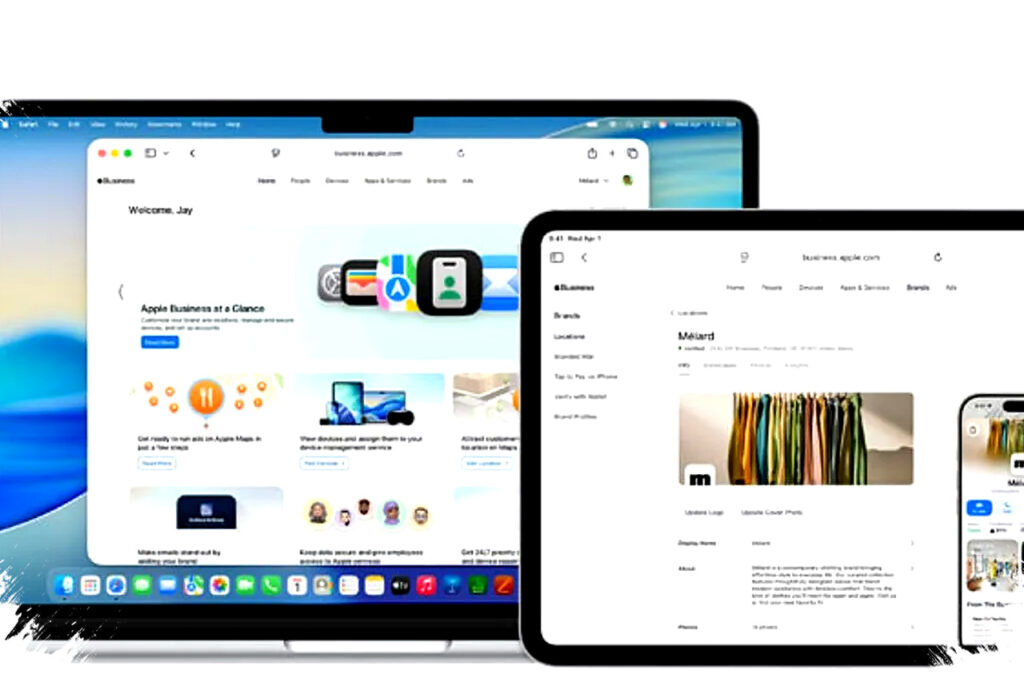
Apple is preparing two new iPhone apps that could reshape how people work and interact with AI on Apple devices. The first is Apple Business, a new enterprise-focused app designed to centralize company tools and services, while the second is a redesigned Siri that reportedly behaves more like a chatbot.
Both products point to a bigger shift in Apple’s software strategy. Instead of relying only on hardware upgrades, Apple appears to be betting more heavily on productivity software and generative AI to keep users inside its ecosystem.
Apple Business aims to simplify workplace tasks
Apple Business is being positioned as a single access point for company-related needs on iPhone, iPad, and Mac. Based on the reported features, employees will be able to install work apps, view coworker contact details, and submit technical support requests from one place.
That kind of integration matters for organizations that manage large numbers of devices and users. It also reflects Apple’s broader push to make its software stack more useful for business customers, not just individual consumers.
The app is expected to replace several existing Apple business services, including Apple Business Essentials, Apple Business Manager, and Apple Business Connect. By folding those tools into one product, Apple may reduce friction for IT teams that currently have to move across multiple platforms.
According to the reference report, Apple Business is planned to launch on April 14. It is also expected to support iOS 26, iPadOS 26, and macOS 26, which suggests Apple is tying the app to its next wave of operating system updates.
What Apple Business could offer employees
The reported feature set suggests Apple wants Apple Business to serve as more than a simple company portal. It could become the main hub for work-related actions that employees often need during the day.
Here is a simple overview of the expected functions:
- Install company-approved applications.
- Access contact information for colleagues.
- Request technical support directly inside the app.
- Manage work-related services from one interface.
If Apple executes this well, the app could help employees save time on routine tasks. It could also give businesses a cleaner way to manage digital workflows across Apple devices.
The timing is notable as well. Many companies now want fewer disconnected apps and more centralized tools, especially as hybrid work remains common. Apple Business appears designed to answer that demand with a more unified experience.
Siri is reportedly getting a chatbot-style upgrade
Apple is also working on a more advanced Siri that may feel closer to ChatGPT or Google Gemini. The key change is not just better voice responses, but a more flexible interaction model that includes both text and speech.
That means users may be able to type to Siri instead of speaking every time. It could also make the assistant easier to use in quiet environments, on public transport, or during meetings where voice input is not practical.
One of the most important additions is expected to be conversation history. With that feature, users should be able to return to previous exchanges without restarting the same request from scratch.
This would be a meaningful step for Siri, which has often been seen as less capable than rival AI assistants. A chatbot-like design could help Apple make Siri feel more contextual, more useful, and more aligned with modern AI expectations.
Why the Siri shift matters for Apple
Apple has faced growing pressure to improve Siri as conversational AI tools have accelerated across the tech industry. Consumers now expect assistants to handle follow-up questions, remember context, and support more natural interactions.
A smarter Siri could help Apple close that gap. It may also improve how users search, draft text, organize tasks, and get help with everyday requests on the iPhone.
At the same time, Apple tends to move carefully when introducing major software changes. That may explain why the Siri upgrade is reportedly scheduled later than Apple Business, with release timing tied to iOS 27, iPadOS 27, and macOS 27 at the end of the year.
That delay suggests Apple still needs more time to refine the AI system. Given the complexity of chatbot-style features, a slower rollout may help Apple avoid the kind of rough launch that could damage trust in Siri’s reliability.
Apple’s software strategy is becoming more visible
The appearance of these two apps shows how Apple is balancing two major priorities at once. One is enterprise productivity, and the other is artificial intelligence.
Apple Business targets companies that want more efficient device and service management. Siri’s transformation targets everyday users who want a more helpful digital assistant. Together, they show Apple trying to strengthen both the professional and personal sides of its ecosystem.
This approach also fits the company’s long-term model. Apple often builds tight integration between hardware, operating systems, and services so that users stay within the same environment across devices.
Key details at a glance
| Product | Main purpose | Expected platform support | Reported timing |
|---|---|---|---|
| Apple Business | Centralized business and workplace services | iOS 26, iPadOS 26, macOS 26 | April 14 |
| Siri chatbot version | More interactive AI assistant with text and voice | iOS 27, iPadOS 27, macOS 27 | End of the year |
The table shows how Apple is separating the rollout of its business and AI ambitions. Apple Business is closer to market, while the more advanced Siri update appears to be a longer-term project.
A broader push into AI-powered productivity
Apple’s direction is increasingly clear: it wants software that saves time, reduces complexity, and uses AI to make devices feel more responsive. That combination could become more important as users expect more from their phones, tablets, and laptops than ever before.
If Apple Business performs as reported, it could become a helpful tool for enterprise users and IT teams that rely on Apple hardware. If the Siri upgrade delivers a smoother chatbot experience, Apple could finally give its assistant a more competitive role in the AI era.
For now, the key question is execution. Apple has outlined a future where business management and conversational AI sit more naturally inside the company’s ecosystem, and the next several software cycles will show how far that vision can go.