


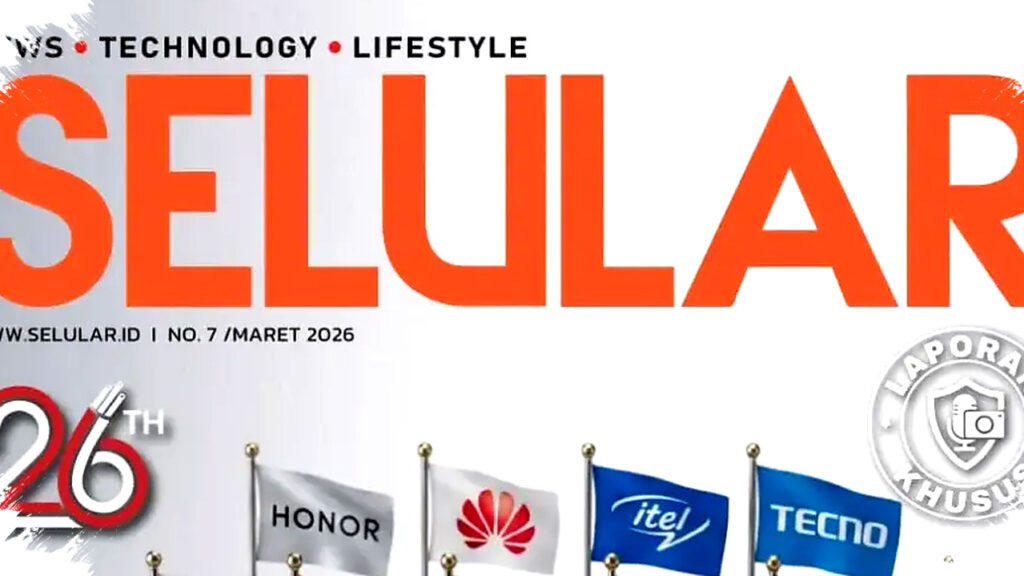
Analysts say challenger smartphone brands still have a path to the top five in Indonesia, but only if they can exploit a narrow set of market conditions. Industry watcher Aryo Meidianto argues that the door is not fully closed, even though the current market structure still favors the biggest vendors.
His view comes as Indonesia’s smartphone market remains heavily concentrated, with the top five brands controlling 85% of the market in 2025, based on Omdia data cited in the source article. That leaves just 15% for challengers such as Nubia, Sharp, Realme, Huawei, Honor, Nothing, and Apple’s iPhone in the local competition.
A tightly packed market led by familiar names
Omdia’s 2025 figures show Xiaomi at the top with 19% market share. Transsion, which sells Infinix, Tecno, and Itel, follows closely at 18%, while Samsung sits in third place with 17%.
Oppo holds fourth with 16%, and Vivo rounds out the top five at 15%. The spread is narrow, but the biggest players still keep enough scale, distribution, and brand equity to defend their positions.
For challengers, that concentration creates a difficult ladder to climb. They must win share not from one dominant brand alone, but from a cluster of companies that already understand Indonesia’s price-sensitive and competitive market very well.
Why challenger brands remain outside the top tier
Aryo said challenger vendors are still too small in volume to threaten the leaders in the near term. He told Selular on Thursday, April 2, 2026, that “vendor challenger sepertinya belum bisa berada di urutan 5 besar untuk di tahun ini,” or that challenger vendors likely cannot enter the top five this year.
His reasoning is straightforward: the leaders still control most of the shipment base, while challengers remain fragmented. Many of them also compete in narrow product niches, which can help visibility but does not always translate into scale.
That matters because Indonesia rewards brands that can combine mass-market relevance with efficient distribution. A company may create buzz with a premium or unusual device, but without broad reach and strong inventory, it is hard to convert attention into sustained market share.
The conditions that could change the ranking
Aryo nevertheless sees a realistic opening for some challenger brands if several conditions align. One possible trigger is a shortage of memory components, especially NAND Flash, which could disrupt supply chains and shift buyer interest.
If larger vendors face constraints in production or inventory, smaller brands may gain room to move. In fast-moving smartphone markets, even temporary shortages can alter retail momentum, especially in low- and mid-range segments where consumers shop based on availability and value.
Another condition is the presence of a standout product that captures public attention quickly. Aryo said a challenger can rise if it has a strong device that people rush to buy, especially if it offers a sharp price-to-spec ratio.
In Indonesia, that formula often works best when a phone delivers one or two highly visible advantages. These may include a better camera, a large battery, fast charging, higher storage, or gaming-focused performance at a price that feels close to mainstream alternatives.
What challenger brands need to break through
To move into the top five, challenger vendors likely need more than one successful launch. They need scale, visibility, and repeated consumer trust in a market that rewards consistency.
- Competitive pricing that still leaves room for margin and distribution support.
- A clearly differentiated product feature that is easy for buyers to understand.
- Strong retail presence across both online and offline channels.
- Reliable stock so demand does not disappear after launch interest fades.
- Local marketing that turns product specs into a recognizable brand story.
Each of these elements matters because Indonesia’s smartphone buyers are increasingly informed and price conscious. Many compare specifications across brands before purchasing, which means a strong product alone is not enough if the brand lacks reach or after-sales confidence.
Low- to mid-range demand still shapes the battle
Aryo also pointed out that the large low-to-mid market could still decide this year’s rankings. That segment remains the main battlefield for Xiaomi, Transsion, Oppo, Vivo, and Samsung, and it is also the segment where challengers have the best chance to gain traction.
He noted that if a vendor can offer attractive pricing with solid quality, entry into the top five is not impossible. The formula is familiar: value wins attention, and scale follows if the product meets expectations in the market.
This is why the challenger discussion often centers on fast-growing models rather than long-term brand presence alone. A company may not need to beat every incumbent at once; it only needs one or two breakout products that can convert into broader consumer adoption.
The Oppo-Realme factor could also matter
Aryo added another layer to the discussion by mentioning the uncertainty around Oppo’s volume calculation after its merger-related relationship with Realme. He said there is potential for the combined market share to grow, which could influence how rankings are read in the future.
That point is important because smartphone market-share reports often depend on how analysts classify brand families and corporate structures. If related labels are counted together in some datasets, the apparent balance of power can shift even without dramatic changes in consumer demand.
Here is a simple overview of the 2025 market structure cited in the report:
| Brand group | Market share |
|---|---|
| Xiaomi | 19% |
| Transsion (Infinix, Tecno, Itel) | 18% |
| Samsung | 17% |
| Oppo | 16% |
| Vivo | 15% |
| Challenger brands combined | 15% |
That table shows why the race remains interesting. The leaders are close enough to each other that a modest supply shock, a strong launch, or a change in pricing strategy could alter the order, even if the overall five-brand concentration stays intact.
Why Google Discover readers should watch this space
Indonesia’s smartphone market is not only about flagship launches or brand prestige. It is also about who can dominate the mass market with the right mix of price, supply, and timing, and that gives challenger brands a realistic but difficult route upward.
For now, Aryo’s assessment suggests the top five will likely remain stable unless a challenger can seize a market disruption and turn one successful model into repeated demand. The next shift will likely come from the brands that can pair aggressive pricing with strong execution in the very segments where Indonesian buyers make the most purchases.