


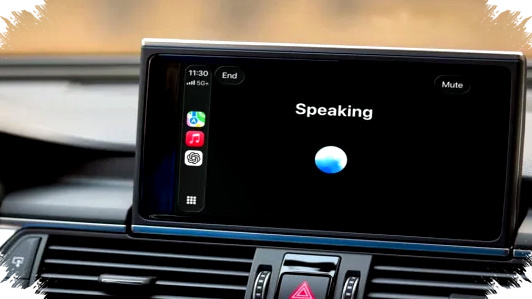
Apple is bringing ChatGPT into CarPlay through iOS 26.4, giving iPhone users a new way to talk to an AI assistant while driving. The feature focuses on voice-only interaction, which Apple appears to position as a safer option for drivers who want hands-free access to generative AI inside the car.
The move also shows how quickly AI is moving beyond phones and desktops into everyday mobility. For users, this means CarPlay is no longer just a screen for calls, maps, and music, but a more interactive hub that can support conversation, quick answers, and on-the-road assistance.
What Apple has added to CarPlay
Apple has integrated ChatGPT into CarPlay as part of the iOS 26.4 update, opening the platform to third-party voice apps in a more flexible way. This is an important shift because CarPlay has traditionally been centered on Apple’s own ecosystem and a limited set of approved functions.
The ChatGPT integration turns the car dashboard into a voice-first AI interface. Instead of typing prompts on a screen, users can speak naturally and listen to spoken responses, which helps reduce distraction while driving.
How the feature works in practice
The ChatGPT experience in CarPlay is designed to work as an extension of the iPhone app. Once the iPhone is connected to the vehicle’s head unit, the ChatGPT icon appears on the CarPlay interface and can be launched from there.
The system then handles the conversation through audio only. That means users will not get long blocks of text on the CarPlay screen, and the assistant responds with voice output instead of visual paragraphs that could pull attention away from the road.
What users need before trying it
To use ChatGPT in CarPlay, Apple says users need an iPhone running iOS 26.4 or later. They also need the ChatGPT app on the iPhone updated to the latest version so the app can sync properly with the CarPlay environment.
The setup is relatively simple once the device and car are ready. After the iPhone connects to CarPlay, users tap the ChatGPT icon manually to start a session, because the feature does not yet support a wake word such as a hands-free verbal trigger.
A simple checklist looks like this:
- Update the iPhone to iOS 26.4 or newer.
- Update the ChatGPT app on the iPhone.
- Connect the iPhone to CarPlay in the vehicle.
- Tap the ChatGPT icon on the CarPlay display.
- Start speaking and listen to the spoken reply.
Why Apple is pushing voice-first AI
Apple’s decision to keep ChatGPT in voice mode reflects a broader safety logic. Drivers already use CarPlay for navigation and communication, so adding text-heavy AI would create new distractions that run against the purpose of an in-car interface.
Voice interaction also fits well with long drives, commuting, and hands-free use cases. A driver can ask for explanations, brainstorm ideas, or get quick information without shifting focus away from the road for too long.
What ChatGPT in CarPlay can do
The feature is best understood as a conversational companion rather than a vehicle control system. Users can ask questions, explore ideas, or continue discussions in real time while traveling.
That makes it useful in situations such as:
- Generating ideas during a commute.
- Getting quick explanations on a topic.
- Having a voice-based conversation without using the phone directly.
- Using travel time for light productivity or planning.
The point is not to replace the car’s native systems. It is to add a smarter conversational layer that runs alongside them.
What ChatGPT in CarPlay cannot do yet
Despite the headline appeal, the feature has clear limits. According to the reference information, ChatGPT in CarPlay does not control navigation functions or internal vehicle systems.
It also does not have access to real-time location data in the same way a car’s built-in navigation service might. That limitation matters because it keeps ChatGPT in a support role rather than letting it interfere with route guidance, vehicle hardware, or core driving functions.
How this compares with the broader AI-in-car trend
ChatGPT in CarPlay is part of a wider industry shift toward AI-powered cabins. Automakers and software companies are increasingly treating the vehicle interior as a digitized environment where voice assistants, smart routing, and personalized services can coexist.
This push is happening because drivers now expect the same kind of digital responsiveness in cars that they already get from phones and smart speakers. The car has become another place where AI can answer questions, organize tasks, and reduce friction in everyday routines.
Why the timing matters for Apple and OpenAI
For Apple, the feature strengthens CarPlay at a time when in-car software is becoming a competitive space. By allowing third-party voice apps like ChatGPT, Apple expands the usefulness of CarPlay without turning it into a full control layer for the car itself.
For OpenAI, the integration creates a new distribution channel for ChatGPT inside a high-frequency use environment. Cars are used daily by millions of people, and even limited voice access can increase how often users interact with the assistant.
What the update signals for drivers
The arrival of ChatGPT in CarPlay suggests that future in-car software will rely more on spoken interaction and less on manual input. That is especially relevant for drivers who want fast answers, brief help, or a conversational assistant that does not demand constant screen attention.
The move also sets expectations that AI in the car will likely remain utility-focused in the near term. Apple’s current approach keeps the assistant useful while drawing a firm line around safety, data access, and vehicle control.
Key points at a glance
| Aspect | Details |
|---|---|
| Platform | Apple CarPlay |
| Required OS | iOS 26.4 or later |
| Core interaction | Voice only |
| Activation | Manual tap on ChatGPT icon |
| Navigation control | Not supported |
| Vehicle system control | Not supported |
As iOS 26.4 rolls out, ChatGPT in CarPlay is likely to become one of the most watched examples of AI entering everyday driving. The feature may still be limited, but it already shows how Apple wants CarPlay to evolve into a safer and more capable voice-driven space for communication, productivity, and AI-assisted conversation on the move.