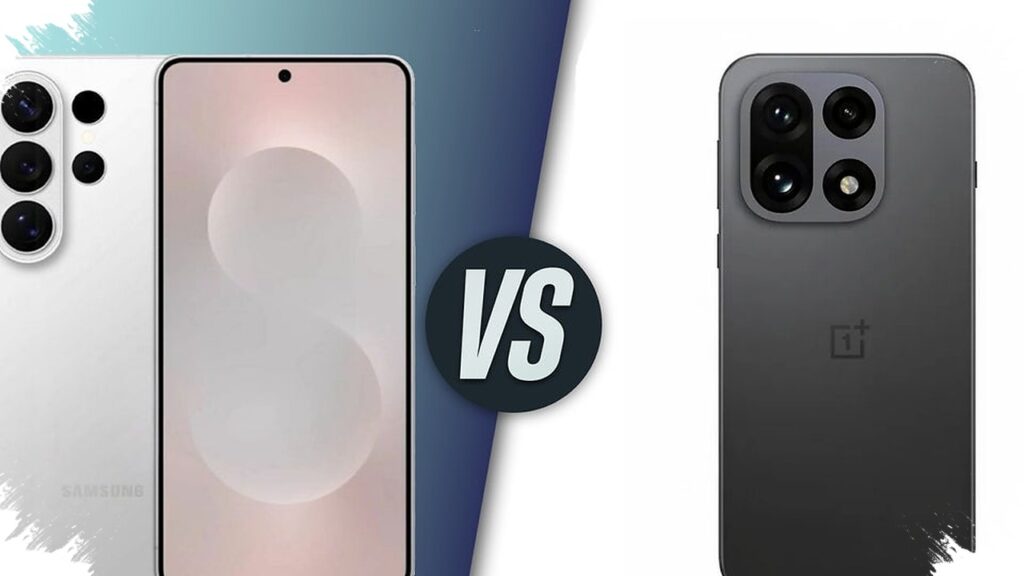
Samsung Galaxy S26 and OnePlus 15 arrive with two very different ideas of what a premium flagship should be. Samsung leans on stability, refined software, and long-term support, while OnePlus pushes harder on raw speed, faster charging, and bolder hardware choices.
That contrast matters because buyers in the premium segment are no longer comparing only processors and cameras. They are also weighing durability, software lifespan, charging habits, display smoothness, and how well a phone fits daily use over several years.
Two flagship philosophies, one crowded market
Samsung’s Galaxy S26 continues the company’s familiar formula of polished design and balanced performance. The phone is expected to keep a compact and elegant body, with Gorilla Glass Victus 2 and newer Armor Aluminum materials that should help it feel premium without making it bulky.
OnePlus 15 takes a more expressive route. It uses a more aggressive design language and adds IP68/IP69K protection, which signals stronger resistance to dust and water than many rivals in the same class. That makes it feel like a device built to stand out, not just blend into the flagship crowd.
Display choice shows the first major split
The Galaxy S26 is equipped with a Dynamic LTPO AMOLED 120Hz display, a panel type Samsung has refined for years. This setup favors excellent brightness control, strong HDR consistency, and comfortable visibility outdoors, where many users still spend much of their phone time.
OnePlus 15 answers with an LTPO AMOLED 165Hz screen and Dolby Vision support. The higher refresh rate gives animations a noticeably smoother feel, especially in games and fast-scrolling apps, while Dolby Vision can improve the viewing experience for supported video content.
Performance is close on paper, different in practice
Both phones are powered by Qualcomm’s Snapdragon 8 Elite Gen 5 in most regions, so the base level of flagship performance is already very high. The real difference comes from how each brand tunes the chipset and manages heat, memory, and software behavior.
Samsung focuses on stability through One UI optimization and long-term software support. The company is also expected to continue its commitment to up to seven generations of Android updates, which gives the Galaxy S26 strong appeal for users who keep their phones for several years.
OnePlus 15, by contrast, leans into more aggressive performance tuning. The device is expected to carry larger RAM configurations and faster storage, which can pay off in heavy multitasking and sustained gaming loads. For power users, that extra headroom can matter more than conservative tuning.
What matters most in daily use
In daily life, the difference between a stable flagship and a more aggressive one often shows up in small moments. Samsung aims to deliver a phone that behaves predictably, stays smooth over time, and integrates tightly with its broader ecosystem.
OnePlus aims to make the phone feel fast in every interaction. App switching, game loading, and file handling should all feel more immediate, which can be a major advantage for users who want the most responsive experience possible.
A simple comparison helps clarify the trade-off:
- Samsung Galaxy S26: better for long-term stability, ecosystem features, and software support.
- OnePlus 15: better for users who prioritize speed, brighter hardware ambitions, and a more dynamic feel.
- Samsung Galaxy S26: more conservative, but easier to trust for years of routine use.
- OnePlus 15: more exciting, but tuned for users who want performance first.
Battery and charging reveal the most practical divide
Battery strategy may be the area where OnePlus 15 creates the biggest gap. Samsung keeps a more cautious approach with slower charging speeds, a decision that is usually tied to battery health and long-term durability.
OnePlus 15 goes in the opposite direction with a larger battery and very fast wired and wireless charging. That changes how the phone fits into everyday life, because short top-ups can replace long charging sessions and reduce downtime between work, travel, or gaming.
For many users, this may be one of the most important buying factors. A phone that charges quickly often feels more flexible in real-world use than one that relies on slower but more conservative charging behavior.
Camera approach: mature tuning versus bold hardware
Samsung’s Galaxy S26 keeps a familiar triple-camera setup that emphasizes color consistency, strong HDR, and dependable results across many scenes. The 3x telephoto lens remains one of its most practical strengths, especially for everyday portraits and subject zoom without excessive complexity.
OnePlus 15 takes a more aggressive route with three 50MP sensors, including a periscope lens. That setup gives it more room for detailed zoom shots and wider framing, while its image style is expected to look more dramatic and punchier than Samsung’s more controlled output.
The front camera comparison is also interesting. Samsung sticks with a 12MP selfie camera tuned for natural and stable results, while OnePlus uses a higher-resolution camera with autofocus support. That should help OnePlus deliver sharper selfies and better focus consistency in challenging light.
Price keeps the battle close
Samsung Galaxy S26 is expected to cost around $900, while OnePlus 15 is priced closer to $800. That $100 difference is meaningful in a segment where both phones already offer flagship-level processors and premium displays.
Samsung justifies the higher price with its ecosystem, productivity tools such as Samsung DeX, and stronger long-term software support. Those features matter most to users who want a phone that behaves like a full mobile workstation, not just a fast entertainment device.
OnePlus counters with a sharper value proposition. It brings faster charging, larger battery capacity, higher-refresh display technology, and more ambitious camera hardware at a lower expected price. For buyers focused on specs per dollar, that is a difficult offer to ignore.
Which type of user fits each phone
If you want a phone that feels refined, predictable, and supported for years, Galaxy S26 is the safer answer. It fits users who value ecosystem continuity, balanced photography, and steady long-term performance.
If you want a smartphone that pushes hardware harder and gives you more immediate excitement, OnePlus 15 looks stronger on paper. It suits gamers, heavy multitaskers, and users who dislike waiting for their phone to recharge.
That is why this comparison is not really about which phone is universally better. It is about whether you prefer Samsung’s disciplined premium experience or OnePlus’s more aggressive performance-first strategy, because both phones now stand on solid flagship ground and target slightly different kinds of power users.