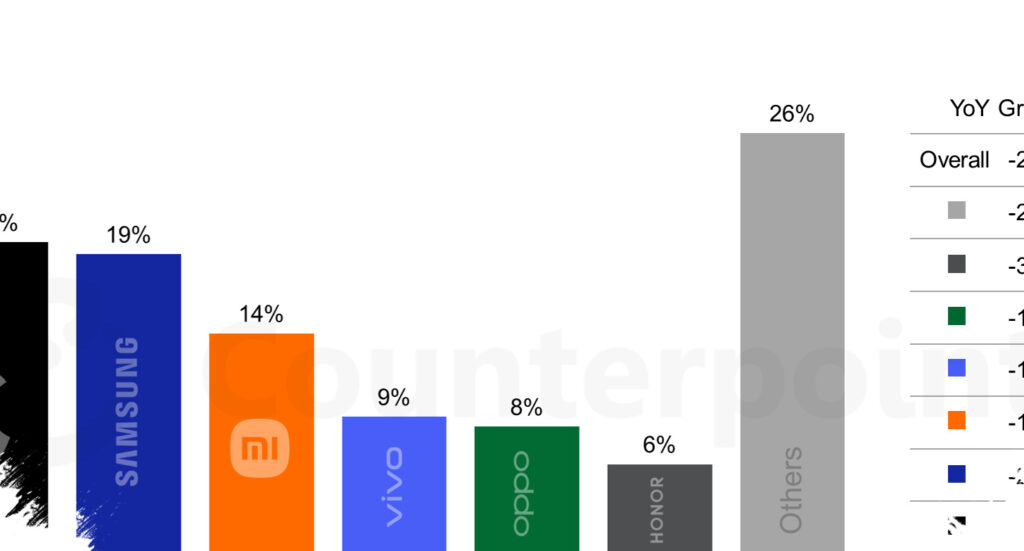
Geopolitical conflict is adding new pressure to the smartphone market just as device makers were already coping with higher memory costs. Industry observer Aryo Meidianto says the war between Iran, the United States, and Israel is making handset prices “even hotter,” because it compounds an earlier squeeze from scarce DRAM and NAND Flash supplies.
That means consumers are facing a double hit. Prices are rising not only because key memory chips are expensive, but also because logistics, packaging, and energy costs are moving higher at the same time.
Why smartphone prices are rising faster
Aryo said the war is worsening an already fragile cost structure in the smartphone supply chain. Before the conflict effect, manufacturers were dealing with tighter memory availability as AI demand pulled more DRAM and NAND Flash into data center and cloud infrastructure.
The result is a classic supply-demand imbalance. Smartphone makers, memory suppliers, and component vendors are now competing for the same parts in a market where availability is already under stress.
Counterpoint Research recently reported that mobile memory prices climbed sharply in the first quarter of 2026. DRAM prices rose more than 50% quarter on quarter, while NAND Flash jumped more than 90% quarter on quarter.
Those gains matter because memory is no longer a small part of a phone’s cost. In many models, especially lower-priced devices, memory takes a much larger slice of the total bill of materials than it did before.
War adds cost beyond chips
Aryo also pointed to secondary effects from the conflict, including higher distribution and packaging costs. Those expenses can look small on paper, but they become significant when they move through global manufacturing and retail networks.
He noted that rising energy prices can lift shipping and logistics spending. He also said plastic prices have increased by 100%, and smartphone packaging still depends heavily on plastic materials.
That combination is important for manufacturers. A phone maker cannot simply absorb higher chip prices and ignore the rest, because transport, outer boxes, inserts, and protection materials all feed into the final retail price.
The pressure does not stop there. If conflict keeps energy and freight costs high, brands may have little choice but to revise prices again in the next product cycle.
The biggest squeeze hits entry-level phones
Counterpoint’s data shows that the cheapest segment may feel the strongest effect. For entry-level smartphones with wholesale prices below $200, a common configuration such as 6GB LPDDR4X and 128GB eMMC could raise total bill of materials costs by as much as 25% quarter on quarter in Q1 2026.
In that scenario, memory alone can account for up to 43% of the device’s production cost. That is a major shift for brands that depend on thin margins and high sales volumes.
The table below shows how the pressure is being transmitted through the market.
| Cost driver | Reported trend | Likely impact on phones |
|---|---|---|
| DRAM | More than 50% QoQ increase | Higher device BOM |
| NAND Flash | More than 90% QoQ increase | Higher storage-related cost |
| Energy | Rising | More expensive logistics and packaging |
| Plastic | Up 100% | Higher packaging cost |
| Entry-level BOM | Up to 25% QoQ | Strongest price pressure |
This helps explain why low-cost phones are no longer insulated from global supply shocks. Their hardware may be simpler, but they still rely on the same memory chips and materials as more expensive models.
Brands have already started raising prices in Indonesia
The effect is now visible in retail pricing. Selular’s monitoring in early April 2026 showed that several smartphone vendors in Indonesia had already adjusted prices upward across different categories.
The increase was not limited to flagship devices. Entry-level and mid-range models also moved higher, showing how broad the pressure has become.
Xiaomi and Samsung were among the major brands that raised prices. According to Selular’s observation of official vendor listings, increases ranged from about $6 to more than $60, depending on the model and specification.
One clear example is the Samsung Galaxy A07 with 4GB RAM and 64GB storage. It launched at about $85 and later moved to roughly $97.
Xiaomi also increased the price of the Redmi A5 with 4GB RAM and 128GB storage. The device rose from about $86 to around $97.
What consumers and retailers are likely to face next
For shoppers, the most immediate impact is simpler choice at a higher price. Entry-level models that were previously aggressive on value may now offer less memory, fewer promotions, or smaller price gaps versus mid-range phones.
For retailers, pricing flexibility also becomes harder. When component costs move quickly, stock bought at an earlier price may become less profitable to sell, while new shipments arrive with higher replacement costs.
Here are the main effects buyers should watch:
- Fewer discount opportunities on popular budget models.
- Higher launch prices for new Android phones.
- Smaller memory upgrades at the same price point.
- Faster price changes when components become scarce.
Manufacturers may respond in different ways. Some will raise prices directly, while others may keep the sticker price stable but reduce bundled accessories, cut memory capacity, or simplify packaging to protect margins.
Why AI demand matters in the middle of all this
The memory shortage did not start with war. AI expansion has already driven massive demand for DRAM and NAND Flash, because data centers, servers, and AI hardware all need memory at scale.
That means handset makers are competing with much larger technology sectors for the same supply pool. When a geopolitical shock adds freight, energy, and materials pressure on top of that, the pricing environment becomes much harder to control.
The smartphone market often feels consumer-driven, but it still depends on industrial inputs that move with global events. In 2026, that reality is showing up in retail tags, product launches, and brand strategy across Indonesia and other markets.
What happens next will depend on how long memory shortages last and whether conflict-related costs stay elevated. For now, the industry is signaling that expensive chips, higher logistics spending, and rising packaging costs are likely to keep smartphone prices under pressure for longer than many buyers expected.