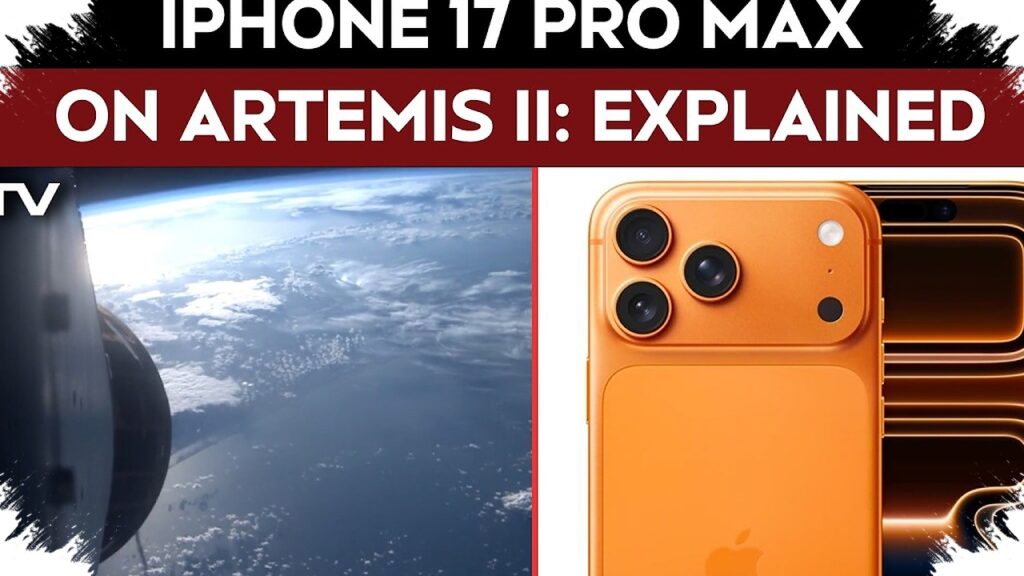
NASA is preparing to let the iPhone 17 Pro Max fly on Artemis II, and that permission says more about spacecraft safety than about the phone itself. The device has cleared a long approval path because NASA treats every item brought into orbit as a potential hazard to the crew and the capsule.
The phone will not support critical mission operations. Instead, astronauts will use it as a tool to document the journey, capture visuals, and record moments from the first crewed Artemis flight around the Moon.
Why NASA Approved the iPhone 17 Pro Max
NASA applies strict rules to every object that goes aboard a crewed mission. According to Tobias Niederwieser, an assistant research professor at BioServe Space Technologies, the approval process is slow because it must protect both the astronauts and the spacecraft.
The evaluation begins with a safety review of the hardware. NASA then looks for risks such as moving parts, fragile materials, or anything that could break in microgravity and become dangerous inside the cabin.
The next step is to design a plan that reduces those risks. NASA only moves forward after it checks whether that plan works in practice, which makes the process more like a layered certification system than a simple equipment check.
What Makes a Smartphone Risky in Space
A phone on Earth can fail without serious consequences, but the same failure in space can create major problems. Broken glass, for example, can float through the cabin and injure astronauts or damage sensitive hardware.
That risk matters even more in a tightly packed spacecraft. A small fragment can interfere with other equipment, limit movement, or become a hazard during critical moments of the mission.
NASA also worries about radiation exposure. Electronics sent beyond Earth must withstand harsher conditions than consumer devices face on the ground, so engineers test them repeatedly to make sure they stay functional.
How Artemis II Changed the Rules
The iPhone 17 Pro Max became eligible after passing the type of review NASA used for Artemis I hardware. That approval matters because it shows the device can survive operation in orbit for an extended period away from Earth.
Apple did not take part in the testing and approval process. The decision came from NASA’s own safety and mission standards, which makes the aircraft-style clearance even more notable for a consumer phone.
The phone’s role is limited, however. It is not part of navigation, communications, or life-support systems, and it will not be allowed to connect to the internet or use Bluetooth while in space.
What the iPhone 17 Pro Max Will Actually Do
The phone’s purpose on Artemis II is practical but secondary. Astronauts will use it to capture the human side of the mission, including cabin life, key milestones, and views that can help document the first crewed Moon-orbiting flight in the Artemis program.
That kind of use makes sense for a device that is high-quality, compact, and equipped with advanced cameras. Even so, NASA keeps it isolated from functions that could interfere with the mission or create unnecessary security and technical risks.
The Approval Process in Simple Terms
- NASA checks whether the device has any obvious safety risks.
- Engineers look for fragile parts, moving components, and materials that could break.
- Teams create safeguards to reduce those risks in space.
- NASA tests whether those safeguards work before granting approval.
This structure helps explain why astronaut-approved consumer technology is so rare. Space hardware must survive vibration, cabin constraints, low gravity, and radiation, all while avoiding any chance of endangering the crew.
Why This Matters Beyond One Phone
The iPhone 17 Pro Max’s selection also reflects how consumer technology is slowly finding a place in modern spaceflight. As missions become longer and more complex, reliable off-the-shelf devices can support documentation, training, and crew experience if they meet strict safety standards.
That does not mean astronauts will soon carry any phone they want into space. It simply shows that a mainstream device can earn a spot on a mission when it clears NASA’s technical and safety barriers, and when its role stays limited to noncritical tasks aboard Artemis II.