


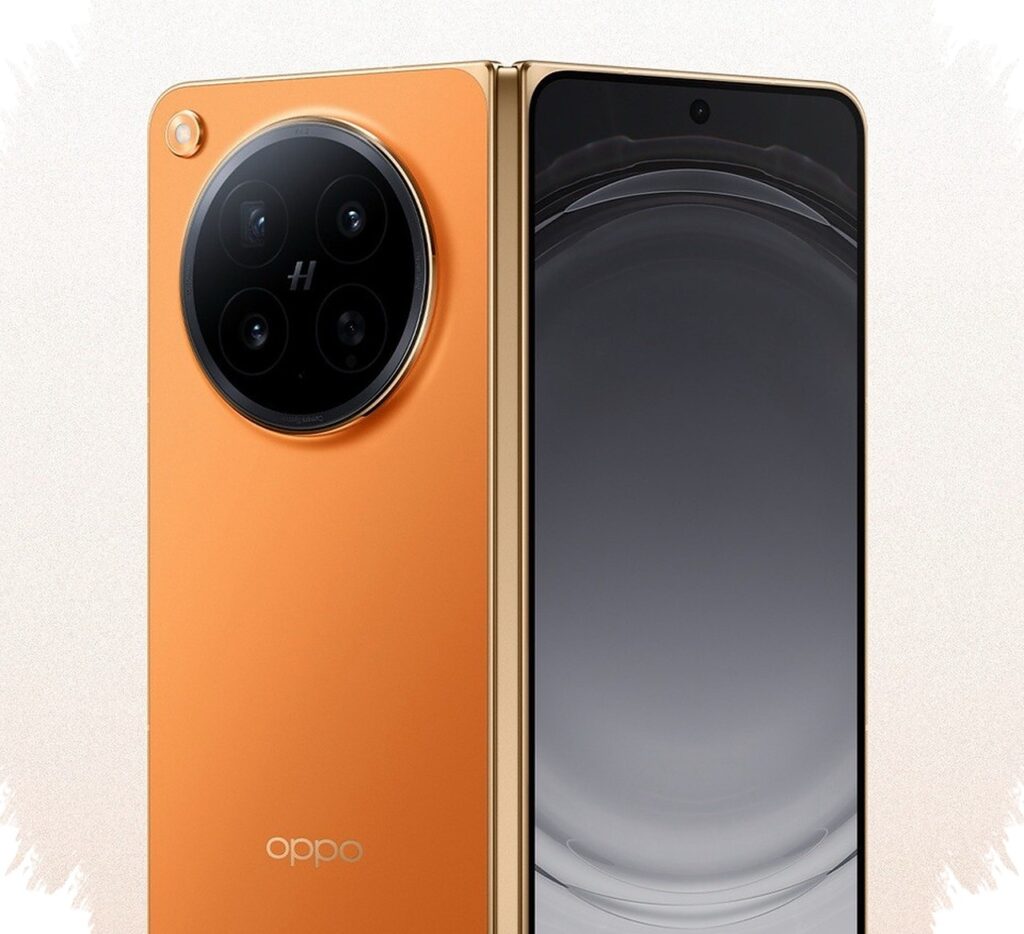
OPPO’s Find N6 has quickly become one of the most talked-about foldables of 2026 because of a simple but ambitious promise: a nearly flat display with almost no visible crease. For many users, that matters more than raw specs, because the crease has long been the biggest annoyance in foldable phones.
The new model matters because it attacks the problem people actually see and feel every day. If OPPO’s claim holds up in real use, the Find N6 could change how buyers judge premium foldables and push the category closer to mainstream acceptance.
A foldable that tries to solve the biggest complaint
OPPO launched the Find N6 globally on 17 March 2026, with availability starting in select Asian markets on 20 March 2026. The brand positions it as a major step forward in foldable design, not just another annual refresh.
The key message is clear: this phone is built to reduce the crease as much as possible. OPPO combines a second-generation Titanium Flexion hinge with Auto-Smoothing Flex Glass and a technology the company calls Zero-Feel Crease.
That approach changes the day-to-day experience in a meaningful way. A smoother display makes reading easier, improves video viewing, and gives multitasking a more tablet-like feel when the device is unfolded.
What OPPO says changed inside the hardware
The Find N6 uses an 8.12-inch LTPO OLED main display with 2K resolution and a 120Hz refresh rate. It also includes a 6.62-inch cover screen with a 120Hz panel, keeping the outer display aligned with flagship expectations.
Under the hood, OPPO pairs the device with Qualcomm’s Snapdragon 8 Elite Gen 5. Buyers can choose 12GB or 16GB of LPDDR5X RAM, while storage options run from 256GB to 1TB using UFS 4.1.
The camera system also looks serious on paper. OPPO lists a 200MP wide camera tuned with Hasselblad, plus a 50MP ultrawide and a 50MP periscope telephoto lens.
Here is a simple breakdown of the main specs:
| Feature | OPPO Find N6 |
|---|---|
| Main display | 8.12-inch LTPO OLED, 2K, 120Hz |
| Cover display | 6.62-inch OLED, 120Hz |
| Chipset | Snapdragon 8 Elite Gen 5 |
| RAM | 12GB / 16GB LPDDR5X |
| Storage | 256GB / 512GB / 1TB UFS 4.1 |
| Main camera | 200MP wide, Hasselblad |
| Other cameras | 50MP ultrawide, 50MP periscope telephoto |
| Battery | 6,000mAh silicon-carbon |
| Charging | 80W wired, 50W wireless |
| OS | Android 16 with ColorOS 16 |
| Thickness | 4.21mm open, 8.93mm closed |
Is the crease really gone?
This is the part that matters most for buyers. Early assessments suggest the phone does not erase the crease in an absolute sense, but it reduces it dramatically.
That distinction is important. In foldable smartphones, “crease-free” often means the line becomes hard to notice in regular use, not that the fold disappears completely at a microscopic level.
So the Find N6 appears to be a technical improvement, not a marketing illusion. The screen still folds, and the physics of foldables still apply, but the visual and tactile disruption is now much smaller than before.
Why this matters more than a spec sheet
A better hinge and flatter screen do not just improve aesthetics. They also affect how people interact with the phone during work, travel, and entertainment.
For example, a closer-to-flat panel helps when reviewing documents, chatting in split-screen mode, or watching long-form video. It also makes the device feel less like a compromise and more like a premium large-screen tool.
OPPO is clearly trying to shift the foldable conversation away from “Why is there a crease?” toward “Can this replace a traditional phone for power users?” That is a much stronger position for any company trying to grow this category.
Where the Find N6 still faces pressure
Despite the hardware progress, the Find N6 is not a perfect product. Price remains one of the biggest barriers, especially outside China.
According to the reference data, pricing starts at roughly $3,000 in China, with the global market around $5,000. Estimated pricing for Indonesia could fall between $1,500 and $2,400 depending on import and retail conditions.
That kind of pricing keeps the Find N6 in elite territory. It also means the phone will mainly attract early adopters, professionals, and foldable enthusiasts rather than mass-market buyers.
There is also the question of durability over time. OPPO says the new hinge design can handle hundreds of thousands of folds, but that will still need to be proven through long-term use, repairs, and real-world wear.
Why the Find N6 is still important for the industry
The Find N6 shows that foldable phones are entering a more mature phase. Brands no longer compete only on screen size or novelty, but on how close they can get to a truly seamless experience.
OPPO’s latest move suggests that foldables are moving from experimental hardware toward practical premium devices. The company has made the crease reduction its core message, and that alone could force rivals to respond with better hinges, stronger materials, and improved display layers.
For users, the appeal is straightforward. They get a large main display, fast charging, a premium camera system, and a battery rated at 6,000mAh, all in a device that tries harder than most to hide the fold.
The remaining question is not whether the Find N6 is better than earlier foldables, because it clearly is. The real question is whether “almost invisible” is enough to convince buyers that a foldable can finally feel complete in everyday use.