


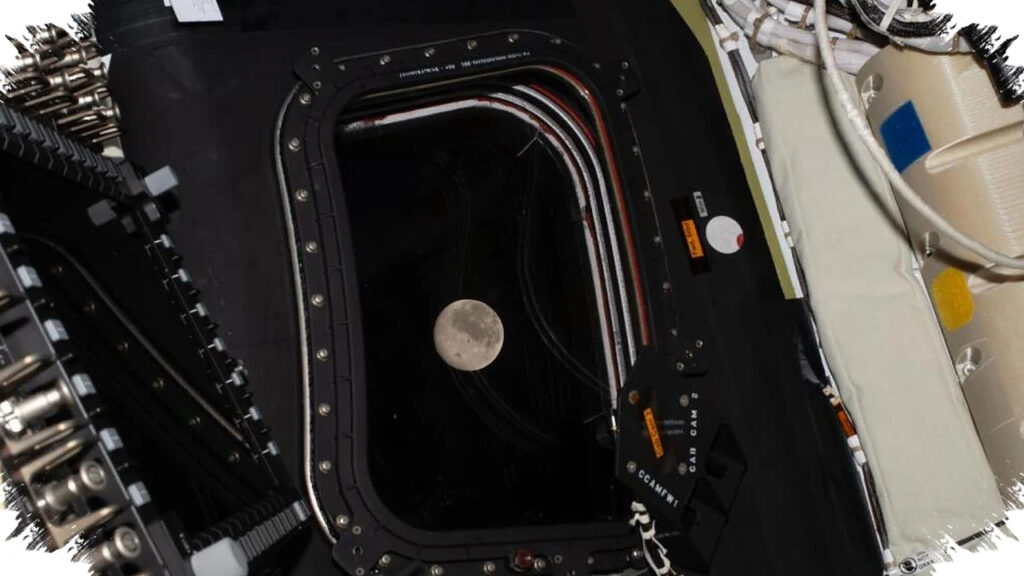
Artemis II has turned into more than a NASA mission. The 10-day lunar flight is now also a global showcase for Apple, after iPhone-captured photos and videos from space drew wide attention across social media and tech circles.
The spacecraft’s journey around the Moon ended with a splashdown near San Diego, but the visuals shared from orbit became one of the most talked-about parts of the mission. Tim Cook and Apple marketing chief Greg Joswiak publicly praised the astronaut crew for capturing Earth and space in striking detail, giving the “Shot on iPhone” label a rare stage far beyond everyday photography.
A consumer device passed NASA’s strict standards
Artemis II carried three NASA astronauts and one astronaut from the Canadian Space Agency, and every item on board had to meet demanding safety rules. The iPhone included in the mission cleared those checks before launch, which shows how tightly NASA controls equipment used in crewed spaceflight.
Its role was limited, however. The device served mainly for photography and video recording, not for core mission operations or scientific control systems.
That distinction matters because it explains why the phone could become a public-facing symbol without interfering with mission-critical work. The iPhone was there as a documentation tool, and the images it produced quickly traveled far beyond the space program.
Why the “Shot on iPhone” message hit differently in space
Apple has long used “Shot on iPhone” to highlight everyday creativity. The campaign usually leans on portraits, travel scenes, concerts, or short films made by users on Earth.
In Artemis II, the context changed completely. The same branding became tied to a historic lunar mission, which gave it a new level of visibility and credibility that no standard commercial ad could match.
Greg Joswiak responded with a playful twist on one of the most famous lines in space history, writing: “One small step for iPhone, one giant leap for space selfies.” The message spread quickly because it merged a familiar cultural reference with a product moment that looked both unexpected and authentic.
Several factors helped the content gain traction:
- The photos and videos were taken during a real deep-space mission.
- Apple executives amplified the coverage through public posts.
- The Earth-and-Moon visuals were naturally suited for viral sharing.
- The imagery gave Apple’s camera marketing a fresh association with exploration and precision.
NASA’s rules created room for Apple’s image boost
NASA does not directly promote commercial products in the way a private company would. That policy protected the agency from turning the mission into an ad, but it did not prevent Apple from benefiting from the attention.
The result was a kind of indirect brand lift. The iPhone appeared in a setting that represented scientific achievement, engineering rigor, and human exploration, which gave Apple credibility that is difficult to manufacture through traditional campaigns.
This matters because the exposure reached a global audience that was already watching the mission closely. In that setting, even a consumer device can become part of a much larger story about what modern technology can do beyond Earth.
What made the images so powerful
The photographs and video did more than show a phone camera in an unusual place. They connected a mainstream consumer product with a mission that symbolizes one of the most ambitious efforts in current space exploration.
That combination created a strong public reaction for a few clear reasons:
- The setting was extraordinary, with Earth and the Moon both in frame.
- The device was familiar, which made the achievement relatable.
- The mission carried scientific weight, which added legitimacy.
- The content arrived in a form that worked well for mobile-first audiences.
The timing also helped. Apple is heading into another major product and software cycle, and any high-profile proof point about camera quality tends to support its broader innovation narrative.
A rare overlap between exploration and branding
Artemis II showed how quickly the line between scientific achievement and brand storytelling can narrow when consumer technology enters space. A device that millions of people use for daily snapshots became part of a mission that captured the attention of the entire tech industry.
For Apple, that means “Shot on iPhone” is no longer limited to Earth-bound lifestyle marketing. In this case, it traveled through orbit, circled the Moon, and returned with a content story that linked product design, astronaut documentation, and public fascination in one unusually powerful moment.