


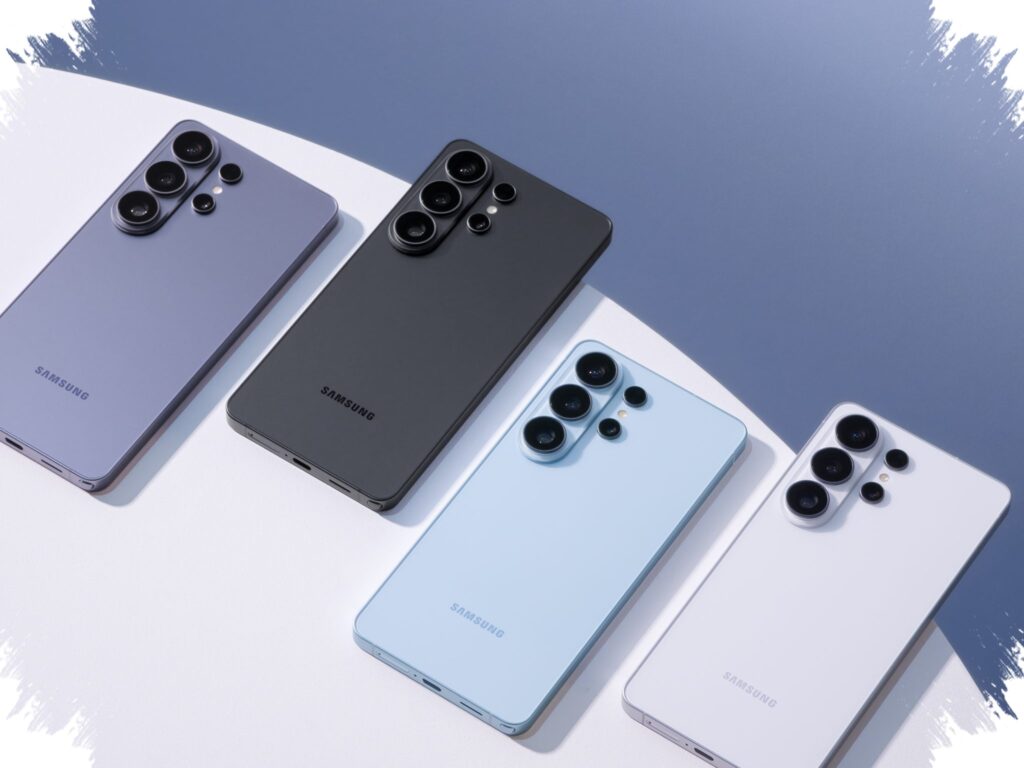
Google’s Quick Share is expanding into more Android phones, bringing a faster and more familiar way to move files between devices. The feature now looks even more important for Samsung users, with the upcoming Galaxy S26 lineup expected to support the AirDrop-like sharing system.
Quick Share lets Android users send photos, videos, documents, and other files directly from one device to another. It uses a peer-to-peer connection, which means the transfer does not go through a server and the shared content is not stored during the process.
Samsung Devices Join the Expansion
Samsung appears to be one of the biggest beneficiaries of this rollout. Reports tied to the wider Quick Share support indicate that the Galaxy S26, Galaxy S26+, and Galaxy S26 Ultra are included in the list of compatible devices.
The support also extends to Samsung’s foldables, including the Galaxy Z Fold and Galaxy Z Flip series. Several Galaxy S25 and Galaxy S24 models are also said to be part of the supported group, giving the feature broader reach across premium Android phones.
This matters because Samsung has one of the largest Android user bases in the world. Wider compatibility increases the chance that Quick Share becomes a daily file-sharing standard for Android users, not just a useful extra feature.
How Quick Share Works Like AirDrop
Quick Share is designed to keep file sharing simple and fast. When the feature is turned on, nearby Android devices can detect each other automatically, making it easier to send content without opening a complicated menu or using cables.
To make the device visible, users can switch the setting to “Everyone.” Once that is enabled, a file can be selected and sent to a nearby device within seconds, as long as both phones are within range and ready to connect.
A simple Quick Share process looks like this:
- Open Quick Share on the Android phone.
- Set visibility to “Everyone.”
- Choose the file to share.
- Select the receiving device from the available list.
- Confirm the transfer on the destination phone.
This flow closely resembles the convenience that made AirDrop one of Apple’s most popular features. The difference is that Quick Share is built for the Android ecosystem, where device variety is much wider and compatibility has often been a challenge.
Privacy and Security Remain Central
Google says the system is built with privacy in mind. According to the company, transferred data does not pass through servers, the shared content is not saved, and no extra data is included with the file transfer.
That approach gives Quick Share an advantage at a time when many users are more careful about how personal data moves between devices. A direct peer-to-peer connection also helps speed up transfers because the phones communicate without a middle layer.
For everyday users, that combination offers convenience and confidence. It makes the feature useful for personal sharing, school work, office documents, and other common mobile tasks that depend on fast file delivery.
Google’s Bigger Push in the Android Ecosystem
The wider arrival of Quick Share also shows how Google is sharpening the Android experience. File sharing has long been one of the clearest areas where Apple’s AirDrop set the benchmark, while Android users often relied on different tools depending on the phone brand.
By expanding Quick Share and bringing it to more Samsung models, Google is pushing Android toward a more unified sharing experience. That could make it easier for users to move between devices without learning a new process each time.
The impact could be especially strong for Galaxy owners using multiple devices. A larger support base across the Galaxy S26 family, foldables, and earlier S-series phones may help Quick Share become one of the most practical features in Android’s everyday toolkit, especially as more users expect instant wireless sharing to work as smoothly as it does on Apple devices.