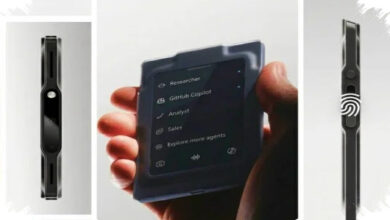
Samsung appears to be working on the biggest flaw of tri-fold phones: awkward proportions. A newly surfaced patent points to a wider concept, reportedly called the Galaxy Z TriFold Wide, that aims to feel more natural in the hand when folded and more useful when opened.
That shift matters because foldable devices often face the same complaint. They can look impressive as tablet-sized screens, but many still feel too narrow or too experimental in daily use, especially in the closed position.
A wider tri-fold could make the format far more practical

The patent suggests Samsung is testing a tri-fold design that is broader than earlier concepts. In folded form, the device would reportedly resemble a regular smartphone more closely, except for a body that is slightly wider than the average handset.
That detail may sound small, but it goes straight to one of the main concerns in foldable design. A phone that feels too slim in the closed state can become uncomfortable for typing, reading, and quick app use.
When opened fully, the wider layout could create a more tablet-like display. That would make it better suited for video playback, split-screen multitasking, and light productivity without forcing the screen into an unusually stretched shape.
Why Samsung may be changing direction
For years, tri-fold concepts have been admired more for engineering ambition than for everyday comfort. A device that folds twice can deliver a larger screen, but the dimensions often become harder to balance in real-world use.
A wider body could solve part of that problem. Instead of treating the tri-fold as a dramatic experiment, Samsung seems to be exploring a form factor that works better in both modes, closed and open.
The logic is simple: if a foldable does not feel good when folded, many users will not treat it as a daily driver. A more balanced shape could help bridge the gap between a conventional phone and a larger productivity device.
What the earlier Samsung tri-fold tells the market
Samsung’s interest in a tri-fold is not new, and the category already carries some history. The company’s first tri-fold effort reportedly launched at around $2,899, but it did not last long in the market because production was difficult.
Even so, demand did not disappear entirely. The reference article notes that limited restocks sold quickly and resale prices climbed much higher, showing that premium buyers still pay attention when Samsung pushes into a new foldable category.
That history helps explain why the wider design concept is important. It suggests Samsung may be trying to move beyond a showcase device and toward something that can scale more realistically.
What the patent does and does not mean
The discovery is based on a patent, so it should not be treated as a confirmed launch plan. In the tech industry, patents often protect ideas that never reach store shelves.
Still, patents are valuable because they reveal where a company is investing attention. In this case, the focus seems to be shifting from making a tri-fold possible to making it genuinely usable.
That is a meaningful distinction. A device can be technically impressive and still fail if the outer screen feels cramped or the folded shape remains awkward for everyday tasks.
Why the wider shape could matter against rivals
Samsung is not alone in exploring new foldable forms. Huawei has already experimented with wider foldable concepts, while Apple is widely expected to enter the category later this year.
Those moves raise the stakes for Samsung. The company cannot rely only on being first or most visible in the foldable market, because rivals are now pushing toward similar premium territory.
A broader tri-fold could also align with other rumored foldable adjustments in Samsung’s lineup. Reports around the Galaxy Z Fold 8 have suggested a move toward a more balanced display ratio, which would point to a wider strategy across the product family.
Key takeaways from the Galaxy Z TriFold Wide concept
- The design appears wider than earlier tri-fold ideas.
- Folded use may feel closer to a normal smartphone experience.
- Opened use could improve video viewing and multitasking.
- The concept responds to complaints about awkward aspect ratios.
- It remains a patent, not a confirmed commercial product.
If Samsung turns this concept into a shipping device, the tri-fold category could become more than a technical showcase. A wider and more natural design would make the format easier to use every day, which is exactly what high-end foldables need as competition intensifies.