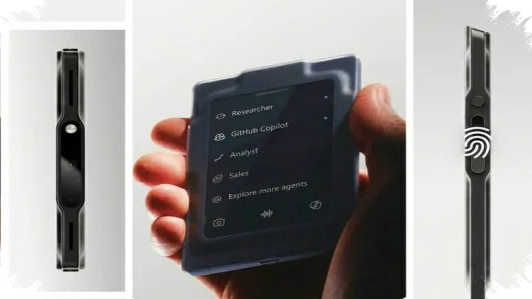
Microsoft is pushing a different idea of mobile computing with Project Solara, an AI-focused Android device that is not meant to behave like a conventional smartphone. Introduced at Computex 2026, the project points to a future where the main interface is built around a digital assistant that can act independently, rather than a home screen crowded with apps.
A device built for task completion, not app hunting
The clearest message behind Project Solara is that Microsoft wants to reduce the role of the traditional app launcher. The company appears to be shifting the center of the experience from navigating software icons to finishing tasks faster and with less friction.
That approach targets a different kind of mobile workflow. Instead of asking users to move through layers of apps, Microsoft is imagining a device that responds more directly to voice, context, and immediate needs.
Targeting frontline and field workers
Project Solara is aimed first at frontline workers and professionals who spend much of their time on the move. Microsoft is positioning the device as a badge-style AI companion for people who need fast access to a digital assistant during everyday work.
The focus makes the project more specialized than a standard consumer phone. It is designed for situations where speed, awareness, and constant connectivity matter more than a familiar smartphone layout.
Android, but through Microsoft’s own platform
Under the surface, the device uses Android through the Microsoft Device Ecosystem Platform. That gives Microsoft flexibility while keeping the ecosystem controlled enough to optimize how the AI agent behaves.
The company also argues that the next generation of AI devices must be built specifically for this purpose and kept lightweight. With AI-generated interfaces, developers would not need to build native apps for every new form factor.
Small screen, always connected
Project Solara is built as a compact badge with a small touchscreen, 5G connectivity, a camera that monitors the surrounding environment, and a Qualcomm processor. Microsoft says it relies on Qualcomm wearable silicon, although the exact chip series has not been disclosed.
The company says the device is capable of handling high-level AI processing both locally and through the cloud. That combination is central to the project’s promise of staying responsive while remaining small.
Features meant for real-world work
The display is intentionally small, supporting quick visual interaction rather than full smartphone-style browsing. The upward-facing camera is there to give the AI awareness of the environment, so the device can better understand what the user is doing.
Security features are also part of the package. Microsoft has included a side fingerprint reader and a physical privacy switch, while connectivity extends to 5G, WiFi, Bluetooth, and GNSS for use while moving between locations.
Internal testing is already underway
Microsoft says hundreds of employees are already testing Project Solara internally. The next step is a pilot rollout for corporate use, with healthcare, retail, hospitality, legal services, and field industries among the sectors named for consideration.
That testing plan suggests Microsoft is treating the device as more than a concept demo. The company seems to be exploring whether an AI-first badge can fit into daily work better than a traditional phone.
The wider race for AI devices
Project Solara arrives as reports say OpenAI is speeding up its own AI smartphone efforts. Qualcomm’s CEO has also said that adoption of agent-based devices is inevitable, which adds more weight to the direction Microsoft is taking.
The competition is no longer limited to browsers or standalone apps. It is starting to move toward devices that stay with the user, understand context, and rely on assistants as the main interface.