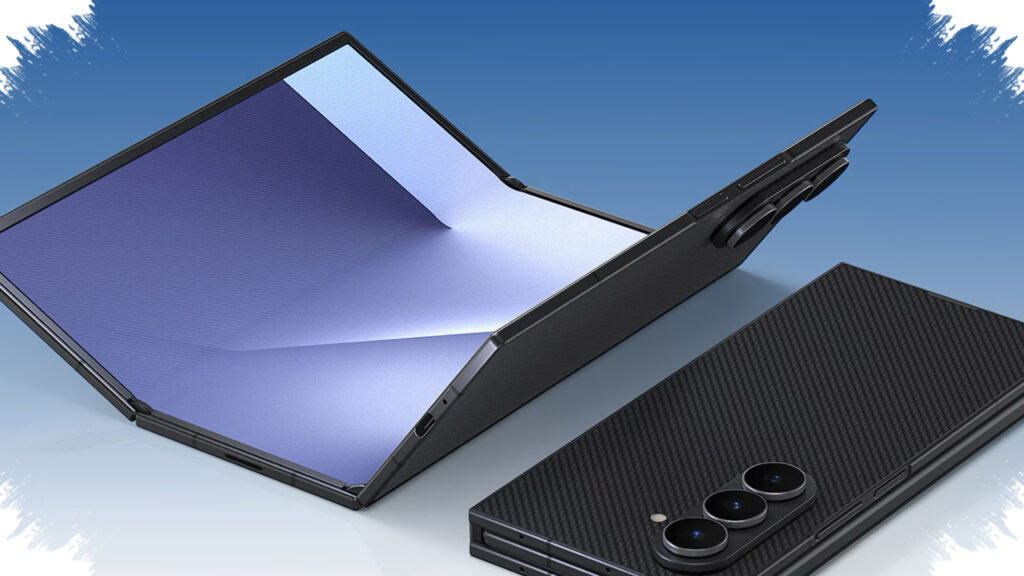
Samsung appears to be preparing a major rethink for its next-generation foldables, with the Galaxy Z TriFold 2’s hinge said to be a key target. Reports suggest the component will be thinner than the first generation while still keeping the strength and durability required for a tri-fold phone.
That detail matters because the hinge is more than a moving part. On a foldable device, it shapes the overall body, affects internal space, and has a direct impact on how comfortable the phone feels in daily use.
A hinge redesign, not a minor tweak
The latest rumor, which points to Samsung’s supply chain, indicates that the company is not limiting its work to a small update. Instead, the Galaxy Z TriFold 2 is said to be getting a hinge solution developed from the ground up.
That approach suggests Samsung is treating the second-generation TriFold as a chance to refine the device at a deeper engineering level. With foldables, even a small reduction in hinge thickness can change the way the entire device is built.
Why thickness still defines the foldable race
In the foldable market, thickness remains one of the most closely watched factors. A slimmer device is usually easier to hold, easier to carry, and closer in feel to a standard smartphone.
That is why hinge design carries such weight. If the hinge takes up less space, Samsung gains more flexibility in arranging internal components, improving layout efficiency, and refining the structure of the chassis.
Samsung has already been working to reduce thickness in its foldables, including the Galaxy Z Fold 7. The new report suggests that effort is still continuing rather than reaching a final stage.
The first TriFold already set a solid base
The rumor is not tied to any major flaw in the first Galaxy Z TriFold. Long-term impressions referenced by the source say the original hinge already feels sturdy and gives a strong sense of durability.
That raises the possibility that Samsung is not fixing a weak point. Instead, the company seems to be building on a foundation that already works well and trying to make it thinner and more refined.
Such a move is common in premium product development. Improvements often focus on saving internal space and sharpening technical details, not only on solving problems.
Possible benefits beyond one device
The hinge work may matter far beyond the Galaxy Z TriFold 2 itself. The same rumor says the new engineering could be reused across other Samsung foldables, including the Galaxy Z Fold 8 and Galaxy Z Flip 8.
There is also a possibility that the design could later appear in the Fold Wide. If that happens, the TriFold 2 would become more than a standalone product and could serve as a technical base for the wider Galaxy Z family.
This would also make sense from a design efficiency standpoint. A more mature and less complex hinge could help Samsung reorganize internal space across multiple form factors.
A larger role for a limited product line
The first Galaxy Z TriFold reportedly had very limited availability and did not receive a broad launch. As a result, its presence in global markets remained small despite the strong interest in tri-fold devices.
A wider release for the Galaxy Z TriFold 2 could change that picture. If Samsung decides to expand distribution, the device may carry both a more polished hinge and a broader market reach.
For consumers, that would signal a longer-term strategy. Samsung appears to view foldable development as a connected system, where one product can help shape the next generation of the entire lineup.
The reported hinge redesign points to that direction clearly. If Samsung succeeds in making the TriFold 2 thinner without weakening the structure, the result could influence how its premium foldables are built well beyond a single model.