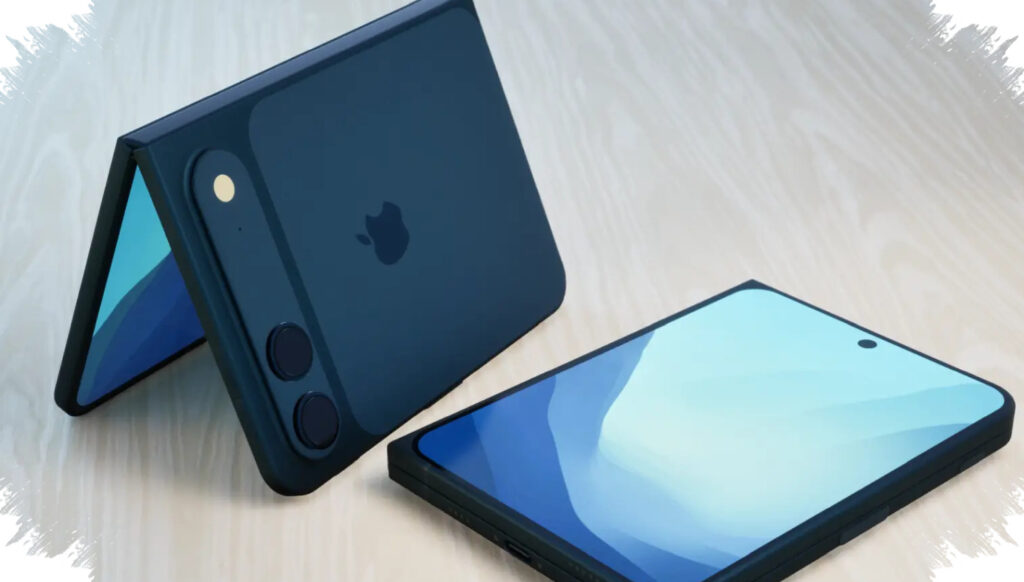
Apple’s first foldable iPhone is still being discussed as a September launch candidate, even as supply chain chatter continues to question whether the device could slip behind schedule. Bloomberg’s reporting suggests the company remains on track to introduce the iPhone Fold during Apple’s traditional fall window, alongside the iPhone 18 Pro and iPhone 18 Pro Max.
That view stands in contrast to earlier concern raised by Nikkei Asia, which pointed to issues during trial production. But according to sources cited by Mark Gurman, the foldable device could still arrive at the same time as Apple’s non-folding models, or at the very least “very soon after.”
Why the delay talk has not settled the issue
The talk of a postponement has gained traction mainly because foldable phones are far more complex to build than standard smartphones. Gurman noted that this complexity can limit early supply, but it does not automatically mean the launch date will move substantially.
Production timing is still not locked in, either. Gurman said the schedule remains open because full-scale manufacturing has not yet started, which leaves room for changes before Apple commits to mass production.
That matters because Apple has long used a predictable launch pattern for its major products. A September debut would place the iPhone Fold inside that familiar rhythm, allowing it to appear immediately beside the company’s core iPhone lineup rather than as a separate later release.
Apple’s foldable approach appears closely watched
Beyond timing, the most attention-grabbing part of the iPhone Fold story is Apple’s approach to the foldable display itself. Gurman believes the device will compete directly with existing foldables, but its screen is expected to bring notable improvements.
One of the biggest points of interest is Apple’s effort to reduce the visible crease commonly seen on folding displays. The crease is said to be cut down so much that the phone is described as being nearly “crease-free.”
Apple is also believed to have taken durability and display quality into account, which are two of the most sensitive issues in the foldable category. If those expectations hold true, the iPhone Fold could enter the market with a more refined feel than many of its rivals.
Display material remains a central challenge
Foldable screens require a flexibility that ordinary glass cannot provide. For that reason, devices in this category cannot use the same display glass found in non-folding smartphones.
In the broader industry, plastic panels were widely used during the early phase of foldable phones. Over time, many manufacturers shifted toward Ultra-Thin Glass, or UTG, a material that can bend without breaking easily while still offering a glass-like experience.
Apple is believed to be heading in a similar direction. However, there is still no detailed confirmation of whether the company’s display solution will prove more durable than those used by competitors, since the available information mainly points to Apple trying to match existing standards and improve where foldables are often criticized most.
September still looks like the most plausible window
Even with the latest reporting easing fears of a major delay, the iPhone Fold launch date is not finalized. Gurman acknowledged that the device is still roughly six months away and that many variables could change before manufacturing begins in earnest.
Still, the combination of Bloomberg’s report and the absence of strong signs of a substantial postponement keeps September looking like the most reasonable expectation. If Apple follows through, the company will have to show that its first foldable can balance a new form factor with the durability and polish usually associated with its products.
For now, the market is watching two points at once: whether the iPhone Fold arrives in Apple’s usual September slot, and whether its design can deliver a clearer screen, better durability, and a less visible crease than the foldables already in the market.