


The global smartphone market opened the year under pressure as tighter memory supply and rising component costs pushed shipments downward. IDC reported that worldwide smartphone shipments reached 289.7 million units in the first quarter and fell 4.1% from the same period a year earlier.
The decline also ended a stretch of growth that had lasted for 10 straight quarters since mid-2023. Instead of expanding, the industry is now facing a more difficult environment in which manufacturers must balance demand, production costs, and pricing decisions at the same time.
Memory constraints are reshaping vendor behavior
IDC Senior Research Director for Worldwide Consumer Devices, Nabila Popal, said limited memory availability has forced manufacturers to reduce shipments. At the same time, the higher price of memory has lifted production costs, prompting several major brands to raise their retail prices.
That shift is being felt most strongly in developing markets, where consumers are more sensitive to price changes. Nabila said that in some emerging markets, prices have climbed by as much as 40% to 50%, according to IDC’s official statement cited on Thursday.
Entry-level phones face the sharpest pressure
IDC sees the most severe impact in the affordable segment, especially devices priced below US$200. Buyers in that category are more likely to delay purchases or scale back spending when prices rise, making the segment more vulnerable than higher-end products.
By contrast, developed markets have held up better because financing schemes, trade-in programs, and stronger demand for premium devices have helped stabilize purchases. In those markets, the pricing shock has been easier to absorb than in regions where low-cost phones dominate sales.
Major brands still grew while Chinese vendors weakened
Even as the overall market contracted, Samsung and Apple posted annual growth. Samsung remained the market leader with 62.8 million shipments, up 3.6% from 60.6 million units a year earlier.
Apple followed with 61.1 million units, increasing 3.3% from 59.1 million. IDC said both companies remained relatively resilient because demand for mid-to-high-end and premium models continued to support their business.
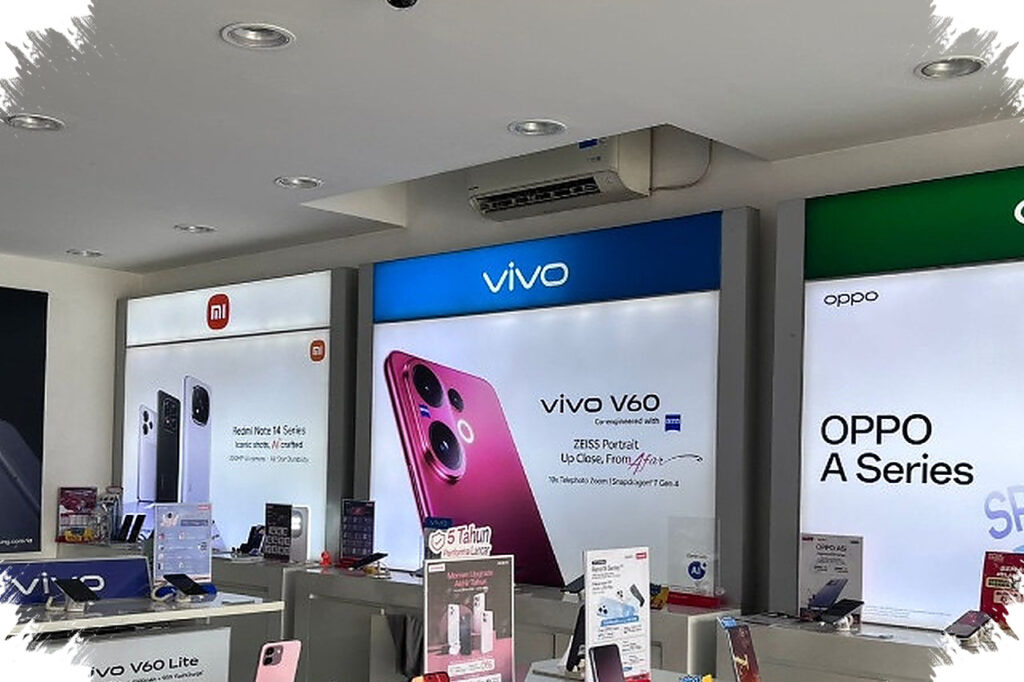
The picture was less favorable for several Chinese vendors. Xiaomi shipped 33.8 million units, down 19.1% from 41.8 million. OPPO recorded 30.7 million units, a decrease of 9.9% from 34.1 million, while vivo slipped to 21.2 million units from 22.7 million, marking a 6.8% decline.
Cost controls are becoming part of the strategy
To protect margins, many manufacturers are tightening spending. IDC said companies are cutting marketing activity, reducing distribution support, and lowering specifications on certain product lines.
These measures can ease cost pressure, but they also limit room for growth. With component prices, energy costs, and logistics expenses all moving higher, vendors are being forced to adjust operations more aggressively than before.
IDC also noted that conflict in the Middle East has added another layer of uncertainty for global supply chains. That extra strain comes on top of the memory shortage and higher component prices already weighing on the smartphone industry.
Premiumization continues despite the slowdown
Although shipment volumes softened, IDC said premiumization is still advancing. Average selling prices are expected to keep rising as vendors shift more of their portfolios toward higher-end devices.
Associate Director for Consumer Devices IDC, Kiranjeet Kaur, described the quarter as a difficult one for smartphone players across the board. She said vendors now need to protect profitability while still trying to preserve market stability at home and expand beyond their domestic markets.
Kiranjeet also pointed to the pressure on manufacturers to keep portfolios optimized while responding to a market that is becoming more selective. In IDC’s view, the coming quarters will test how well brands can manage tighter memory supply, defend margins, and maintain demand in the most price-sensitive segments.
Source: teknologi.bisnis.com