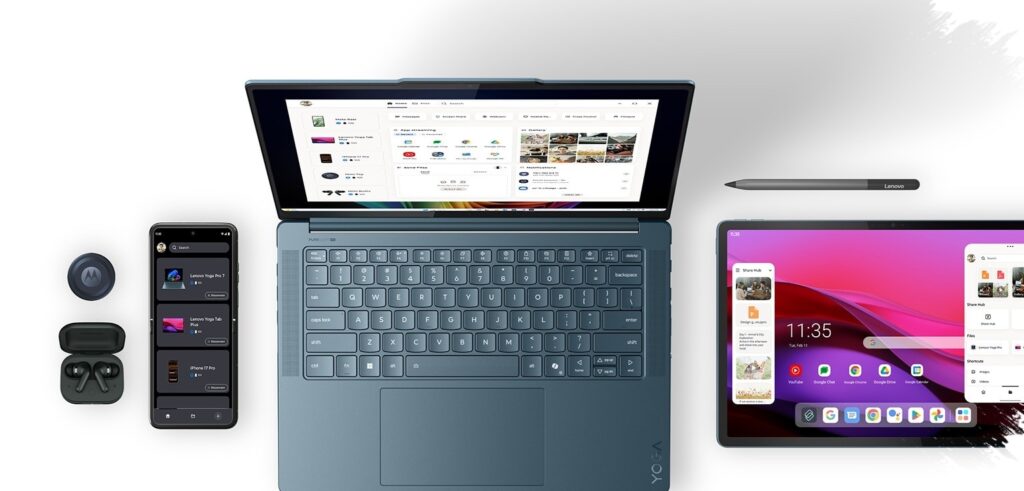
Lenovo is preparing a major showcase in China on 19 May, and the lineup is expected to span gaming smartphones, foldables, tablets, and AI-focused laptops. What stands out most is not just the number of devices, but the way Lenovo is framing them as part of a single AI-driven ecosystem.
Under the Tianxi AI theme and the idea of an “All in One Multi Terminal” experience, Lenovo appears to be pushing a more connected approach across product categories. The message is clear: smartphones, tablets, and laptops are no longer meant to function as separate tools, but as devices that work together for work, entertainment, and mobility.
AI as the common thread
Lenovo’s direction suggests a broader shift in how smart devices are being positioned. Instead of focusing only on higher specifications, the company is placing more weight on continuity between devices and the role of AI in daily use.
The multi-terminal concept indicates that Lenovo wants users to move between a phone, tablet, and laptop without feeling a break in the experience. That approach also shows how central AI has become in the company’s current product strategy, moving it beyond the status of a simple added feature.
Gaming phone enters the spotlight
Among the most attention-grabbing devices in the lineup is the Legion Y70, which is expected to target mobile gamers. The phone is reportedly being prepared with a major performance upgrade, along with a better cooling system and gaming-specific features.
Those additions matter because the mobile gaming market remains highly competitive. In that environment, sustained performance often matters just as much as raw speed, and thermal control can shape the overall user experience during long sessions.
Premium foldable with flagship hardware
Another device set to appear is the Moto Razr Fold, which sits in Lenovo’s premium segment. The large-screen foldable was previously shown at MWC 2026, and its appearance at the 19 May event would continue Lenovo’s premium-device strategy.
The Moto Razr Fold is said to come with a Snapdragon 8 Gen 5 chipset, 16GB of RAM, and a 6000 mAh battery. Charging support includes 80W wired fast charging and 50W wireless charging, while the expected price is around 1,999 euro or about Rp37.8 juta.
Lightweight AI laptop for portability
On the productivity side, Lenovo is preparing the YOGA Air 14 Ultra. This AI laptop is notable for weighing less than 1 kilogram, making it a strong fit for users who prioritize portability.
Lenovo is also highlighting its premium design language and AI-based features on this model. That combination suggests the company still sees strong demand for thin laptops that can balance practicality with a more upscale feel.
Tablets and higher-performance laptops complete the lineup
The event will also feature the Legion Y900 tablet. It is expected to combine gaming and productivity use cases in one device, which could appeal to users who want flexibility without relying on multiple separate products.
Lenovo is also preparing the Legion Y7000X laptop for users who need heavier computing power. This model is aimed at gamers and content creators who require stronger CPU and GPU performance for demanding tasks, not just everyday use.
A broader ecosystem strategy
Taken together, the planned devices show that Lenovo is building around connected experiences rather than isolated product launches. Gaming, productivity, mobility, and AI are being linked through a lineup that is meant to complement itself across categories.
If the devices arrive as expected, Lenovo could draw strong attention by presenting a portfolio that feels more unified. The focus on a gaming phone, a foldable premium handset, a tablet, and AI laptops suggests a clear attempt to serve different types of users while keeping them inside one ecosystem.