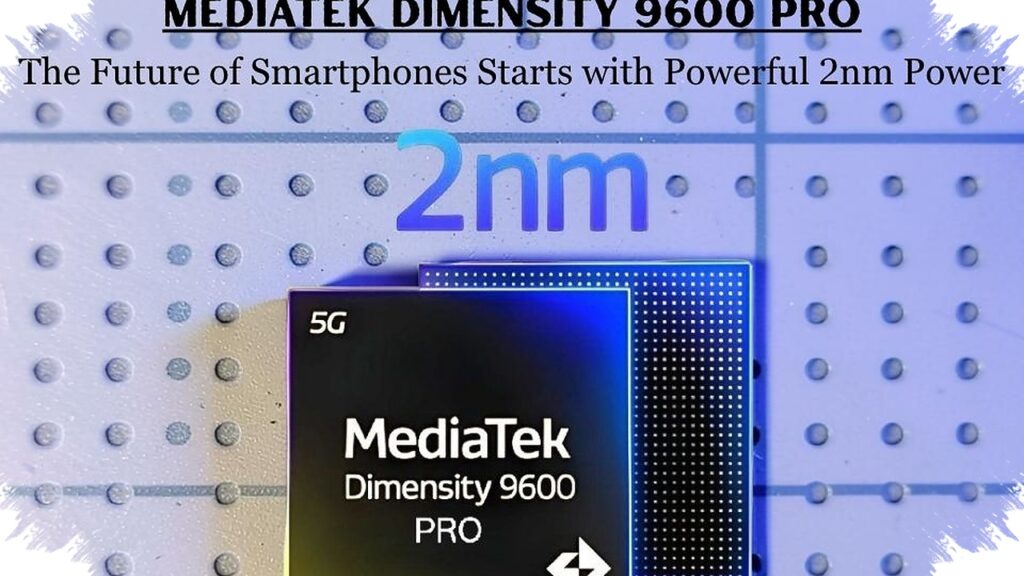
MediaTek’s next flagship chipset is already drawing attention after leaks pointed to a Dimensity 9600 Pro sample reaching an ambitious 5GHz target. Early benchmark chatter is giving the chip an unusually strong first impression, even though the figures still come from an engineering sample rather than a retail device.
The most discussed detail is its Geekbench 6 result. Reports from Digital Chat Station say the Dimensity 9600 Pro posted around 4,200 to 4,300 points in single-core performance, while multi-core scores landed in the 12,000 to 12,500 range.
Those numbers matter because they suggest a clear step forward from the previous generation. In the same leak, the earlier chip was said to score around 4,000 in single-core tests and about 11,000 in multi-core, which indicates that MediaTek is pushing for a more aggressive performance ceiling.
A stronger CPU direction
The leak also points to an all-big-core design, which places performance ahead of smaller efficiency-focused cores. The configuration is said to follow a 2+3+3 layout, built around two main super cores and several high-performance cores.
That kind of setup usually signals a focus on heavy workloads rather than conservative power tuning. Gaming, demanding productivity apps, and extreme multitasking are the most likely areas where this architecture could make an impact if the final product keeps the same direction.
MediaTek’s approach also suggests it wants to widen its performance gap in the premium segment. Instead of relying on a more balanced mobile layout, the company appears to be leaning into raw horsepower for its next top-tier platform.
Efficiency still remains a priority
A higher clock target often raises questions about heat and power consumption, but the leak says MediaTek may be using TSMC N2P manufacturing to help manage that challenge. The same report claims the process could improve power savings by around 25% to 30%.
That detail is important because a 5GHz-class chip needs more than speed to be practical in a smartphone. Without stronger power control, the gains seen in benchmark tests can be difficult to hold during real-world use.
This is why the engineering sample scores should be treated as an early signal rather than a final promise. They show the likely direction of development, but not the complete thermal or battery behavior that retail phones will deliver.
Graphics and market competition
On the graphics side, MediaTek is said to be relying on Arm “Magni” as the GPU solution. That points to a chipset designed not only for fast CPU performance, but also for high-end visual workloads in flagship phones.
The competitive context is equally notable. Snapdragon 8 Elite Gen 6 Pro is described as a direct rival, with its own performance uplift reportedly under 20% and a similar target clock near 5GHz.
That places the Dimensity 9600 Pro in a tight race at the top of the mobile market. The competition is no longer just about benchmark numbers, but also about how well each chip balances speed, energy use, and sustained performance under pressure.
Devices linked to the first launch wave
Leak reports also mention that Vivo X500 series devices could be among the first to use the chip. Oppo Find X10 is also said to be in the early group of devices associated with Dimensity 9600 Pro.
If those launch links prove accurate, the chipset could become one of the most closely watched entries in the premium smartphone segment. For now, the most important question is whether the engineering sample’s benchmark strength can survive the move into commercial hardware without losing stability.