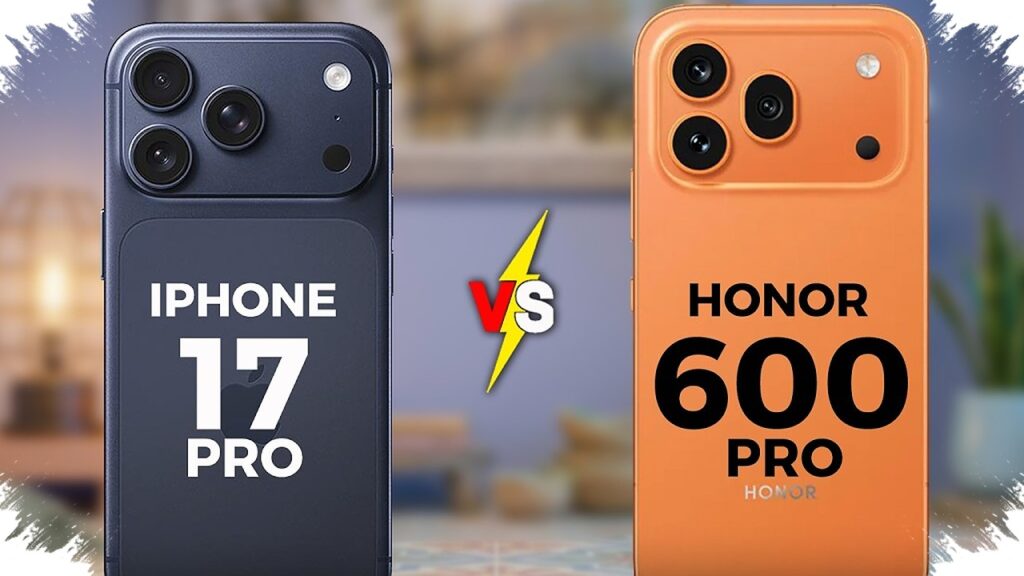
Honor is preparing to expand the 600 series to the global market on 23 April 2026, and the line is already drawing attention for more than just its specifications. The biggest talking point so far is the rear design, which has been widely described as echoing the look of the iPhone 17 Pro Max, especially around the camera layout and color treatment.
That comparison has helped put the Honor 600 and Honor 600 Pro in the spotlight ahead of launch. The company also added fuel to the discussion by promoting the Honor 600 Pro in an unusually bold way, making the device a talking point before it even reaches the market.
A design that invites comparison
The rear panel is the first thing that stands out on the Honor 600 series. Honor uses a long horizontal camera module, while the lens arrangement inside it follows a zig-zag pattern that makes the device look distinct from many other phones in its class.
According to GizmoChina, Honor even showcased the Honor 600 Pro in front of the Apple Store in Hong Kong, on Canton Road. The device appeared on a promotional setup mounted on a truck, complete with messaging that carried a teasing tone and seemed to compare its design and colors with Apple’s latest iPhone.
That promotional approach suggests Honor is trying to build a stronger visual identity for the series. The orange color shown in the campaign also added to the conversation, since it was said to resemble one of the color options seen on the iPhone 17 Pro.
Two models, two performance levels
While the exterior design creates a unified look, Honor separates the two models clearly on the inside. The standard Honor 600 is powered by the Snapdragon 7 Gen 4, placing it in the upper mid-range category with a focus on daily use, media consumption, and lighter gaming.
The Honor 600 Pro steps up to the Snapdragon 8 Elite. That chipset gives the Pro model much more headroom for demanding gaming, heavy multitasking, and AI-related processing, making it the more ambitious option in the series.
This split means the lineup is aimed at different types of users rather than offering only one performance profile. One model is tuned for broad efficiency, while the other targets buyers who want stronger overall power.
Camera setup with a clear advantage for the Pro
Both phones come with a 200 MP main camera and a 12 MP ultrawide camera on the back. On the front, Honor uses a 50 MP selfie camera on each model, signaling that the company wants the series to compete strongly in imaging across both photo and video use.
The Honor 600 Pro, however, adds a 50 MP periscope telephoto camera with up to 3.5x optical zoom. That extra lens gives the Pro model a more versatile camera system, especially for capturing distant subjects with more detail.
Display, battery, and durability
The Honor 600 series uses a 6.5-inch OLED display with 1.5K resolution and a 120Hz refresh rate. That combination should deliver smooth scrolling, responsive navigation, and a comfortable viewing experience for entertainment and everyday tasks.
Power comes from a 7,000 mAh battery on both models. The phones support 80W fast charging and 27W reverse charging, while the Honor 600 Pro also adds 50W wireless charging.
Durability is another strong point for the lineup. Both devices carry IP68, IP69, and IP69K certification, which means they are designed to handle dust, water, and even high-pressure exposure.
Color choices and launch positioning
Honor plans to offer the series in several color options, including Golden White, Black, and Orange. Those choices, combined with the bold rear design and the company’s promotional strategy, help the lineup stand out before its global debut.
With the Honor 600 and Honor 600 Pro set to arrive on 23 April 2026, the series is being positioned as a new contender in the upper segment. The combination of distinctive styling, large battery capacity, strong camera hardware, and high-end protection ratings ensures the lineup enters the market with plenty of attention already built in.