


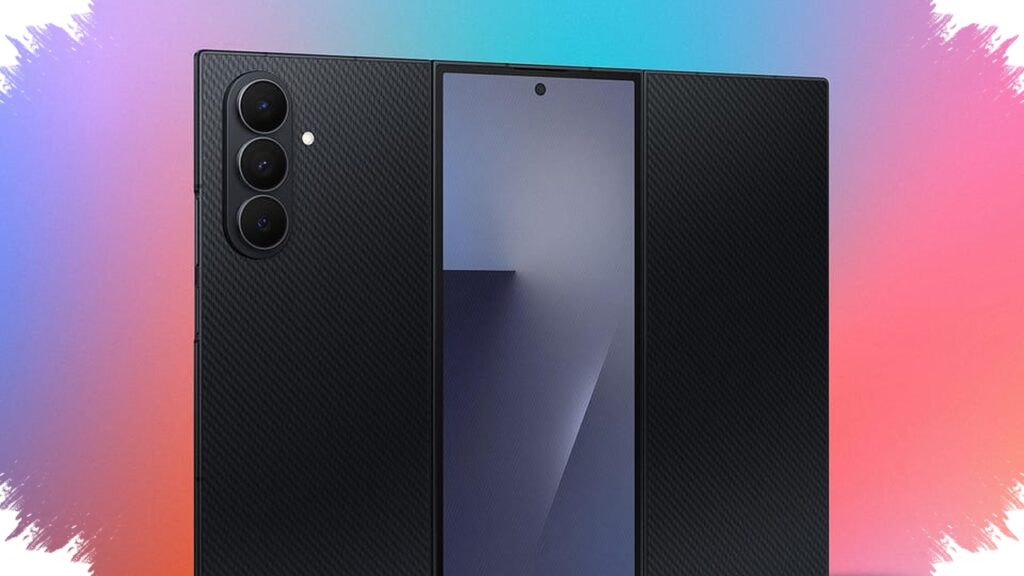
Samsung’s latest patent suggests the company is looking for a more practical path in the tri-fold category. The idea behind the Galaxy Z Tri-Fold Wide is not simply to make a device that folds in more places, but to make one that feels less awkward in daily use.
That focus matters because tri-fold phones have often drawn criticism for being too thick, too narrow, or awkward to handle. Samsung’s “wide” direction appears aimed at fixing those concerns by making the device feel more balanced both when folded and when fully opened.
A wider approach to a persistent foldable problem
One of the biggest challenges in tri-fold design is usability in the closed state. Many concepts have looked impressive on paper, yet their shape has not always felt natural for regular smartphone tasks.
The Galaxy Z Tri-Fold Wide is meant to address that gap by keeping a more phone-like feel when folded. At the same time, the added screen space is intended to give users more room for typing, reading, and switching between apps without the device feeling awkward in hand.
When the device is opened fully, the concept shifts toward a larger display experience that is closer to a tablet. That makes the format more suitable for watching video, handling multiple apps at once, or working with a broader visual canvas.
Samsung appears to be prioritizing function over spectacle
The patent points to a design direction that values balance over eye-catching novelty. Rather than chasing an extreme form factor that exists mainly to attract attention, Samsung seems to be exploring how a tri-fold can fit into normal routines.
That shift is important because the foldable market has matured. Users now look beyond the folding mechanism itself and expect a device that remains comfortable for messaging, document handling, and entertainment.
A wider layout could help Samsung answer those expectations. If the design reaches a practical level, tri-fold devices may move closer to becoming useful everyday tools instead of remaining experimental showcase products.
Competition is pushing the category forward
Samsung is not developing this concept in isolation. Pressure from rivals is also shaping how the company approaches foldables, especially as competitors explore different wide-format designs.
Huawei has already tested several wide foldable formats and has drawn attention in the Asian market. Apple is also widely expected to enter the foldable segment, adding more urgency for Samsung to strengthen its position.
That competitive backdrop is changing what matters in the category. The market is no longer impressed only by the ability to fold; it now wants devices that offer clear practical advantages over conventional smartphones.
Pricing and production remain the hard part
Even with strong interest, tri-fold devices still face serious barriers. Earlier tri-fold models were reportedly priced at $2,899, placing them firmly in the premium range and limiting broader access.
That price level shows how difficult the technology remains to produce at scale. Still, demand has been high enough that secondary market stock reportedly sold out quickly, which suggests the concept continues to attract attention despite its cost.
For Samsung, the patent may also reflect an effort to make the design more efficient. If the structure can be aligned more closely with existing product lines, production costs for the display and supporting components could become easier to manage.
What the patent signals for Samsung’s foldable roadmap
The Galaxy Z Tri-Fold Wide patent suggests a more mature stage in Samsung’s foldable thinking. The emphasis is moving toward comfort, efficiency, and an experience that makes sense for everyday use.
Challenges around hinge design, thickness, and mass production are still central, and those issues will likely determine whether the concept becomes more than a patent. Even so, the wider tri-fold direction shows how foldables may continue moving toward designs that feel less experimental and more naturally useful.