


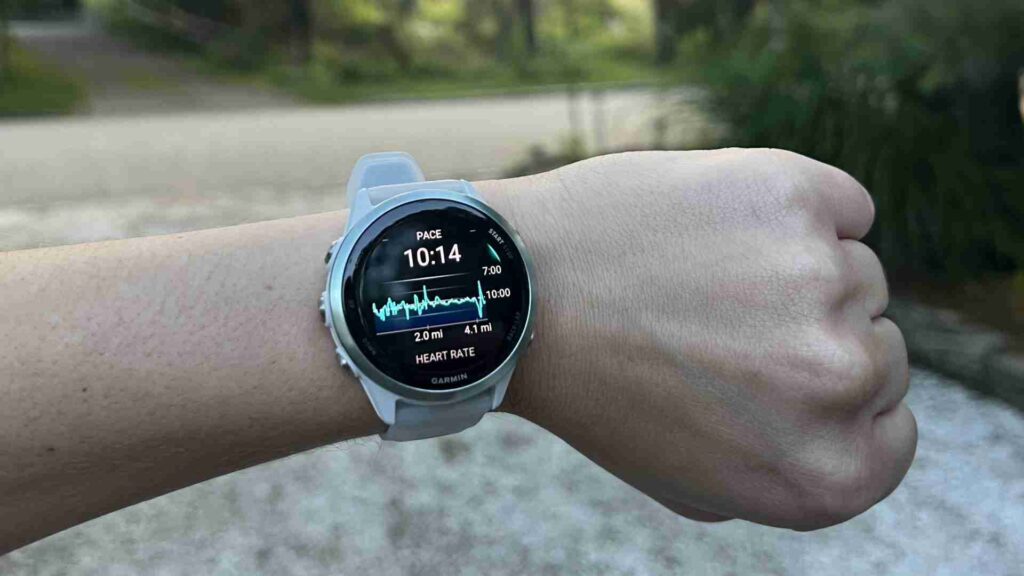
A Garmin Fenix that has long been known for its tightly controlled ecosystem has now been pushed beyond its official limits. A programmer named Sam Dumont has managed to make the watch read running efficiency metrics from an unofficial external device.
The result matters because data such as ground contact time and vertical oscillation usually appear only through official Garmin accessories. In this case, the Fenix displays those metrics as if they came from a genuine sensor, even though the signal is being sent from a low-cost development board.
How the workaround was built
Dumont used an ESP32 and an nRF52832 chip to send Bluetooth Low Energy packets that imitate the format of Garmin running sensors. When the watch receives the signal, it shows the same metrics it would normally display with an official accessory connected.
What makes the project notable is not only the outcome, but also the method behind it. Dumont used Claude to help trace a Bluetooth Low Energy protocol that was previously closed.
He said he did not have deep reverse engineering experience, but his long-term use of the Garmin platform since 2020 gave him enough context to steer the exploration with AI support. In posts on Reddit and his personal blog, Dumont explained that Claude often acted like a technical partner when he hit a dead end.
Still a proof of concept
The project remains a proof of concept rather than a finished product. The sample data used so far is also static, not live measurement data from a real sensor.
Even with those limits, the demonstration shows that Garmin’s closed ecosystem is not completely sealed. The Fenix can still be made to interpret incoming data as if it came from an official accessory.
Dumont has already shared the project code on GitHub along with development documentation. For the maker community, that opens the door to building custom running sensors that could work with Garmin watches.
The possibility is especially relevant for runners who want to monitor their technique without buying an official foot pod or another expensive accessory. If the concept is developed further, locally made devices could offer access to running efficiency data at a much lower cost.
The remaining questions are practical ones: stability, accuracy, and ease of use still need to be proven. For now, the key takeaway is clear: independent development has found a new way into a system that once looked tightly closed.