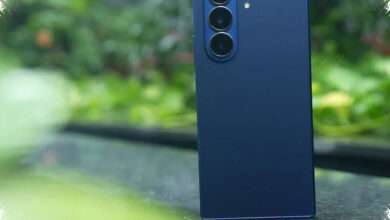
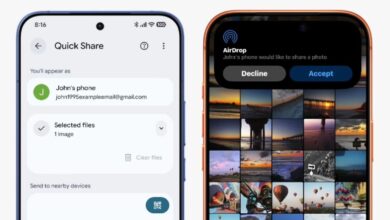
The premium foldable race is shaping up around two different philosophies, with iPhone Fold and Galaxy Z Fold 8 expected to target the same high-end audience from opposite directions. One is framed as a new entrant that could set a fresh benchmark, while the other leans on years of foldable experience to refine an already familiar formula.
That contrast is what makes the matchup so closely watched. If the current rumors hold, the market could see Apple arrive early in the spotlight while Samsung answers with a more mature device built on its established Galaxy Z Fold foundation.
A launch window that could shift attention


The timing alone may help Apple grab early headlines. iPhone Fold is said to be shown first at WWDC on 8 June 2026, while Galaxy Z Fold 8 is expected to arrive in July 2026.
That gap gives Apple a chance to shape the conversation before Samsung’s next foldable reaches the stage. Even so, Samsung still benefits from being the company that has spent longer building user expectations around book-style foldables.
Samsung’s path: refinement over reinvention
Galaxy Z Fold 8 is rumored to stay close to the format that existing Fold users already know. The device is described as keeping the book-like design, while introducing a main display of 8 inches and an outer screen of 6.5 inches.
Both AMOLED panels are expected to support a 120Hz refresh rate. Samsung is also said to reduce the thickness to around 4.5 mm when unfolded, while aiming for a screen with minimal creasing and a carbon-fiber back panel to keep the phone light but durable.
That approach suggests a focus on polishing the experience rather than changing the category. For Samsung, the advantage lies in maturity, since the company already has the ecosystem and user familiarity that come from years of foldable development.
Apple’s angle: a wider canvas for content and multitasking
Apple’s foldable strategy appears to lean toward comfort and practicality. iPhone Fold is rumored to use a 4:3 screen ratio, a wider layout that is expected to be more convenient for video viewing and multitasking.
The format is also said to reduce black bars when watching content. Apple is reportedly testing several hinge designs as well, with the goal of minimizing the visible crease in the middle of the display.
That emphasis makes the device sound less like a direct imitation of existing foldables and more like an attempt to optimize how a foldable should feel in daily use. Durability and visual comfort seem to sit at the center of that development direction.
Battery capacity becomes a key dividing line
Power requirements are another area where the two phones are expected to diverge. Galaxy Z Fold 8 is rumored to carry a 5,000mAh battery and support 45W fast charging, with silicon carbon battery technology helping keep the body slim.
iPhone Fold is said to feature a 5,500mAh battery, which would be a notable size for Apple and a signal that foldable usage demands more endurance than a standard iPhone. For devices built around large displays and multitasking, battery life could become one of the clearest deciding factors.
Camera ambitions look stronger on Samsung’s side
If the camera rumors prove accurate, Galaxy Z Fold 8 may enter the contest with the bolder hardware. Samsung is said to be preparing a 200MP main camera with OIS, a 50MP ultra wide camera, and a 10MP telephoto lens.
The device is also expected to support 4K recording on all lenses. That would make the Fold 8 appear more aggressive not only for everyday photography, but also for users who want a foldable that can handle content creation.
Details on iPhone Fold’s camera system remain limited. Still, reports suggest Apple is working on major upgrades so the device can stand as a serious premium foldable from the start.
Pricing expectations place both in elite territory
Galaxy Z Fold 8 is predicted to start at Rp160 juta to Rp175 juta, although that figure is considered too low for the Fold line. Market estimates for Indonesia are seen as more realistic at around the Rp30 jutaan range or higher, based on previous generations.
The top configuration is rumored to deliver 16GB of RAM and 1TB of storage. For iPhone Fold, no price has leaked yet, but its positioning is almost certain to sit at an extremely premium level.
With one side pushing a more polished version of an established design and the other introducing a new interpretation of foldable usability, the rivalry between iPhone Fold and Galaxy Z Fold 8 is set to become one of the most important contests in the premium foldable segment.