


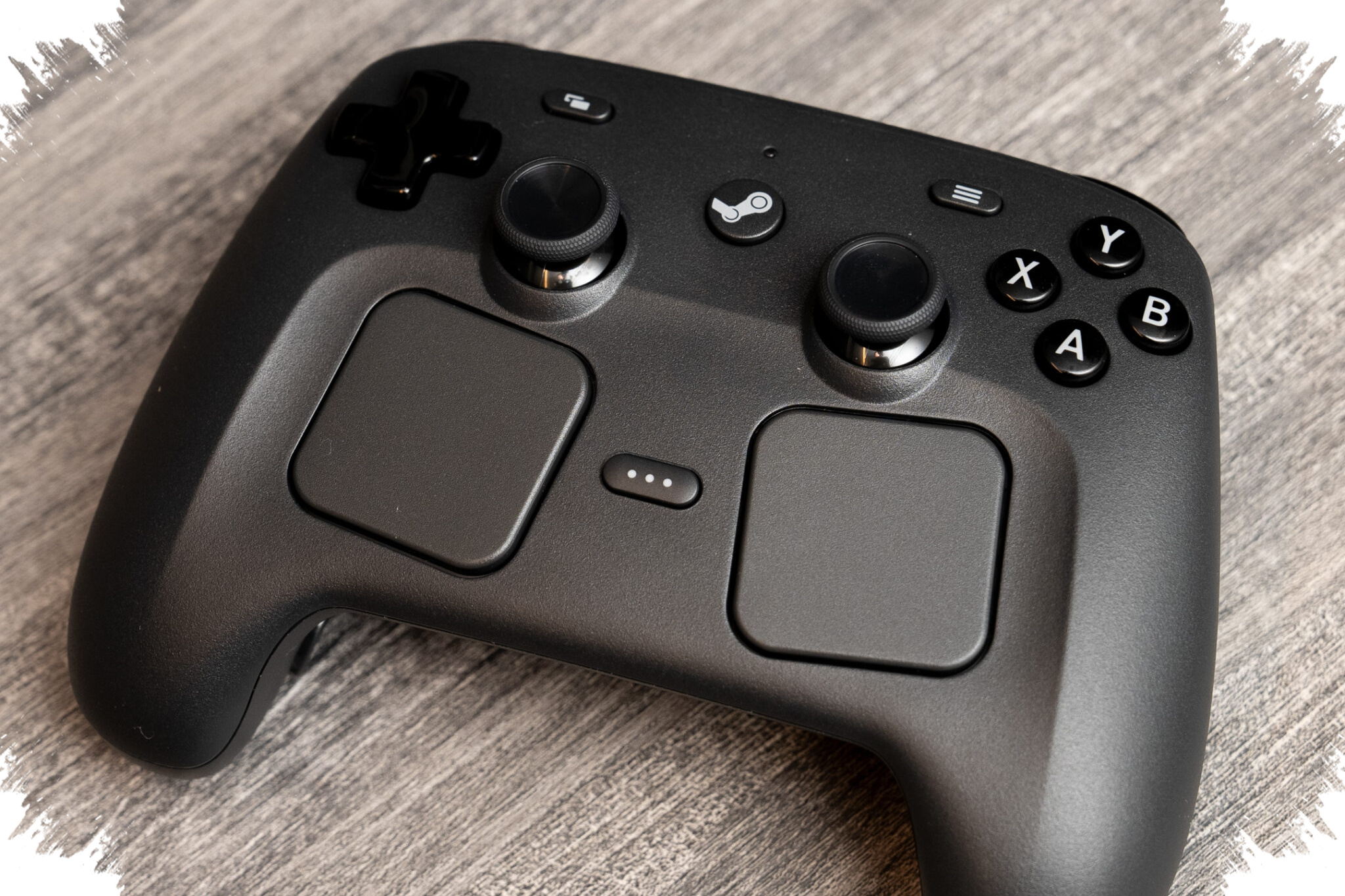
Valve’s new Steam Controller is drawing attention for the same reason many PC accessories do: it promises a more seamless way to play. But that promise appears to come with a major catch for anyone who does not spend most of their time inside Steam.
The core issue is not the hardware shape or button layout. According to the source material, the controller has no native Windows driver and relies entirely on the Steam application to work, which makes its usefulness much narrower than many PC players may expect.
A controller that depends on one ecosystem
That level of dependence creates an immediate problem outside Valve’s own platform. If a game is launched outside Steam, the controller may not function as intended, leaving players with an accessory that feels far less universal than a premium PC controller should be.
This especially matters for players who split their libraries across several storefronts. Epic Games Store users and Xbox Game Pass subscribers are among those most likely to feel the limitation, since their games are not always tied to Steam in the first place.
Windows 11 can make the problem worse
The situation becomes even more restrictive for games installed through the Xbox app on Windows 11. In that setup, file access is tightly locked down, which prevents the Steam client from seeing or connecting to those files.
When that happens, controller input cannot be passed properly into the game. A device meant to simplify navigation and gameplay then loses the basic compatibility that would make it useful across a broader range of PC titles.
Game Pass users face the sharpest impact
This is not just a small technical inconvenience. It reflects how PC gaming habits have changed, with many players now keeping their collections across several launchers instead of relying on a single storefront.
For Game Pass users, the restriction may be especially noticeable. The source says games accessed through the subscription may not work with the new Valve controller unless the same game is also purchased on Steam.
For example, the article points to Forza Horizon 6 as a case where the Game Pass version would not automatically support the controller, while the Steam version would be the safer route for compatibility.
The problem appears to be software, not hardware
Because the limitation comes from software support, it is not necessarily permanent. Valve could still release a standard Windows driver that would allow the controller to be recognized more widely by the operating system and other applications.
At the moment, however, there is no certainty that such a fix will arrive. Until that changes, the controller appears far better suited to players who stay entirely within Steam than to those who move between multiple PC platforms.
That uncertainty matters because the PC game market is already fragmented. A typical library can now be spread across Steam, Epic Games Store, and subscription services like Game Pass, making broad controller support more important than ever.
Community workarounds may offer a familiar path
This is not the first time Steam Controller compatibility has been limited outside Steam. The earlier generation of the controller faced similar issues, and the community responded with a free tool called GlosSI.
GlosSI worked as a bridge that allowed the older Steam Controller to be used with apps and games outside Steam. The source notes that the tool is still available on GitHub for the older controller generation, showing that community fixes have helped solve similar problems before.
Even so, that does not mean the new controller is already covered by a ready-made solution. For now, buyers may need to check where most of their games are stored before assuming the device will work as widely as a typical Windows controller.
For players whose libraries are almost entirely on Steam, the limitation may not be a major issue. But for anyone who regularly switches between launchers, the lack of a native Windows driver could leave Valve’s new controller far less flexible than expected.