Motorola is sharpening its position in the premium foldable segment with a broader Razr 70 lineup that aims to make the category feel less exclusive. Instead of relying on a single flagship model, the company is splitting the family into three tiers: Razr 70, Razr 70 Plus, and Razr 70 Ultra.
That approach places price and perceived value at the center of Motorola’s strategy, while Samsung remains the dominant name in premium foldables. The new lineup is designed to give buyers more room to choose a device based on budget and feature needs, with the Razr 70 starting at US$799,99 or around Rp13 jutaan, the Razr 70 Plus at US$1.099,99 or around Rp19 jutaan, and the Razr 70 Ultra at US$1.499,99 or around Rp26 jutaan.
A more layered answer to a crowded premium market
Motorola’s move is notable because it does not frame foldables as a single high-cost product category. Instead, the company is pushing a structure that spreads the appeal across three levels, which may help it compete more directly with rivals that have long defined the premium space.
The idea is simple enough: keep the foldable identity, but make entry into the segment feel more reasonable. That is where the Razr 70 family becomes important, especially for buyers who want the clamshell form factor without immediately moving to the highest price bracket.
Razr 70 sets the entry point
The most affordable model in the lineup is still positioned with competitive hardware. The Razr 70 uses a 6.9-inch LTPO AMOLED main display with a peak brightness of 3,000 nits and a 120Hz refresh rate.
Inside, Motorola pairs the phone with the MediaTek Dimensity 7450X, along with 8GB of RAM and up to 512GB of internal storage. That combination is aimed at everyday use, media consumption, and moderate multitasking, while keeping the phone at the lowest entry point in the new family.
Razr 70 Plus moves into a faster and more fluid tier
The middle model takes a more performance-focused route. The Razr 70 Plus comes with an LTPO Extreme AMOLED display and a 165Hz refresh rate, which should make navigation and scrolling feel smoother during social media use and content viewing.
Motorola also steps up the chipset to Snapdragon 8s Gen 3 and gives the device 12GB of RAM. Battery capacity reaches 4,500 mAh, supported by 45W wired fast charging, which makes the Plus variant a more practical option for users who need stronger performance and quicker top-ups during the day.
Razr 70 Ultra carries the most complete package
At the top of the range, the Razr 70 Ultra adds the most extensive feature set. It includes a 5,000 mAh battery, 68W wired charging, and 30W wireless charging, giving it the strongest power configuration among the three models.
The camera hardware is also shared between the Razr 70 Plus and Razr 70 Ultra, with both models featuring a 50MP main camera with OIS and a 50MP ultrawide lens. For selfies and video calls, both devices use a 32MP front camera placed on the foldable screen side.
Design remains part of the pitch
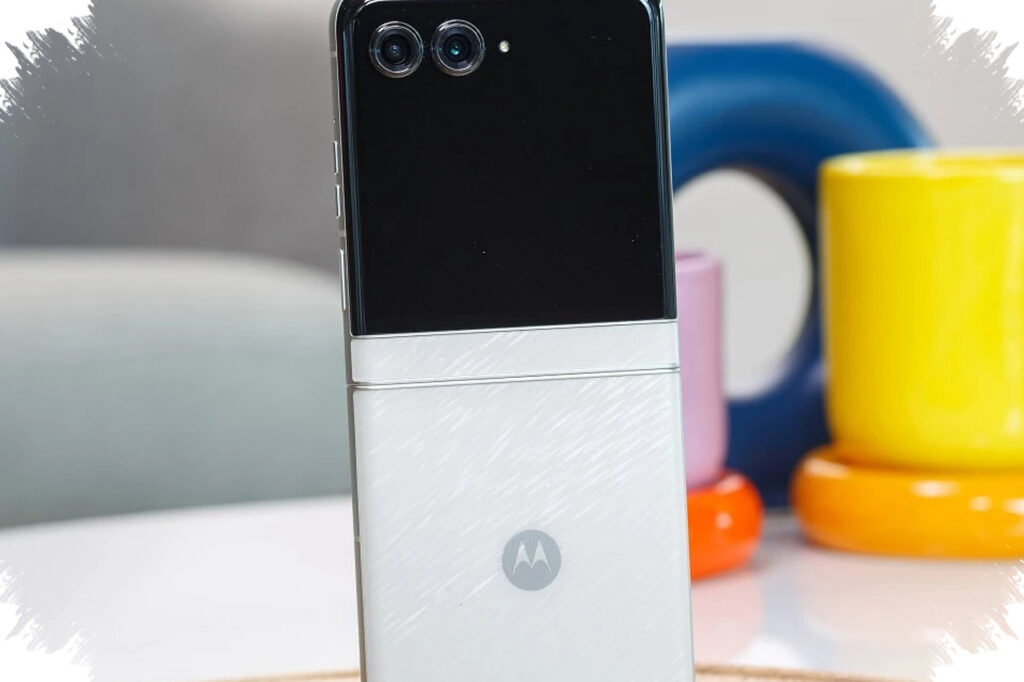
Beyond hardware, Motorola is also using design as a major differentiator. All Razr 70 models run Android 16 and come in Pantone collaboration color options, which gives the lineup a stronger visual identity in a market where premium devices often compete on more than just specifications.
That focus suggests Motorola wants the Razr series to be seen not only as functional foldables, but also as style-driven devices with a clear brand character. In a segment where visual presentation matters, the Pantone partnership adds another layer to the product positioning.
Motorola has also confirmed that the Razr 70 Plus and Razr 70 Ultra will begin global distribution soon. The rollout is set to cover Europe, the Middle East, Africa, and Asia Pacific in the coming months, signaling that the company wants the series to compete internationally with a more balanced blend of price, features, and design appeal.