


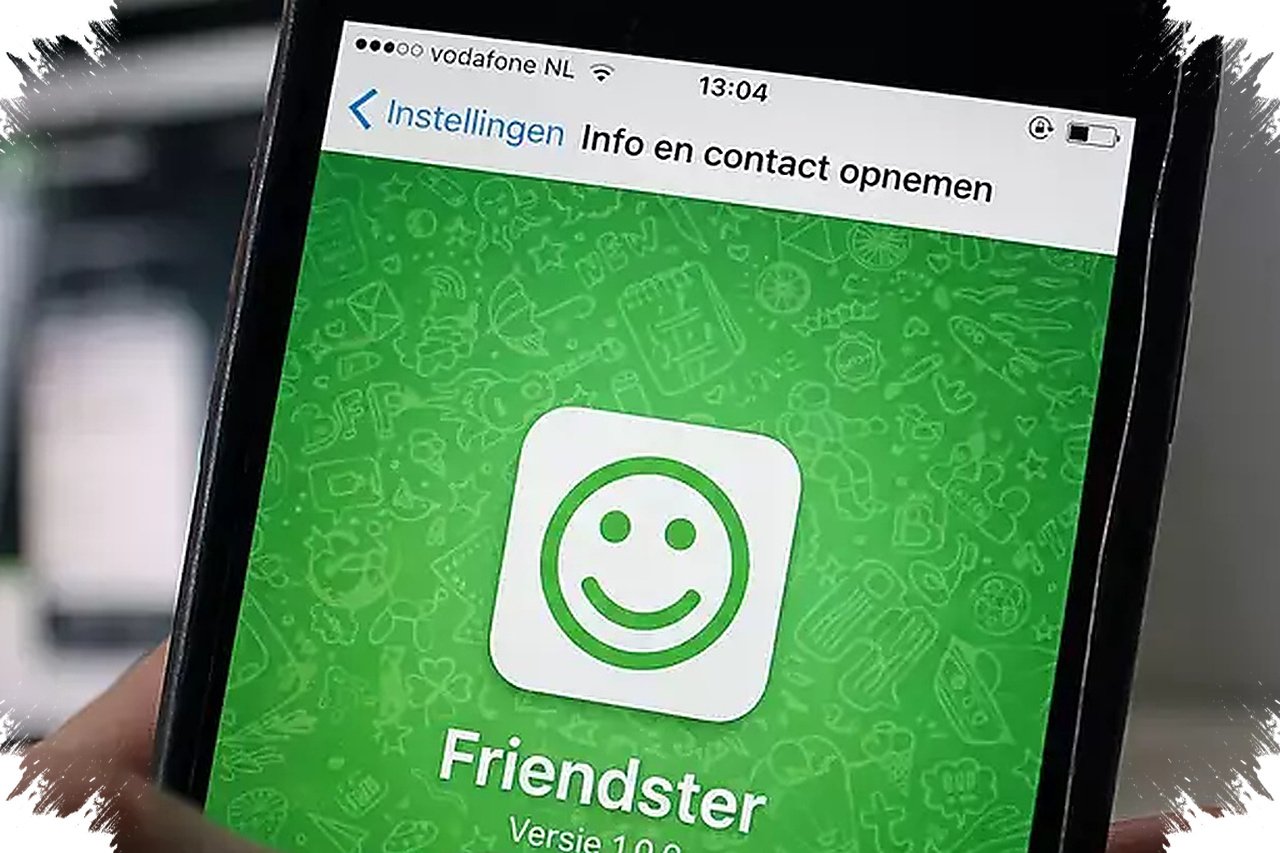
A long-dormant social network is back in a new form, and its return is built around the opposite of what many users now associate with modern platforms. Friendster has reappeared as a privacy-focused app that removes ads and avoids algorithm-driven feeds, offering a simpler experience that looks nothing like today’s crowded social networks.
The revived version is meant for direct interaction between users rather than engagement tricks. It is also available for users aged 13 and above, and the app is small in size at about 5.9 MB.
A familiar name with a very different approach
The new Friendster is not a revival of the old service in its original form. It is a rebuilt brand that uses the same name, but the service now emphasizes privacy and a cleaner social experience.
Mike Carson, a programmer from Philadelphia, brought the brand back in April 2026. To do that, he acquired the Friendster.com domain and the trademark rights for around US$ 30,000.
According to Carson, the deal included US$ 20,000 paid in Bitcoin and a domain exchange that generated about US$ 9,000 per year in ad revenue. He then secured Friendster.com as part of the transaction.
How Friendster first became a major name online
Friendster originally entered the internet scene in 2002, when Jonathan Abrams founded the platform. It launched in March 2003 and quickly became one of the early social networks that helped shape how people connected online.
The service let users create profiles, connect with friends, and share photos, links, and personal interests. It was also used for finding events, meeting potential partners, and discovering music communities and other interest groups.
Its growth was extremely fast. Within a short time after launch, the user base rose from hundreds to millions, and by early 2003 it had already passed 3 million users.
Fast growth, then technical strain
At its peak, Friendster had more than 115 million registered users. The platform was also valued at around US$ 53 million in 2003.
Even so, its position in the United States gradually weakened. Friendster remained stronger in Asia-Pacific, especially Southeast Asia, while users elsewhere began moving to newer services.
Technical problems played a major role in the decline. Bugs and system limitations made the service less stable as traffic increased, while competitors such as Facebook and MySpace offered more appealing updates and a smoother experience.
The company’s focus on growth rather than technical fixes made the situation worse. Over time, that helped push more users away from the platform.
Ownership changes and the end of the old service
In 2003, Google reportedly offered to buy Friendster for US$ 30 million, but the offer was not accepted. Instead, Friendster took funding from Kleiner Perkins Caufield & Byers worth US$ 13 million.
That decision also changed the company’s leadership. Jonathan Abrams was later replaced, and former Yahoo executive Tim Koogle served as CEO.
Friendster was later acquired in 2009 by Malaysia-based internet company MOL Global for about US$ 26.4 million. After the acquisition, the service shifted its focus more toward users in Asia, but that was not enough to restore its position as a leading social network.
By 2010, Friendster had lost much of its relevance and stopped operating as a social networking service. In 2011, it became a social gaming platform, while user content was gradually removed.
Users were previously given a chance to export their data through Friendster Exporter before the deletion was completed. On 31 May 2011, all user content, including photos, comments, blogs, and groups, was deleted. Friendster was then officially shut down on 14 June 2015.
Old accounts do not return with the new app
Many former users still look for ways to reopen their old Friendster accounts, but no official recovery feature exists. That is tied to the full deletion of user content that had already taken place years earlier.
Photos, comments, blogs, and groups are no longer available in the system. Anyone who wants to try the new Friendster experience has to create a new account, since the revived service does not restore the old network in its original form.