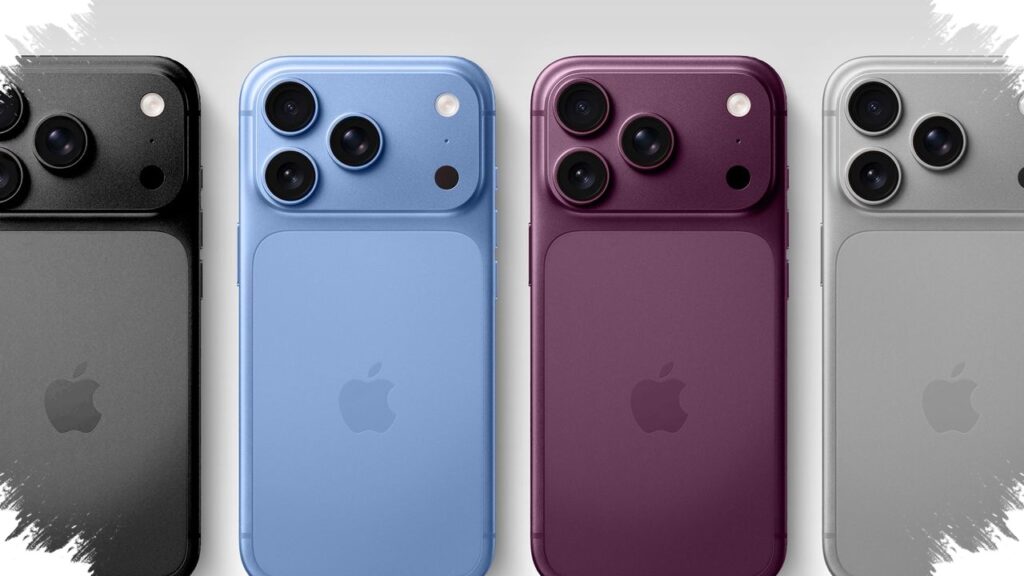
Apple appears to be preparing one of its clearest splits yet between standard and Pro iPhone buyers. The most notable change is not just in hardware, but in timing: the regular iPhone 18 may arrive later than the Pro models, rather than sharing the same September launch window.
If the supply-chain chatter proves accurate, Apple’s September 2026 event will not serve as the full unveiling for the entire iPhone 18 family. Instead, the company is said to be focusing first on the iPhone 18 Pro, iPhone 18 Pro Max, and a rumored foldable model, while the standard iPhone 18 and iPhone 18e would follow later.
A more divided launch strategy
That move would mark a sharp shift from the usual iPhone rollout pattern. For years, the non-Pro model has often been the default choice for many buyers, but this approach would place it further away from the spotlight and give the Pro line more prominence at launch.
Industry analysts see the timing change as connected to supply-chain pressure, especially rising memory costs. In that context, prioritizing higher-margin devices first would give Apple more room to manage costs without rushing every model out at once.
The result is a clearer separation between Apple’s regular and Pro audiences. The standard iPhone 18 would still exist as a major part of the lineup, but it would no longer appear to be the centerpiece of the launch cycle.
What the standard iPhone 18 may still keep
Even with the delayed release, the standard model is still expected to receive meaningful upgrades. One of the biggest is a unified 12GB RAM configuration across the iPhone 18 lineup, up from the 8GB that has been common on base models.
That increase matters because Apple Intelligence is becoming a bigger part of the iPhone experience. The upgraded Siri work tied to iOS 27 is said to rely on a new language model, and more memory should help on-device AI features run more smoothly without depending too heavily on the cloud.
Apple is also expected to use a new A20 chip built on a 2nm process. The chip should help deliver better efficiency and performance, even if not every other part of the device receives the same level of treatment.
Display and camera choices stay more restrained
On the display side, the standard iPhone 18 is rumored to keep a 6.3-inch panel with 120Hz ProMotion, following what arrived on iPhone 17. The catch is that its OLED material is said to be a step behind the Pro versions.
Supply-chain reports point to Samsung M12+ OLED material for the regular model, described as an incremental evolution from the panel used on iPhone 14 Pro. By contrast, the iPhone 18 Pro is expected to move to the newer M16 material.
That difference could matter beyond image quality. Older OLED materials generally need more power to hit the same brightness levels, which may reduce some of the efficiency gains from the newer chip. There is also a rumor that all iPhone 18 models may get a smaller Dynamic Island, though another report suggests the change may be limited to the Pro versions.
Camera upgrades appear more selective as well. The standard iPhone 18 is said to keep a dual 48MP rear camera setup with a main and ultrawide lens, while the aperture-variable lens rumored for the Pro models would stay exclusive to the higher-end tier.
Where Apple seems willing to spend and where it is not
The front camera may be where the standard model gets a clearer boost. Apple is reportedly planning a jump to 24MP for the selfie camera, which could improve photo detail and video call quality.
At the same time, Apple appears ready to simplify some components to keep costs under control. One rumor suggests the Camera Control button could lose its capacitive touch layer and rely only on pressure sensing, a change that would likely go unnoticed by most users.
That kind of adjustment fits with another reported goal: keeping the starting price of the standard iPhone 18 at $799. If Apple can hold that line, then using older OLED materials and simplified hardware would be one way to balance new features against rising component costs.
Taken together, the picture is of a standard iPhone 18 that remains capable and modern, but is more deliberately positioned below the Pro line. Apple seems to be drawing a firmer boundary between what the regular model must do well and what remains reserved for its more expensive devices.