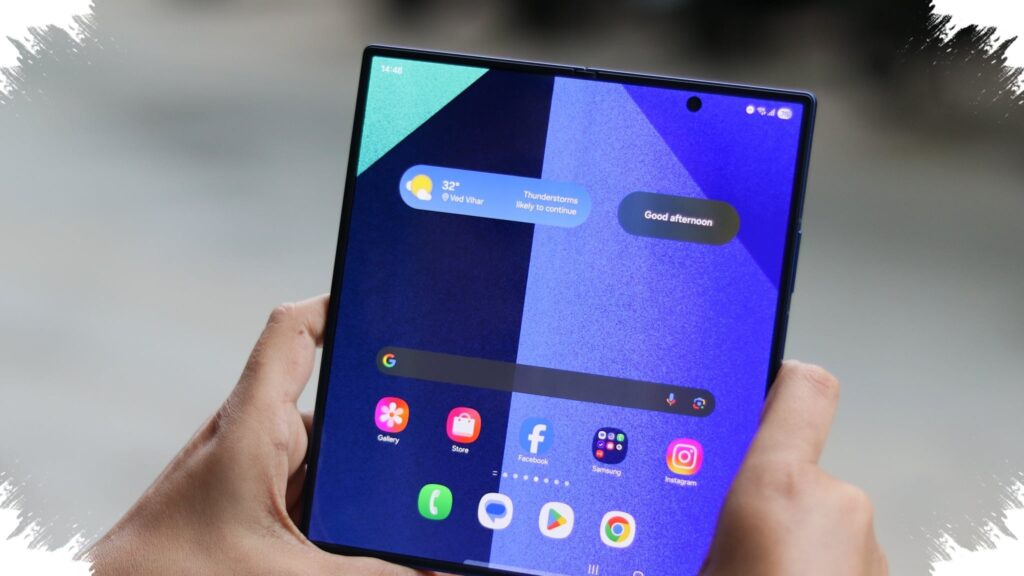
Samsung’s next book-style foldable is facing an unusually direct challenge before it is even official. Motorola has already moved with Razr Fold, and it is making the case with a larger battery, a lower starting price, and a display setup designed to stand out quickly in the premium foldable market.
That pressure matters because Galaxy Z Fold 8 is still not announced. Even so, the device is already being measured against Motorola’s latest move, and on paper the comparison is not flattering for Samsung in every category.
Motorola moves first with an aggressive package
Motorola launched Razr Fold in the U.S. on April 29, then opened pre-orders on May 14 through Best Buy and its own online store. Official sales began on May 21, giving Motorola a head start before Samsung’s next foldable even arrives.
The Razr Fold is priced at $1,900 for the 16GB RAM and 512GB storage configuration. That makes it $100 cheaper than the Galaxy Z Fold 7 at its $2,000 starting price, and roughly $300 less than Samsung’s similarly equipped variant.
Samsung’s Galaxy Z Fold 8 is still expected in July, with reports pointing to a London event on July 22, 2026 for the launch of the Galaxy Z Fold 8, Galaxy Z Flip 8, and Galaxy Wide Fold. No strong pricing leak has emerged yet, although the pattern set by Galaxy Z Fold 7 suggests a 256GB base model could start around $2,000 and a 512GB version could approach $2,200.
Where Motorola tries to win on value
The clearest advantage for Motorola is not just price, but the amount of hardware bundled into the device. Razr Fold ships with 16GB of RAM and 512GB of storage as standard, while the expected Galaxy Z Fold 8 lineup is rumored to begin at 12GB of RAM and 256GB of storage.
That gap becomes even more noticeable when looking at power and charging. Motorola equips Razr Fold with a 6,000mAh battery, which is described as the largest battery in a foldable phone sold in the U.S. The phone also supports 80W wired charging and 50W wireless charging.
Samsung is expected to raise the Galaxy Z Fold 8 battery capacity to 5,000mAh. Charging is also projected to reach up to 45W over cable, which would still leave it behind Motorola’s numbers on paper.
Big displays are part of the pitch
Motorola is also leaning hard on screen size and display specs. The Razr Fold uses a 6.6-inch P-OLED cover display with 10-bit color, Gorilla Glass Ceramic 3 protection, Dolby Vision support, a 165Hz refresh rate, and peak brightness up to 6,000 nits.
Inside, the phone carries an 8.1-inch 2K panel with a 120Hz refresh rate and peak brightness up to 6,200 nits. That makes it the largest internal display on a foldable phone currently sold in the U.S.
Samsung’s Galaxy Z Fold 8 is expected to use an 8-inch LTPO AMOLED main display and a 6.5-inch LTPO AMOLED cover screen, both with 120Hz refresh rates. The biggest talked-about improvement is not size, but a less visible crease and improved durability.
Samsung may still keep the performance edge
Motorola’s chip choice puts the Razr Fold behind Samsung in raw silicon, at least based on current leaks. Razr Fold is powered by Snapdragon 8 Gen 5, while Galaxy Z Fold 8 is tipped to get Snapdragon 8 Elite Gen 5 for Galaxy.
That means Samsung could still hold the upper hand in flagship performance. It also has a more established reputation in book-style foldables, which could matter if buyers are looking beyond spec sheets.
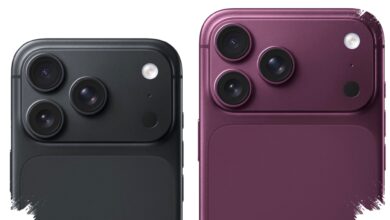
The design approach also appears different. CAD leaks shared by Android Headlines suggest Samsung is staying close to the familiar Galaxy Z Fold look, with vertically arranged triple cameras, flat sides, sharper corners, and a body that resembles the previous generation. Even so, Galaxy Z Fold 8 is expected to be thinner and lighter than the Razr Fold, which weighs about 244 grams.
Cameras and stylus support complete the contrast
Motorola includes three 50MP rear cameras on the Razr Fold, covering the main, ultrawide, and 3x telephoto positions. The company also claims 100x super zoom, along with video recording up to 8K 30fps and 4K 60fps.
Its front camera setup includes a 32MP sensor on the outer display and a 20MP sensor on the inner screen. For a first-generation book-style foldable, that is a notably full package.
Samsung, meanwhile, is still expected to keep a 200MP main camera on Galaxy Z Fold 8, along with a possible upgrade from 12MP to 15MP for the ultrawide camera and from 10MP to 12MP for the telephoto camera. The 3x optical zoom is expected to remain.
Motorola also offers stylus support through the Moto Pen Ultra, sold separately for about $100. Based on current leaks, Samsung may once again ship the Galaxy Z Fold 8 without S Pen support, which gives Motorola another point of differentiation in the premium foldable race.
What makes this matchup notable is the different philosophy behind each phone. Samsung appears to be refining its formula with a faster chip, a cleaner fold, and a slimmer body, while Motorola is pushing harder on battery size, charging speed, display ambition, and price.