


Samsung appears to be tackling one of the biggest weak points of Exynos 2600 in the Galaxy S26: heat. The focus is not only on the chipset itself, but also on a more aggressive cooling setup designed to keep performance stable inside an increasingly thin body.
That matters because, in premium smartphones, temperature control often decides whether performance can hold up over time or quickly drop under pressure. Samsung appears to be treating even a small thermal improvement as meaningful, with a roughly 1-degree reduction inside a tight internal space seen as enough to support sustained chip performance.
A redesigned thermal stack
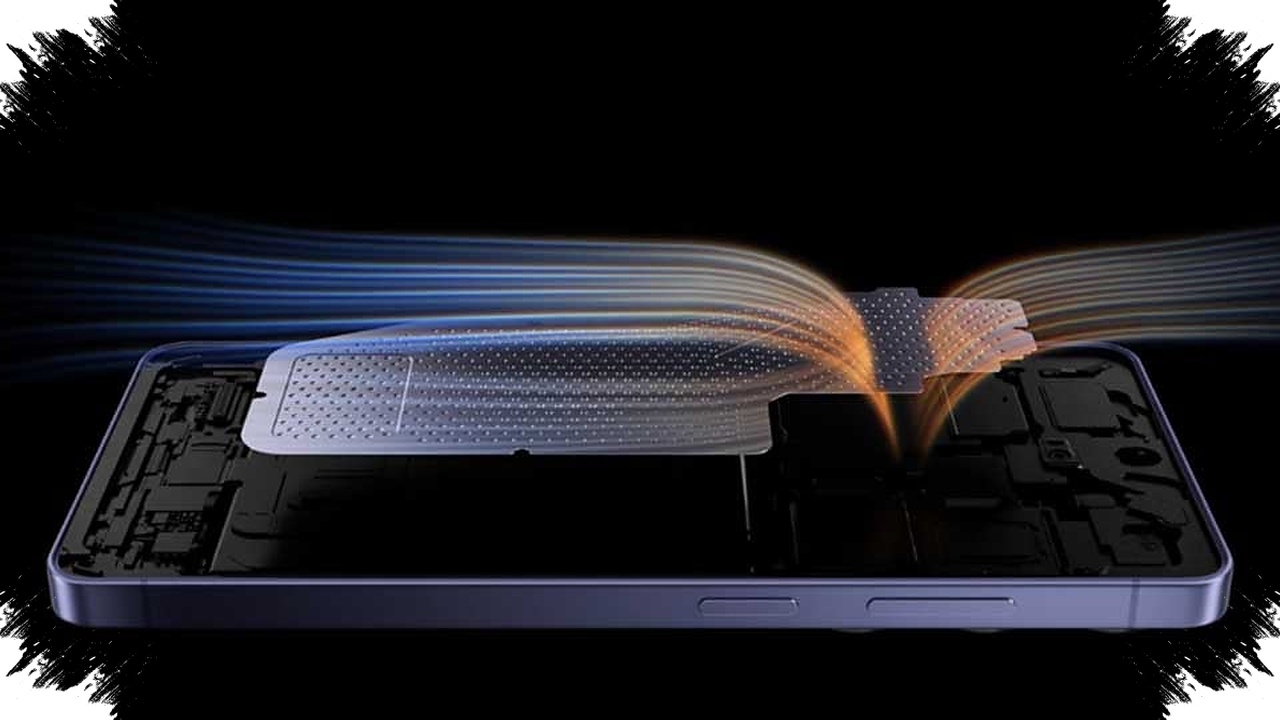
One of the key changes involves Tailored 3D Thermal Interface Material, or TIM. This layer sits between the processor and the heat sink, such as a vapor chamber, and its role is to fill air gaps so heat can move away more efficiently.
Samsung had already used Tailored 3D TIM on the Galaxy S25 to improve thermal efficiency. On the Exynos-based Galaxy S26, that approach is said to continue with further refinement rather than a return to the older design.
Exynos 2600 is also linked to a copper-based Heat Path Block, or HPB. Samsung places the HPB above the AP die, where it works together with TIM to improve the route through which heat escapes.
Two thermal solutions working together
According to Samsung executives, the combination of 3D TIM and HPB improves heat dissipation significantly compared with the previous generation. Samsung says the 3D TIM helps spread heat more widely and release it more evenly to both the front and back of the device.
The goal is not only to lower chip temperature. The system is also intended to protect internal components and maintain AP performance during heavy use.
That approach makes sense technically, since heat cannot transfer efficiently when air gaps remain between the processor and the cooling structure. Even a simple-looking change in that thin layer can have a visible impact on thermal behavior.
Internal testing shows measurable gains
Samsung says internal testing has already shown clear improvements. AP temperature reportedly dropped by about 1.18 degrees Celsius compared with the older 2D TIM setup.
The back of the device was also measured at about 0.73 degrees Celsius cooler. Those numbers may seem modest in isolation, but they matter for a thin phone with dense internal packaging.
Lower chip temperatures can reduce the risk of throttling during heavy workloads. A cooler rear surface can also make the phone more comfortable to hold during extended use.
Samsung’s comparison is based on the previous 2D TIM generation. That means the improvement comes not only from a newer chip, but also from a redesigned heat path.
The standard model may not fall behind
One of the more notable points is that the peak surface temperature of the base Galaxy S26 and the Galaxy S26 Ultra is reported to be at a comparable level when both use Exynos 2600. If that carries over to the final product, it would suggest that the smaller model can still manage heat effectively.
That is significant because the base model usually has less internal space. A smaller vapor chamber also tends to make thermal control more difficult.
Samsung appears to want the compact version to avoid falling too far behind the Ultra in temperature stability. The strategy also shows that the company is not relying on a single large cooling part.
Instead, Samsung seems to be layering multiple solutions, from a copper-based heat block to a redesigned thermal interface material. For the Exynos-based Galaxy S26 lineup, that could become an important differentiator.
Rather than focusing only on raw power, Samsung now appears to be treating heat dissipation efficiency as a core part of the performance package.