


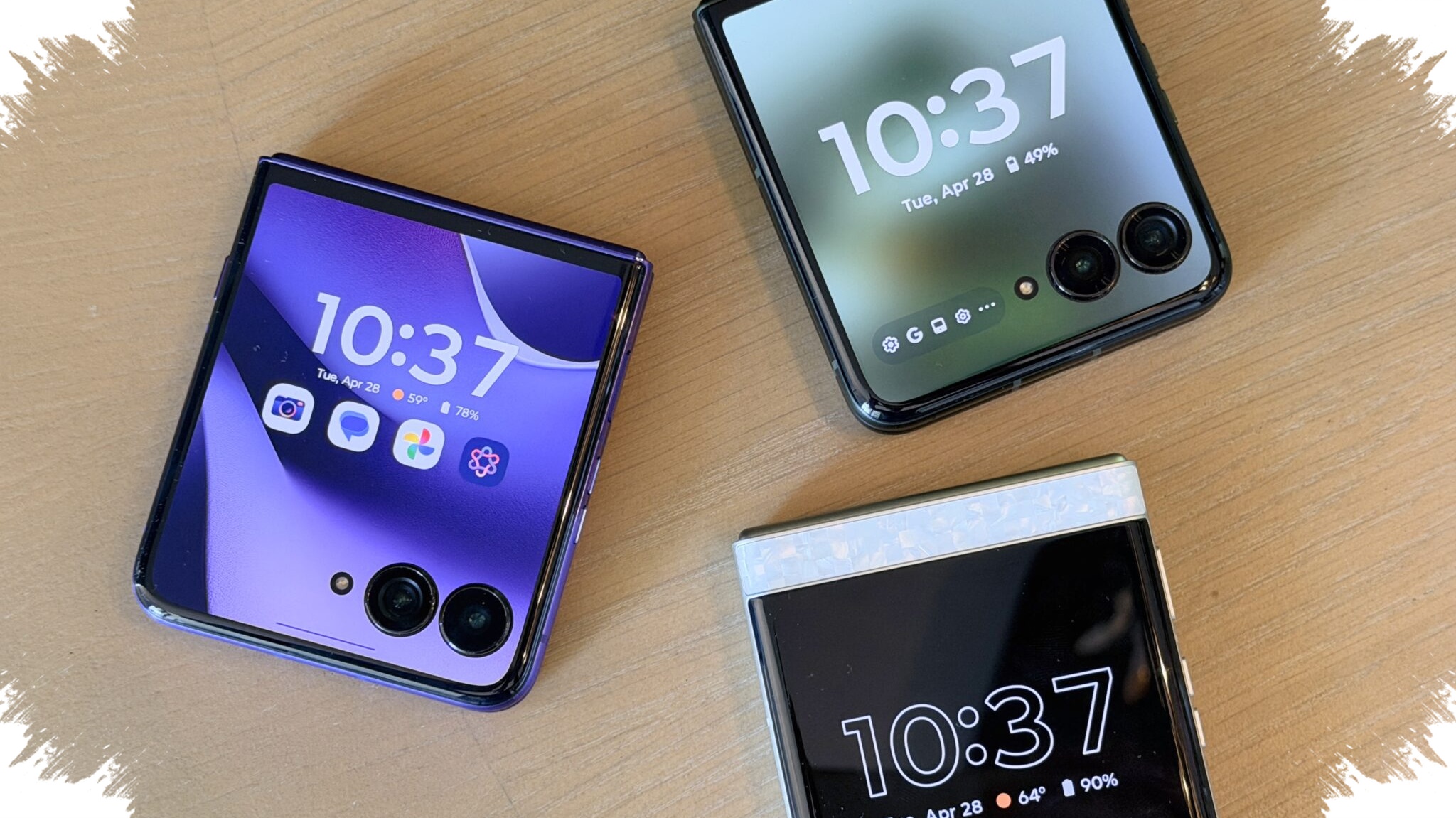
For buyers choosing between Motorola Razr Ultra 2026 and Galaxy S26 Ultra, the decision is less about raw premium status and more about how a phone fits into daily life. One leans into foldable convenience and playful flexibility, while the other pushes harder on serious productivity, long-term software support, and AI-driven tools.
That contrast is especially clear in the way each device handles the basics. The Razr Ultra 2026 is built to fold into a more pocketable shape, then open into a large 7-inch main display, while the Galaxy S26 Ultra keeps the traditional bar-style form and focuses on a 6.9-inch screen paired with S Pen support and a privacy feature aimed at more controlled use.
Two premium phones, two very different priorities
Motorola’s approach is centered on portability and visual flair. The Razr Ultra 2026 includes a 4-inch outer display and a 7-inch main display, and both panels run at 165Hz, with peak brightness reaching 3,000 nits on the cover screen and 5,000 nits on the main screen.
Samsung takes a steadier route with the Galaxy S26 Ultra. Its 6.9-inch Dynamic AMOLED 2X display runs at 120Hz, and the device keeps the classic flagship slab shape instead of chasing foldable compactness.
The design language also separates the two clearly. Motorola offers Pantone Orient Blue with an Alcantara texture and Pantone Cocoa with a natural wood veneer finish, while Samsung sticks to Sky Blue, Black, and Cobalt Violet, with Pink Gold and Silver Shadow as exclusive options.
Durability and daily use take different paths
The durability story follows the same split. The Razr Ultra 2026 uses Corning Gorilla Glass Ceramic 3, a titanium reinforced hinge, and an IP48 rating, while the Galaxy S26 Ultra relies on Armor Aluminum, Corning Gorilla Glass, and IP68 protection.
That difference shapes how each phone feels to use throughout the day. The Razr’s outer screen is meant to do more work, from opening apps and checking notifications to using widgets, video wallpapers, and touchless gestures such as waking the screen or silencing an alarm with hand movement.
Samsung’s answer is built around more traditional productivity. The Galaxy S26 Ultra includes an in-box S Pen for note-taking, drawing, and precise navigation, and its Privacy Display makes side viewing harder for sensitive content.
Nicholas Sutrich described Privacy Display as the most interesting screen feature in a decade. It can be turned on globally, limited to specific apps, or enabled when a user enters a PIN, password, or pattern.
AI plays a major role on both phones
Both devices run Android 16, but their software strategies are not the same. Motorola pairs the Razr Ultra 2026 with Moto AI, adding tools such as Catch Me Up, Next Move, and Daily Drop, along with Gemini, Gemini Live, Circle to Search, Microsoft Copilot, and Perplexity.
Samsung combines Android 16 with One UI 8.5 and Galaxy AI. Its feature set includes Now Nudge, Now Brief, Gemini, Gemini Live, Bixby, and Perplexity, creating a more system-wide AI layer across everyday use.
Motorola’s AI is designed to fit the foldable format and fast cover-screen interactions. Samsung’s version is more closely tied to work-oriented tasks, privacy, and a more structured daily workflow.
Performance, charging, and support separate them further
Under the hood, the Razr Ultra 2026 uses Snapdragon 8 Elite with 16GB of RAM and 256GB or 512GB storage options. The Galaxy S26 Ultra runs on Snapdragon 8 Elite Gen 5, with 12GB of RAM on the 256GB and 512GB variants, and 16GB on the 1TB model.
Both phones use a 5,000mAh battery, but the charging approach is different. Motorola says the Razr Ultra 2026 can last around a day and a half, and its 68W TurboPower charging is said to deliver a full day of use in eight minutes, with 30W wireless charging and 5W reverse charging also included.
Samsung says the Galaxy S26 Ultra can reach up to 31 hours of continuous video playback. It supports 60W wired charging, 25W wireless charging, and Wireless PowerShare, with a 0-80% charge in 30 minutes over cable.
Long-term support is another major divider. Motorola promises three years of software updates and five years of security updates, while Samsung offers seven years for both software and security.
Camera systems reflect different philosophies
Motorola equips the Razr Ultra 2026 with a triple-camera setup built around a 50MP LOFIC main sensor, a 50MP ultra-wide with macro vision, and a 50MP internal camera. The flip design also adds flexibility through Flex View, which lets the phone work like a mini tripod.
The outer display can be used as a selfie preview screen, and AI can help choose the best expression from multiple frames in a group shot. Motorola also adds Signature Style, Frame Match, blurred watermarking that matches photo colors, Ultra HDR for Instagram, and editing tools such as Magic Eraser, camouflage, and AI commands for changing backgrounds or lighting.
Samsung aims for consistency and versatility with a more traditional flagship camera array. The Galaxy S26 Ultra includes a 200MP main camera, a 50MP ultra-wide, a 50MP periscope telephoto with 5x zoom, a 10MP telephoto with 3x zoom, and a 12MP front camera.
Its imaging software is built for dependable results. Super Steady Video with Horizontal Lock is designed to keep footage stable even when the user moves across uneven ground, while Photo Assist can remove distractions, fix blur, fill in missing elements, change clothing, or generate a new image from an existing photo.
Razr Ultra 2026 is scheduled to arrive at the end of May 2026. For buyers who want a more distinctive premium phone, it stands out through foldable convenience and flexible camera use, while Galaxy S26 Ultra looks better suited to users who want productivity tools, stronger privacy controls, and longer software support.