


Android is becoming a far more automated platform, but Google is also making sure Gemini does not act on its own outside the user’s control. Across phones, laptops, cars, browsers, and keyboards, the company is weaving Gemini into more everyday tasks while keeping every outward-facing action behind explicit permission.
That balance is the clearest message from Google’s Android Show announcements tied to I/O. The company wants Gemini to prepare work, connect information, and speed up routine actions, but it still treats consent as a hard boundary whenever an AI feature reaches beyond the device.
Gemini is being positioned as the engine behind more Android tasks
On Android, Gemini Intelligence is being built to handle complex workflows across apps. The system can read conversations, pull out an order, and prepare a food purchase with very little input from the user.
Google is also pushing Gemini into more practical daily scenarios. A user can take a photo of a travel brochure and ask Gemini to look for similar tours through Expedia, or ask it to find a class syllabus in Gmail and place required books into an online bookstore cart.
Even with that deeper automation, Gemini is not allowed to finish everything automatically. It can set up the next steps, but confirmation is still required before a transaction or any external action goes through.
User permission remains the main safeguard
Google has made all of these AI features opt-in. Access to apps is limited to the services the user has specifically allowed, and that approach also carries over to Autofill with Google.
In that feature, Personal Intelligence can draw from Google Photos, Gmail, search history, and chat history to fill out forms more accurately. The company still places that capability under user choice rather than default activation.
Google is also adding a Privacy Dashboard so people can review what the AI is doing in real time and what it has done over the previous 24 hours. On the security side, Android 17 adds anti-scam tools such as a bank fraud detector, suspicious app warnings, scam message alerts, tighter location permissions for third-party apps, and official Android OS verification.
Gemini is spreading into Chrome and Gboard
The company is also bringing Gemini into Chrome on Android. There, it can summarize pages, find extra explanations, add information from a web page to a calendar, and carry out web-based tasks that still require confirmation before anything external happens.
In Gboard, Google introduced a new talk-to-text feature called Rambler. It is designed to capture speech in a more natural way, including filler words, repetitions, and spontaneous corrections, and then turn that into cleaner text.
Rambler is also meant to keep up when a user briefly switches languages during a conversation. That makes it more flexible for everyday messaging and note-taking without forcing a rigid transcription style.
Googlebook and more proactive screens
Google is also preparing a new laptop line called Googlebook, developed with Asus, Acer, Dell, HP, and Lenovo. The focus is on proactive support from Gemini Intelligence, including a demo where users point the cursor at something on screen and get a relevant AI suggestion for that area.
Googlebook is also meant to create personal widgets and dashboards from prompts. Gemini can combine a family vacation schedule, flight tickets, car rental details, and a countdown built from data in apps such as Gmail into a single desktop panel.
Cars, creators, and sharing tools are getting updates too
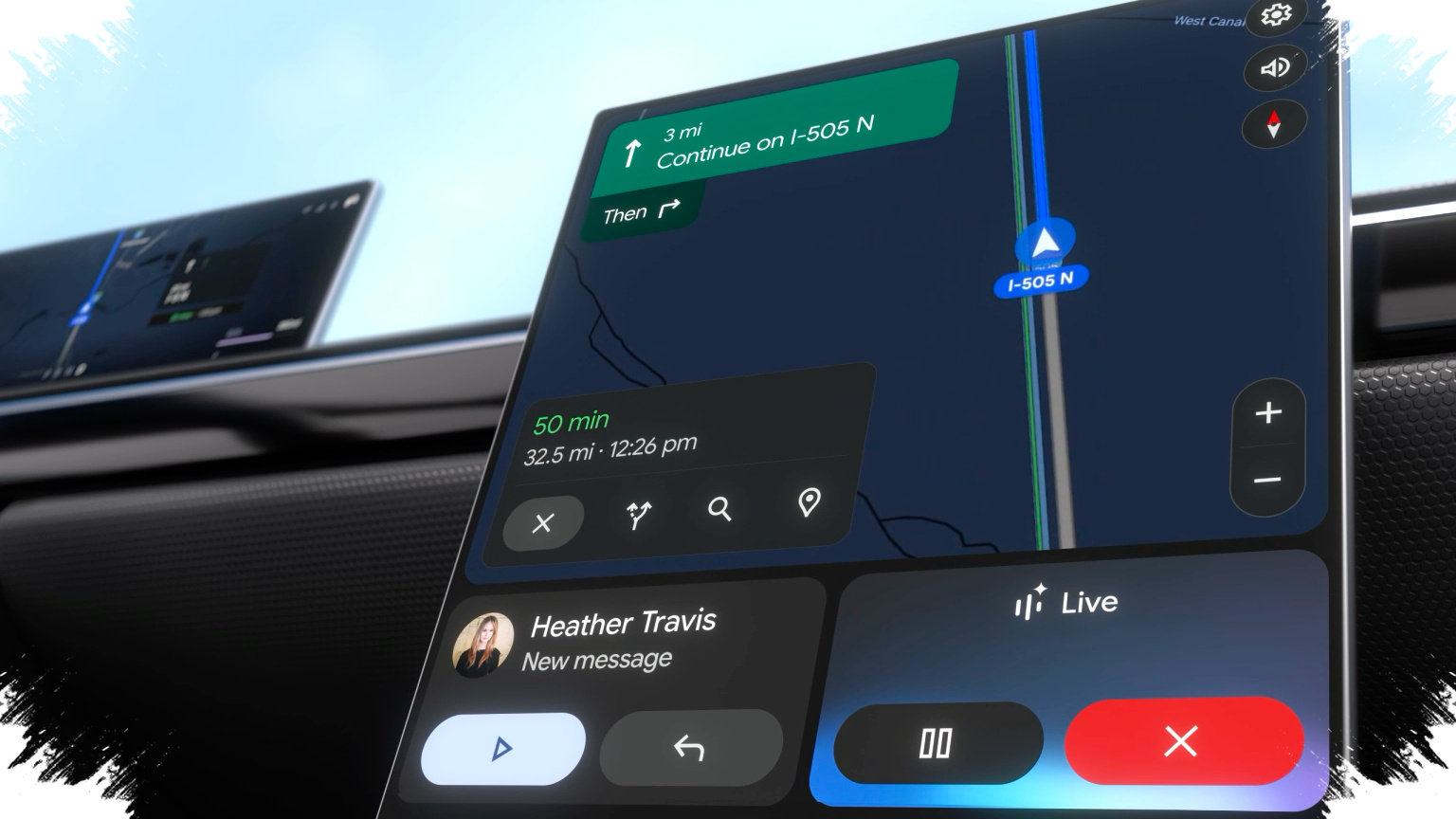
Google says more than 250 million compatible cars are already on the road with Android Auto. The system is gaining 3D navigation with more immersive buildings, overpasses, lanes, and traffic signals, while Gemini integration is expanding to help with food orders through DoorDash and more services later.
When a car is parked, users can also watch YouTube and some other apps in Full HD 60 fps on certain supported car brands. For creators, Android 17 will add Screen Reactions, which records a video response while content is playing and shows the user’s face and the screen at the same time without a green screen or app switching.
Google is also preparing Adobe Premiere for Android after its earlier availability on iPhone. For visuals, the company is introducing Noto 3D, a new emoji style with smoother shading and gradients that will first arrive on Pixel through Gboard, YouTube, and Gmail.
Sharing between Android and iPhone is getting easier
File sharing is also getting a practical update with Quick Share based on QR codes. That will let Android users share files with nearby iPhone devices.
Google is also preparing wireless migration from iOS to Android. The move is designed to carry over contacts, passwords, messages, apps, and eSIM, with several new features starting to roll out in the summer and others arriving later in the year.