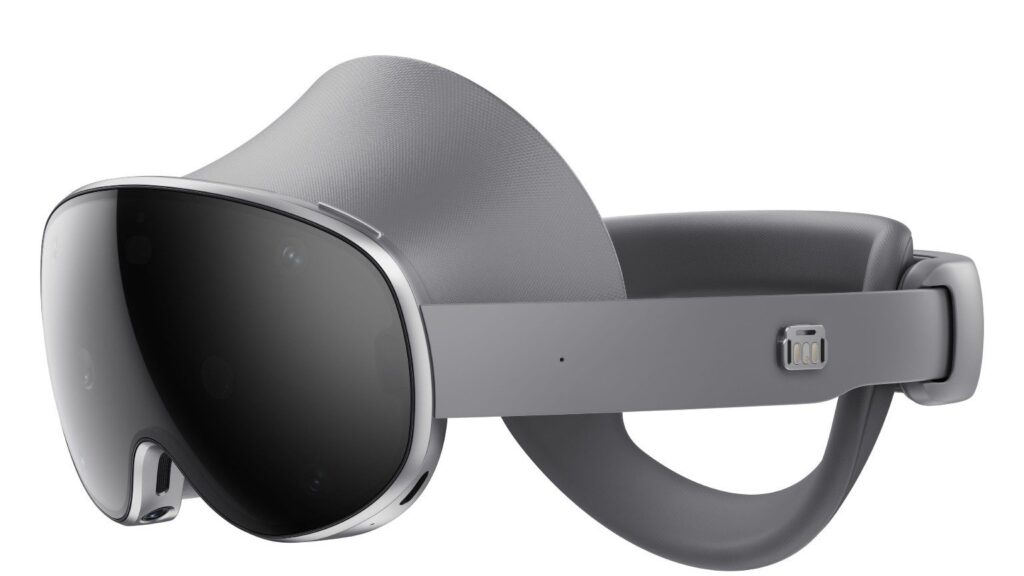
Samsung may be preparing a smaller and potentially more affordable entry for its XR lineup, according to a recently surfaced patent. The device is being referred to as Galaxy XR Lite, and it points to a strategy that goes beyond the premium segment.
The patent, identified as US 2026/0118685 A1, shows an XR headset with a more compact body than Samsung’s premium model. That direction suggests Samsung is exploring a form factor that keeps mixed reality capabilities while reducing the physical footprint of the device.
A slimmer design with automatic lens adjustment
One of the most notable elements in the filing is an active IPD adjustment system. It uses a motor to align the lenses automatically with the user’s eyes, which is an important comfort factor for mixed reality use.
Automatic lens alignment can reduce the need for manual adjustments and make the headset feel more precise in daily use. Samsung also appears to place the motor components vertically, a layout that is linked to keeping the headset thinner and lighter.
Where it could sit in Samsung’s XR lineup
Industry observers see this headset as potentially positioned between the upcoming Galaxy Glasses and the premium Galaxy XR. If that placement holds, Galaxy XR Lite would fill the gap between a simpler wearable and a high-end mixed reality headset.
That approach would make sense in a market that is still growing. Premium devices often serve as technology showcases, while more accessible models are usually what broaden adoption.
Samsung already entered the next generation of mixed reality with the Galaxy XR headset in October 2025. Built on the Android XR platform, it emphasizes immersive experiences with multimodal AI integration.
A strong sensor setup still appears to be part of the plan
Even with a smaller design, the patent suggests Samsung is not scaling back the core mixed reality hardware. The headset is described with two VST cameras, four tracking cameras, and a depth sensor in the center.
That combination points to a serious focus on mixed reality performance. VST cameras are important for bringing the real world into the headset, while tracking cameras and a depth sensor help with spatial mapping and more accurate interaction.
No official confirmation yet
The Galaxy XR Lite name remains tentative because all of this is still based on a patent filing. Patents can signal research and development direction, but they do not always become commercial products.
Samsung has not confirmed that it will use this name or release a headset with the specifications shown in the document. Even so, the filing suggests the company is working toward an XR device that is slimmer, lighter, and potentially easier to access than its first premium model.