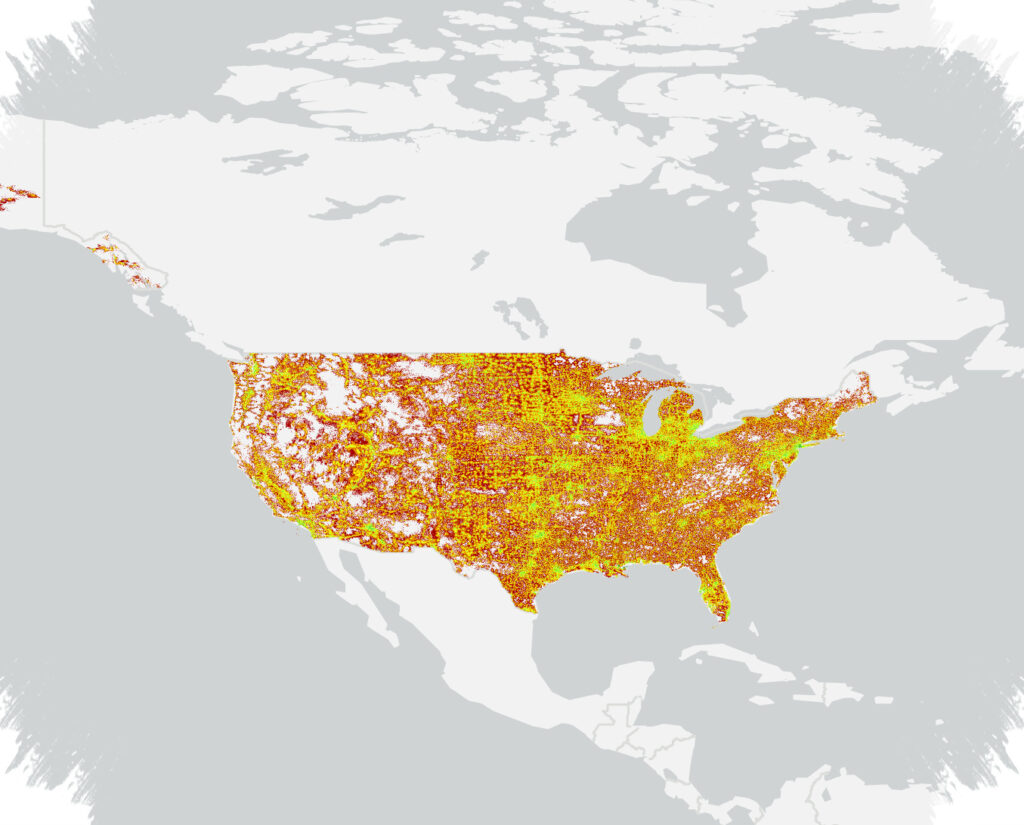
A rare alliance among AT&T, T-Mobile, and Verizon is taking shape around a problem that has long frustrated mobile users: weak coverage in places where terrestrial networks fall short. Instead of competing on this issue, the three largest US carriers are moving together to expand connectivity with satellite support.
The plan is aimed first at areas with lingering coverage gaps, especially remote locations where service is weak or unavailable. For customers, the most practical promise is simple: a better chance of staying connected when traditional cell towers cannot reach.
A joint effort for dead zones
The carriers have agreed to form a joint venture focused on closing coverage gaps through satellite technology. Their goal is not to replace existing mobile networks, but to extend them into places that are still underserved or unserved.
That distinction matters because the effort is framed as an expansion of service rather than a wholesale redesign of mobile connectivity. The new structure is meant to help users move more smoothly between terrestrial networks and satellite-based support when they enter difficult-to-serve areas.
Direct-to-device as the core approach
At the center of the project is direct-to-device satellite technology. This approach allows devices to connect through satellites instead of relying only on conventional cell towers.
The companies said the joint venture will use shared investment to widen mobile connectivity for customers across all three carriers. They also plan to combine IP spectrum and terrestrial spectrum while working on industry specifications that can make the service operate more smoothly.
That technical coordination is important because integrating networks across competing operators is often a barrier in new service development. By aligning on specifications, the three companies appear to be trying to build a more reusable foundation for satellite-enabled mobile service.
What the partnership is trying to solve
Coverage gaps remain a major problem in remote regions. In many of those places, traditional networks provide only weak service or none at all.
This project is designed to reduce those dead zones and make connectivity feel more seamless when users move into areas with poor coverage. If the plan works as intended, customers of AT&T, T-Mobile, and Verizon should all benefit from the same expanded reach.
The carriers also want the arrangement to create more options for customers. A shared platform would give satellite providers a more unified path to reach users, rather than forcing them to work through separate ecosystems for each major carrier.
Why the collaboration stands out
The move is notable because it brings together direct rivals in an area that touches basic user needs. Coverage has long been a point of competition in mobile service, yet this project treats it as a shared challenge.
That collaborative approach also reflects a broader focus on communities that remain underserved. Satellite is being positioned as a complement to terrestrial infrastructure, filling in where building out land-based coverage is difficult or slow.
The companies have described the agreement only as an agreement in principle. That means the initiative is still at an early stage, and customers will not see immediate changes just because the announcement has been made.
Even so, the direction is clear. The three carriers are preparing to pool resources so that satellite connectivity can support mobile service in places where blank spots have been hardest to avoid.