It was always unlikely that Star Wars would bring its next big-screen return with the same tone as Andor. The Tony Gilroy series offered one of the franchise’s most serious stories, built around fascism, resistance, and genocide, but that approach was never the safest route for a movie meant to reach the widest possible audience.
That contrast is exactly why the choice of The Mandalorian and Grogu makes sense commercially, even if it feels disappointing creatively. Andor may be the stronger example of what Star Wars can do for adults, but Baby Yoda remains the kind of crowd-pleasing centerpiece that fits a four-quadrant summer release.
Andor showed what Star Wars can be at its most ambitious
Andor expanded the franchise in a way that felt unusually grounded for Star Wars. The series treated rebellion as something messy, political, and morally costly, which gave it a seriousness that stood apart from many other entries in the saga.
That is part of why it earned attention as “Star Wars for grown-ups.” It did not rely on nostalgia or easy fan service, and it asked viewers to sit with difficult ideas rather than escape them.
But the big screen still runs on mass appeal
For all of Andor’s strengths, a theatrical Star Wars release has different requirements. The franchise has to attract longtime fans, younger viewers, and casual moviegoers at the same time, which means the film has to work as a broad event.
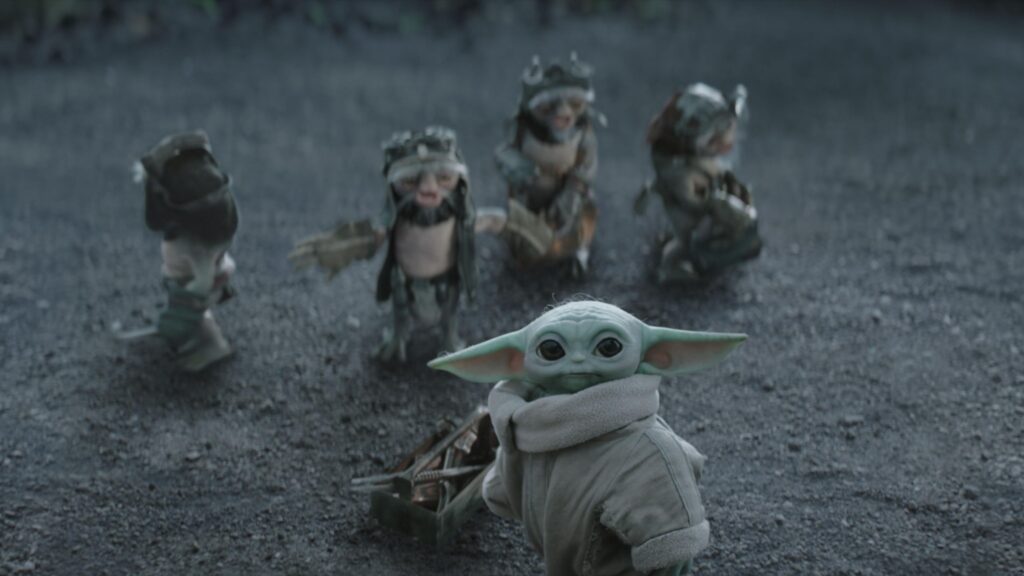
That is where The Mandalorian and Grogu has the edge. The series already leans more toward adventure than political drama, and its connection to the widely loved “Baby Yoda” character gives it instant recognition that can translate easily into a major theatrical launch.
Why Baby Yoda still wins the popularity contest
The article’s core point is simple: Star Wars is not only for adults. It has always needed to appeal to children as much as to older fans, both as a creative identity and as a business strategy.
Baby Yoda became a rare pop-culture figure who could carry that kind of wide appeal. In contrast, Andor is impressive precisely because it is less designed for toys, memes, and easy marketing hooks, which makes it less obvious as the face of a major summer movie.
What this says about the franchise’s direction
The comparison between Andor and The Mandalorian and Grogu shows two different versions of Star Wars success. One version earns respect through complexity and emotional weight, while the other aims for broad familiarity and audience comfort.
That does not make one approach better in every context, but it does explain why Disney is likely to favor a character-driven, adventure-oriented movie over a more politically intense one. Star Wars can support both kinds of storytelling, but only one is built to feel like a four-quadrant theatrical event, and that is why Baby Yoda, not Andor, is the one heading to the big screen.
Read more at: time.com