


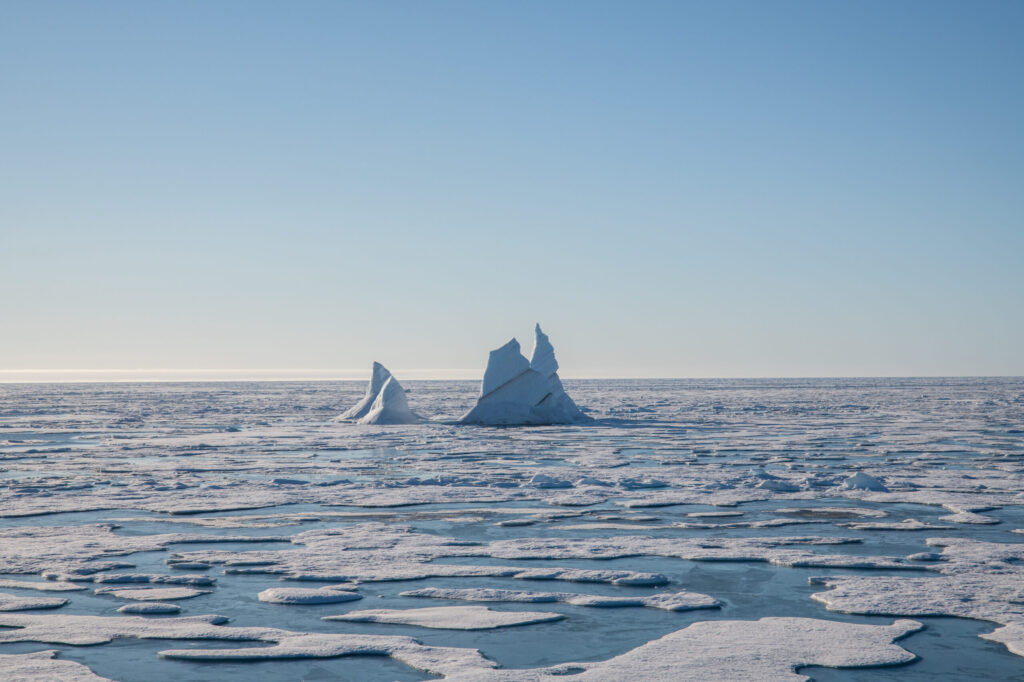
A new analysis suggests the Arctic Ocean has crossed a chemical threshold that may not be reversible. As sea ice retreats, shallow coastal waters now receive stronger sunlight, and that change is accelerating the loss of nitrate, a key nutrient that supports marine life.
The finding raises concerns far beyond chemistry. Researchers say the nutrient decline is already rippling through the Arctic food web, from tiny plankton to fish, seabirds, and marine mammals.
What the study found
The research appeared in Communications Earth & Environment and covered 20 years of oceanographic data from the Fram Strait. That passage acts as a major outlet for Arctic waters flowing into the North Atlantic, making it a valuable place to track long-term change.
An international team led by the University of Edinburgh said the Arctic likely reached a critical ecological tipping point in 2009. The warning sign was not a single event, but a sustained shift in how nutrients move through the region’s shallow seas.
Why sea ice loss changes the chemistry
When sea ice disappears, more sunlight reaches the water below. That extra light can trigger short-lived algae blooms, which add organic matter to the seafloor when the algae die and sink.
On shallow continental shelves, that material uses up oxygen as it decays in the sediment. In low-oxygen conditions, marine microbes consume nitrate and turn it into inert nitrogen gas, removing it from the ecosystem instead of recycling it.
The study says this process, known as benthic denitrification, has intensified sharply across the shallow shelves that make up nearly half of the Arctic Ocean. That matters because nitrate acts as a basic fertilizer for marine productivity.
A nutrient famine with wide effects
The researchers describe the result as a growing shortage of nutrients in Arctic waters. That shortage can limit the growth of plankton, which sit at the base of the marine food chain and support larger animals.
If plankton decline, the impact can move upward through the ecosystem. Commercial fish stocks, seabirds, and marine mammals may all face pressure if the region continues to lose the nutrients needed to sustain productivity.
Why the tipping point matters
The study’s central concern is that the chemical shift may not easily reverse even if sea ice conditions change again. Once nitrate is removed from the system through this pathway, the Arctic ocean chemistry becomes less able to support the same level of biological activity.
That makes the loss of sea ice more than a visible climate signal. It now appears tied to a deeper transformation in how the Arctic Ocean functions, with consequences that could reshape the region’s marine life over time.
Read more at: oceanographicmagazine.com