


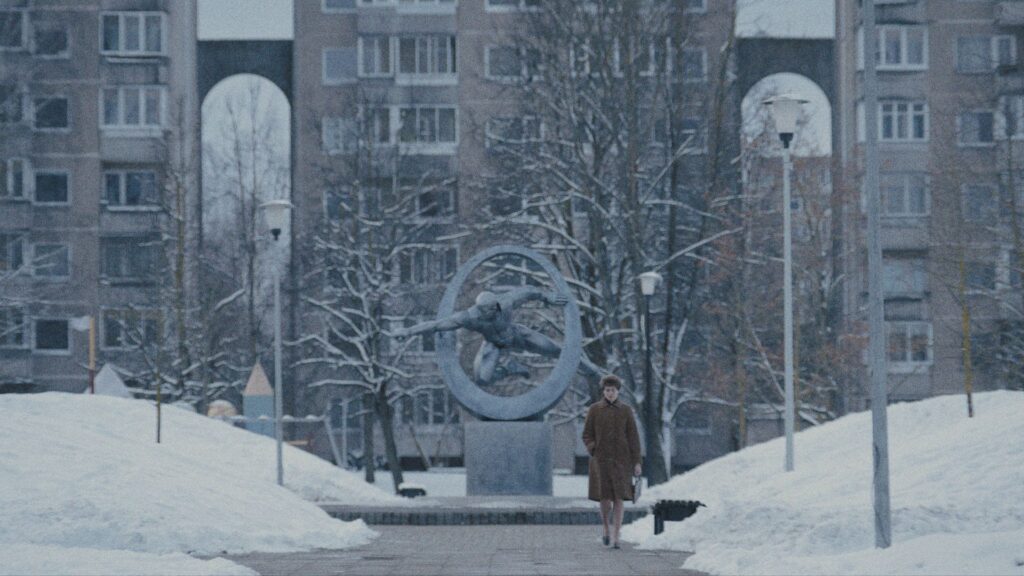
The new “For All Mankind” spin-off “Star City” shifts the focus from the well-known Apollo story to the Soviet side of the Space Race. That change alone makes the series feel like an invitation to learn more about the secretive Soviet space program and the people who powered it.
The show leans on a central real figure from space history: Sergei Korolev. A Ukraine-born engineer, Korolev oversaw the development of the R-7 rocket, the Sputnik program, and the Vostok program, and his work helped the USSR secure some of the earliest and most important victories in the Space Race.
Why Sergei Korolev matters
Korolev’s legacy reaches far beyond a single mission or one famous launch. The article notes that derivations of the R-7 rocket are still used on Soyuz spacecraft, which underlines how lasting his engineering work became.
His name was also hidden from public view during his lifetime. Even many of his closest colleagues knew him only as “the Chief Designer,” a title that reflected how closely the Soviet state guarded space achievements and the people behind them.
That secrecy is one of the biggest reasons “Star City” stands out. While NASA’s Apollo era has been documented through countless films, books, and television projects, the Soviet program remains far less familiar to many viewers.
A different view of the Moon landing era
“Star City” begins with Alexei Leonov planting the USSR flag on the Moon, but it shows the event from the Soviet mission control room rather than from the American side. The result is a story that feels less like a familiar victory lap and more like a tense look at how state power shaped every part of the mission.
In the show’s opening episode, Leonov’s wife does not even know he is in space until KGB agents arrive at her door and take her to mission control. That detail captures the series’ larger point: in this world, triumph comes wrapped in secrecy, fear, and strict control.
The contrast with Apollo is sharp. NASA names like Neil Armstrong, Buzz Aldrin, and Wernher von Braun became widely known, while Soviet achievements were often hidden behind layers of state messaging.
Cold War politics at the center
The series does not treat the Soviet program as only a technical race. It also presents it as an environment shaped by surveillance, suspicion, and political manipulation, with KGB officer Lyudmilla Raskova emerging as one of the most powerful figures.
Raskova commands a large intelligence network and wants to know what everyone is thinking before they think it. The show also introduces Irina Morozova, who later goes on to run Roscosmos in “For All Mankind,” linking the spin-off to the wider universe in a way that adds continuity for longtime viewers.
That emphasis on control gives “Star City” a darker tone than many space dramas. The reference to it feeling like “Tinker Tailor Soldier Spy” as much as “The Right Stuff” fits the mood of a story where espionage and ambition are inseparable.
A harsher kind of heroism
The show also suggests that Soviet cosmonauts lived with more danger and less comfort than their American counterparts. One example comes from Anastasia Belikova’s capsule, which looks cramped and unforgiving compared with the more elaborate systems associated with Apollo.
Belikova’s transfer to the lunar lander is shown as a risky spacewalk rather than the smoother docking maneuvers familiar from Apollo missions. That visual choice reinforces the series’ broader argument that Soviet spaceflight demanded extreme sacrifice.
“Star City” even plays with darker rumors from space history, including the idea that Yuri Gagarin’s death may not have been an accident. When cosmonaut Yana Akhmatova is accused of spying, the show makes clear how little room exists for truth once the state decides on a narrative.
The same logic shapes Anastasia Belikova’s position after a speech that strays from the approved script. The threat to replace her with a more obedient lookalike for a publicity tour shows how far the system will go to protect its image.
Why the show makes the Soviet program more interesting
The appeal of “Star City” is not that it rewrites history with spectacle alone. It succeeds because it frames Soviet spaceflight as a world of ambition, secrecy, and human cost, which naturally pushes viewers to want to know what happened in real life.
That curiosity is exactly what the creators seem to be aiming for. Co-showrunner Ben Nedivi said the team kept researching the Soviet program while developing “For All Mankind,” and the secrecy surrounding it made the subject more intriguing.
The show’s closing stretch also hints at how far that ambition could go, with talk of further Soviet missions to Venus and the building of lunar bases. Even though the real Korolev died long before the timeline of “Star City,” the series uses his figure to explore a Soviet space history that many viewers have never seen dramatized in this way.
The first two episodes of “Star City” are available now on Apple TV, with new episodes debuting on Fridays. For viewers drawn to the human drama behind the Space Race, the spin-off offers a rare chance to see the Soviet side of the story in a way that feels both cinematic and historically compelling.
Read more at: www.space.com