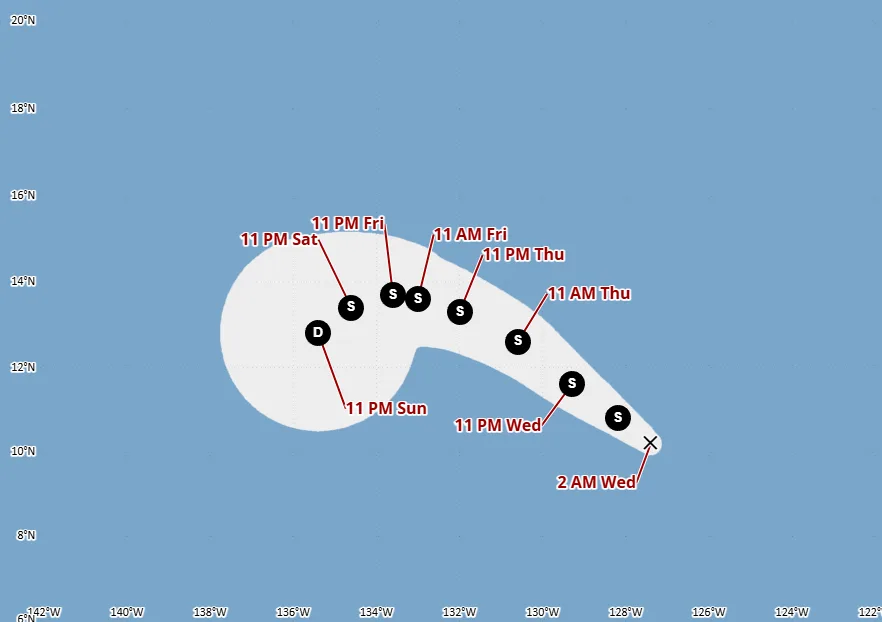
A tropical depression has formed in the eastern Pacific basin, and forecasters say it is expected to strengthen into a tropical storm later Wednesday. The system, identified as One-E, is being tracked by the National Hurricane Center as it moves over open water far from land.
The depression was located about 1,450 miles southwest of the southern tip of the Baja California Peninsula, with maximum sustained winds near 35 mph. Officials said it currently poses no threat to land, but they are watching its path and intensity closely.
What forecasters expect next
The National Hurricane Center said One-E should continue to strengthen over the next couple of days. Forecasters expect it to become a tropical storm later today, which would make Amanda the next name on the Pacific storm list.
After the storm reaches peak intensity, conditions are expected to turn less favorable. Forecasters said wind shear, drier air and upper-level convergence should then help weaken the system.
Track and movement
One-E is moving northwest, and the forecast calls for a slightly faster northwestward to west-northwestward track through Friday. That path keeps the system over the Pacific and away from populated areas for now.
Because the storm remains in open water, the main concern is its future strength rather than immediate coastal impacts. The storm tracker shows no current land threat, though forecasters will continue to update its projected path.
Other systems being watched
The National Hurricane Center is also monitoring two additional areas in the eastern Pacific basin. One low-pressure area is expected to form offshore of Central America and southern Mexico late this week, and conditions could allow it to become a tropical depression late this weekend or early next week.
That system has a 50% chance of tropical development within the next week. A second area of low pressure is forecast to form offshore of southern and southwestern Mexico early next week, with only gradual development possible as it moves slowly northward.
Forecasters give that second system a 20% chance of tropical development. Together, the three areas underline an active stretch in the eastern Pacific, where storms often form far from land and then track over open water.
Why Pacific storms often stay offshore
The eastern Pacific regularly produces tropical systems that never reach the coast. The National Hurricane Center says roughly 85% to 90% of storms that form in the Pacific do not threaten land and often spin harmlessly out to sea.
Even so, some Pacific storms can still affect Hawaii, the west coast of Mexico or the Southwest U.S. if their outer rain bands or moisture bring heavy flooding and rainfall. For now, One-E remains a distant system to watch as it continues its northwestward journey.
Read more at: www.yahoo.com