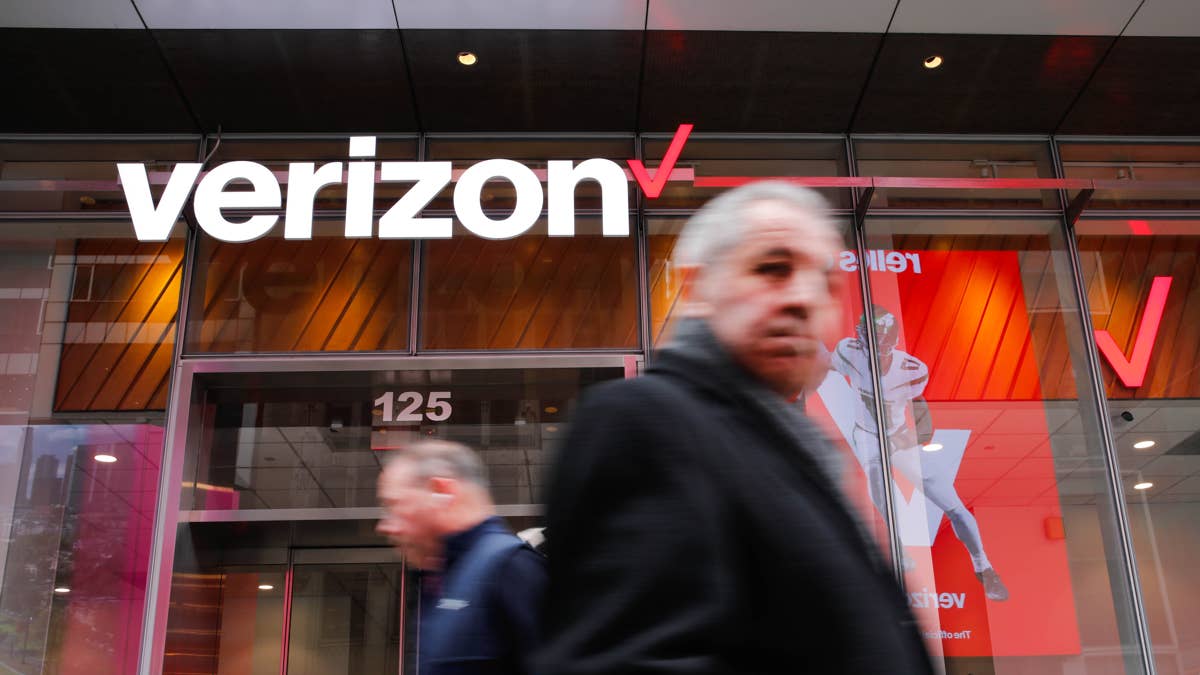
Verizon’s push to tighten store operations is drawing criticism from employees who say the company’s sales rules are slowing service and stretching wait times. The complaints come as the carrier works through a broader turnaround under CEO Dan Schulman, who has been trying to reset performance after years of customer losses.
Schulman told investors shortly after taking the top job in October 2025 that he planned to “aggressively transform” Verizon, arguing that price increases and a frustrating customer experience had helped drive people away. Verizon has lost 2.25 million postpaid phone customers over the past three years, a decline that has put pressure on the company to improve both sales and service.
Employees say every interaction turns into a sales pitch
Verizon workers have turned to Reddit to describe a store culture that, according to their posts, now demands that nearly every customer be offered multiple products. One employee said staff must present new lines, tablets, watches, home internet, insurance, perks, upgrades and device protection, even when a customer comes in for something simple like a cancellation.
That same post said workers are required to get manager approval between quotes and face discipline if they do not close enough add-on sales. The employee also claimed that customers are repeatedly asked whether they own a business or whether their employer could move phone accounts, and that every transaction is routed into a lead for follow-up.
According to the post, those requirements have made store visits much slower. The employee said some customers wait more than two hours before speaking with staff.
Complaints extend to pay, quotas and morale
The allegations go beyond sales pressure and wait times. In the same thread, the employee said Verizon has raised sales expectations while reducing commissions, leaving workers earning less money for more work.
That post said the sales target for November and December was the same as in February, despite the holiday period being busier. It also claimed the commission plan was changed so employees now make “half the money for twice the work,” which the worker said has hurt morale.
Other employees chimed in with similar experiences. One said the post was an accurate picture of what is happening in stores and described repeated questioning from management over small details. The comments suggest the issue is not limited to one location.
Customers report aggressive upselling in stores
Some Verizon customers also described similar experiences when they visited stores for routine service. One customer said they went in to upgrade a phone but were pushed toward a quote that added a new line and two phones, increasing the bill by $136.00 per month.
Another customer said multiple offers were presented even when the visit was only to pick up an iPhone. Those accounts echo the employee complaints that store visits are being converted into broad sales opportunities, regardless of what the customer actually wants.
The pressure campaign appears tied to Verizon’s effort to lift sales and reverse recent losses, but the customer reaction suggests the strategy may be creating new friction at the counter. That tension matters at a time when carriers are fighting not just on price and coverage, but also on how easy they are to deal with once customers are already in the system.
Verizon says wait times are short
Verizon has pushed back against the criticism. Kevin Zavaglia, the company’s chief sales and service officer, said in a LinkedIn post on June 2 that “most customers do not have a wait at all” for service.
Zavaglia said Verizon’s overall average wait time is only 7 minutes and that the figure is down year over year. He also said the company has launched a new compensation model meant to reward “premium pay for premium performance,” adding that top performers are seeing higher payouts than under older plans.
That response suggests Verizon sees the new structure as part of a broader effort to improve results rather than a burden on stores. Still, the divide between the company’s numbers and employee accounts shows how differently the same store experience can look from inside and outside the sales floor.
Competitive pressure remains a problem
The policy debate comes after Schulman told employees in December that Verizon’s customer satisfaction scores were worse than its competitors’ and that employees lacked the “financial flexibility” needed to get things done. A J.D. Power survey in January backed up some of those concerns, finding that Verizon lagged behind several rivals in postpaid phone satisfaction.
J.D. Power said the average satisfaction score for traditional U.S. wireless carriers was 603 on a 1,000-point scale. Among the Big 3 national carriers, T-Mobile led with 631, Verizon scored 593, and AT&T scored 587.
MVNOs did even better overall, averaging 630 points. Consumer Cellular led that group with 721, followed by Google Fi Wireless at 685 and Spectrum Mobile at 614. Carl Lepper, senior director of technology, media and telecom at J.D. Power, said loyalty depends on how easy it is for customers to work with a carrier after they sign up, especially when solving problems, handling bills and getting answers quickly.
Verizon has shown some improvement in attracting new users, but churn remains elevated. In the first quarter of 2026, the company added 55,000 new postpaid phone customers, while wireless retail postpaid phone churn rose to 0.97%, up 2 basis points year over year, according to its latest earnings report.
Read more at: sg.finance.yahoo.com-

-

-

-