


The road to Omaha is set, and the 2026 college baseball regionals bring a bracket that looks deep, balanced and full of high-end pitching and star power. With the SEC placing 12 teams in the 64-team field and the ACC adding nine, the early rounds already point to several dangerous matchups and a strong chance for regional chaos.
UCLA and Georgia Tech enter as the top two seeds, but the bracket does not look built for easy runs. Several experts pointed to the same tension across the field: elite pitching in key games, loaded offenses in pressure spots, and enough parity to make this weekend unpredictable.
What stands out at the start
The most immediate draw is the number of marquee matchups on Day 1. Wake Forest against Kentucky shapes up as one of the best pitching duels of the weekend, with Chris Levonas facing Jaxon Jelkin in a game that could swing on one mistake.
Another early spotlight falls on Ole Miss against Arizona State, a game that pairs one of the nation’s deepest pitching staffs with one of its most dangerous offenses. Ole Miss also brings Hunter Elliott, while Arizona State counters with Landon Harrison, the Big 12 player of the year and one of the most productive hitters in the country.
The bracket also has a different feel because of the way the 17-32 seeds were placed. That adjustment created more balance across the field and added value to several regional hosts and road teams that now look positioned for legitimate postseason runs.
The toughest road to Omaha
North Carolina was one of the biggest hosts to draw real pressure. Tennessee and East Carolina both bring strong postseason résumés, and VCU adds another layer of risk as a fourth seed that will not be intimidated by the atmosphere.
Nebraska also looks vulnerable in a region that includes Mississippi and Arizona State, and one expert called that the toughest road in the bracket. Kansas, hosting its first regional in school history, also faces a difficult path with Northeastern, Missouri State and Arkansas all creating danger in different ways.
West Virginia, Auburn and North Carolina were all flagged as having challenging assignments, but the matchup in Nebraska drew particular attention because of how many legitimate threats sit in the same bracket. That kind of setup is exactly what can turn a top host’s weekend into a survival test.
Players likely to shape the weekend
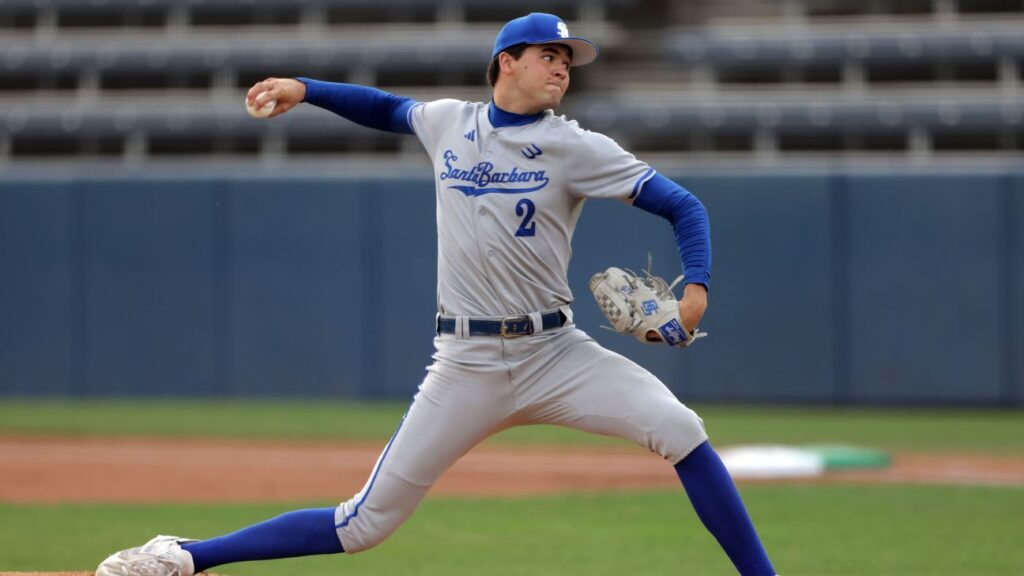
Several names rise above the rest, starting with UCSB left-hander Jackson Flora and USC pitcher Mason Edwards. Flora leads the country with a 1.05 ERA, while Edwards leads the nation in strikeouts, and both project as major draft talents.
The offense side brings its own star power. Georgia, Georgia Tech and Texas A&M own the top three offenses in the country, and each lineup blends power with athleticism. That makes any game involving those teams especially difficult to leave off a watch list.
UCLA shortstop Roch Cholowsky and Georgia Tech catcher Vahn Lackey also sit at the center of the tournament’s prospect conversation. Both are viewed as elite draft talent, and both are expected to draw major attention if their teams make deep runs.
Landon Hairston at Arizona State stands out as one of the most dangerous hitters in the field. He leads the country in OPS at 1.415 and finished fourth with 28 home runs, giving the Sun Devils a true centerpiece in a bracket that already looks loaded.
Top bats and arms to track
Florida’s Blake Cyr has surged at the right time, hitting .692 over his past three games with two doubles, a triple, two homers and eight RBI. That kind of late-season production can quickly change the tone of a regional if he stays hot.
Georgia Tech’s Lackey has also been on a tear, hitting .645 over his past nine games. He finished with a .410 average and 18 home runs, and his production matters because it helps protect other impact bats in a lineup built to score in bunches.
Edwards brings another layer of intrigue because his strikeout total reached 160, while Texas A&M enters with an offense averaging nine runs per game, a .301 batting average and 114 home runs. That collision between elite power and elite swing-and-miss ability could become one of the defining games of the opening weekend.
The catcher group also looks unusually strong. Daniel Jackson, Gavin Kelly, Ryder Helfrick, Lackey and Carson Tinney give this field what may be the best collection of backstops in college baseball over the past decade.
Under-the-radar teams with upset potential
Oklahoma State is one of the most intriguing 2-seeds in the bracket. The Cowboys bring 137 home runs, rank second nationally in that category and feature Kollin Ritchie, who has 29 homers of his own.
That power travels into a Tuscaloosa regional that may not be comfortable for the host, especially if ace Ethan Lund brings top form. Oklahoma State also has the kind of lineup depth that can punish a weekend if the games turn into high-scoring fights.
Jacksonville State is another team to keep close watch on, especially after winning the Conference USA tournament and finishing 46-13. The Gamecocks do not rely only on slugging, but they bring 116 doubles, a .299 team average and a group that does not strike out often.
Their path has already included difficult tests, including a sweep of Auburn in a home-and-away series and narrow losses to Alabama. That experience makes them more dangerous than a typical 3-seed, especially in a noisy regional setting.
Cincinnati was also mentioned as a capable under-the-radar threat in Starkville, while Arizona State’s health and depth make it a hard team to dismiss. These are the kinds of mid-tier teams that can change the bracket if one host stumbles early.
Bold calls for the weekend
A repeat theme from the analysts was parity, with the possibility of multiple regional game sevens and a long list of close finishes. The combination of quality pitching, elite lineups and strong host environments makes a clean path unlikely for most favorites.
One forecast called for the Big Ten to place two teams in Omaha, with UCLA already leading that charge and Oregon, Nebraska and USC all part of the discussion. Another prediction suggested only four hosts will be eliminated at home, which would make the super regional round even more dramatic than usual.
Oklahoma State was also picked by one expert as a team capable of reaching Omaha, and that view fits the overall shape of the field. With power in the lineup, an ace in Lund and enough depth behind him, the Cowboys fit the profile of a team that could turn a difficult regional into a statement weekend.
Read more at: www.espn.com