


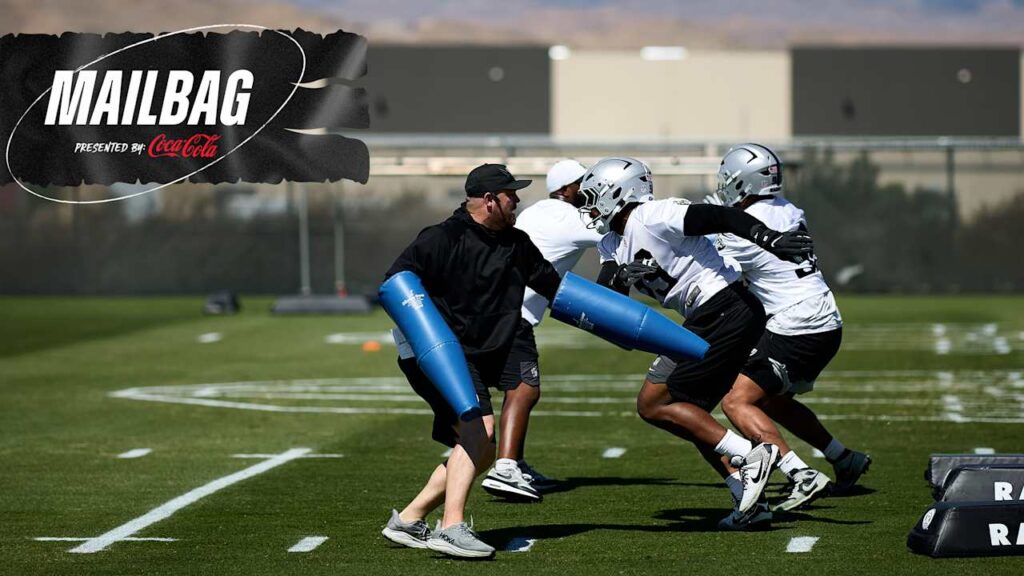
The Raiders’ linebacker group has become a central part of the discussion because the team is leaning into a base 3-4 defense. That alignment asks the linebackers to do more than tackle in the middle, since it also creates chances to rush the passer, cover space, and handle one-on-one matchups.
For fans wondering what a base 3-4 defense means, the answer starts with the front seven. The scheme uses three down linemen and four linebackers, which gives coordinators more flexibility to disguise pressure and move athletes around the formation.
Why the Raiders’ linebacker room fits this approach
The team’s recent moves suggest a clear effort to build a group that can thrive in this kind of system. Nakobe Dean stands out because of his ability to make plays in open space and attack downhill as a blitzer, while Quay Walker brings a similar skill set with added size and tackle production.
Dean has compiled seven sacks and 15 quarterback pressures over his last two seasons. Next Gen Stats also credited him with a 40.7 quarterback pressure percentage in 2025, which points to real value as a disruptive defender rather than just a run-stopper.
Walker offers another layer of versatility because he has led the Green Bay Packers in total tackles in each of his four seasons. He also posted a career-low 3.8 missed tackle percentage rate in 2025, and his 6-foot-4, 240-pound frame could give the Raiders another edge-rushing option.
What linebackers do in a base 3-4
In a 3-4 front, linebackers carry more responsibility than they do in many other systems. They must fill run gaps, protect the middle of the field, and still threaten quarterbacks when the defense sends pressure.
That is why the Raiders’ coaching staff sees value in players who can do multiple jobs. Linebackers coach Ronnell Williams said the group opens up “a whole new section of the playbook,” and added that the staff values pass rush ability, space-eating traits, football intelligence, and the chance to be “plus one in coverage.”
How the Raiders may use the unit
The strongest advantage of this group may come from how it changes matchups. If the Raiders can create one-on-one situations for their linebackers, the staff appears confident in the result because those players can attack, cover, and react quickly.
That flexibility matters in a 3-4 defense because it can force offenses to guess where pressure is coming from. It also gives the Raiders a better chance to use linebackers as both disruptors near the line of scrimmage and reliable defenders in coverage, which is the kind of balance this system demands.