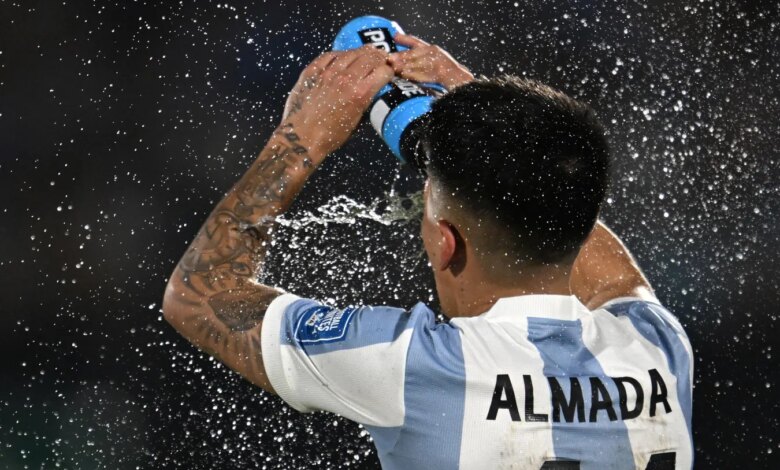
FIFA’s decision to mandate three-minute hydration breaks in every half of all 104 World Cup matches is being sold as a player-welfare measure. But the new stoppages also create a predictable window for broadcasters to sell more advertising.
The rule effectively adds four quarters to a sport built on continuous play, and that is what makes it so disruptive. FIFA says the change will standardize the tournament, even in domed or otherwise climate-controlled stadiums where heat is not the issue.
Hydration pauses were already part of World Cup history, but only on a match-by-match basis. They began in Brazil in 2014, when extreme heat and humidity forced stoppages, and they were tied to conditions such as Wet-Bulb Globe Temperature levels above 32°C.
Why the breaks matter for broadcasters
For television networks, the biggest shift is not tactical but commercial. FIFA announced in March that broadcasters would be allowed to sell advertising during the compulsory breaks, opening a new revenue opportunity that did not previously exist.
That has not produced a uniform approach. Fox cuts to full-screen commercials during hydration breaks, while Telemundo has said it will keep the live match feed on screen and show the action around the pitch instead.
A split viewing experience by market
In Europe, the experience will vary by country. Some national broadcasters prohibit commercials during the pauses, while others are introducing them for the first time to viewers who are used to seeing ads only at halftime.
The breaks also give coaches a new tactical tool. They can use the pause to speak with players in a way that resembles timeouts in American football, basketball and ice hockey.
Other World Cup changes reinforce that shift toward a more broadcast-managed event. FIFA is also adding sideline interviews of coaches at halftime throughout the tournament, and the final will feature a halftime show with performers including Shakira and Madonna.
What the change says about modern soccer
For some observers, the direction of travel is obvious: more stoppages, more production elements and more room for commercials. European news outlets have described it as an Americanization of soccer, even though the sport is not among the top four TV draws in the U.S.
The contrast is stark for fans who value the game’s uninterrupted flow. Soccer has long stood apart for its lack of formal clock stoppages, and that continuity is part of what made it appealing to viewers who dislike constant interruptions.
As FIFA frames the rule around safety, the commercial upside remains hard to ignore. The hydration breaks may help players in hot conditions, but they also make the World Cup easier to package for television, and that may prove just as important for the networks carrying it.