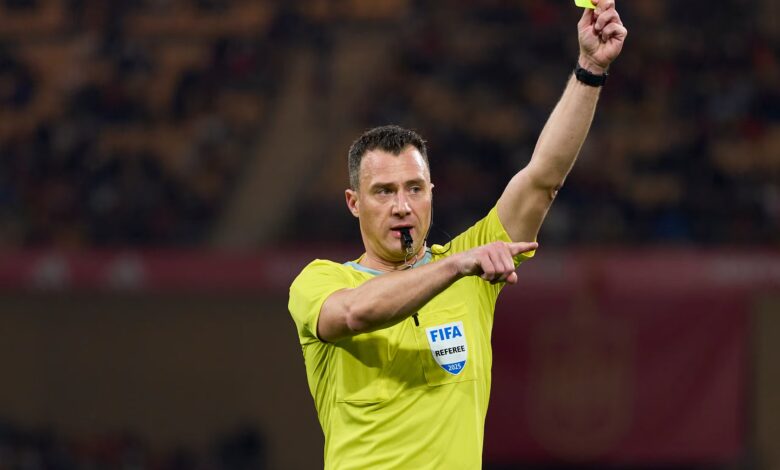
Suspensions can shape a World Cup as much as goals and tactics, and the 2026 tournament brings a few important rule changes that teams cannot ignore. The biggest shift is designed to stop yellow-card trouble from building up as the event gets longer.
FIFA has added extra reset points so players do not carry warning totals too deep into the knockout rounds. That matters in a World Cup that has expanded from 32 teams to 48 and now includes an additional round of games.
How yellow cards work
A yellow card is a warning for fouls, time wasting, arguing with officials, and other infractions. It does not send a player off the field, but the caution stays on record and can lead to a suspension if another yellow follows later.
Coaches, substitutes, and other bench personnel can also receive yellow cards. A second yellow in the same game still means an immediate sending-off and a one-match ban that begins with the next match.
What changes at the 2026 World Cup
FIFA is wiping the slate clean twice during the tournament instead of once. Any player who finishes the group stage with a yellow card starts the knockout round fresh, and the same reset happens again after the quarterfinals.
That means no one enters the semifinals carrying a yellow-card warning, although two yellows before either cutoff still bring a one-game suspension in the next match.
What a red card means
A red card sends a player off immediately and leaves the team with 10 men for the rest of the game. The player also misses the team’s next match automatically, no matter the round.
FIFA’s disciplinary committee can add more games or issue a fine if the offense is serious enough. A red card can come from a direct sending-off for dangerous foul play, violent conduct, spitting, biting, offensive language, or denying a clear goal-scoring chance.
Two new send-off rules
FIFA has also added two new reasons for a player to be sent off in 2026. One targets players who cover their mouths during confrontations, a response to a February Champions League incident involving Benfica’s Gianluca Prestianni and Vinicius Junior.
The other covers deliberate walkoffs during protests against referee decisions. Coaches or team officials who encourage players to walk off can also be punished under the new rule, which was prompted by a January Africa Cup of Nations final.
VAR and carryover rules
VAR can review red cards when officials may have made a clear mistake, and referees can use the pitchside monitor before changing a call. New for 2026, VAR can also step in if a player is wrongly sent off for a second yellow card.
Yellow cards from qualifying do not carry into the World Cup, so every player starts with a clean slate. Red-card suspensions are different, though, and bans for violent conduct or other serious offenses during qualifying can carry into the tournament.
That leaves teams with less room for error in a longer competition where discipline can now matter almost as much as finishing chances.