


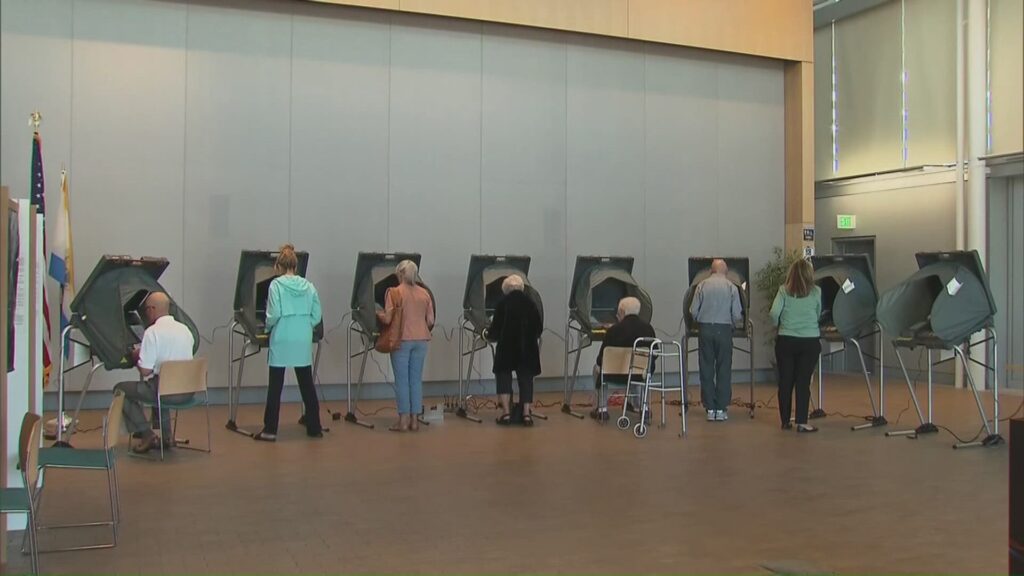
The Supreme Court has allowed a lower-court ruling in Arkansas to stand, keeping in place a decision that further narrows how the Voting Rights Act can be enforced in seven states. The move leaves civil rights advocates facing another setback after the court recently weakened other parts of the landmark law.
By declining to hear the case, the justices left intact an 8th U.S. Circuit Court of Appeals ruling that says private individuals and groups cannot sue to enforce Section 208 of the Voting Rights Act in Arkansas, Iowa, Minnesota, Missouri, Nebraska, North Dakota and South Dakota. That section generally lets voters with a disability or limited ability to read or write receive help from a person of their choice.
What the Arkansas case changed
The lawsuit was brought by Arkansas United, an immigrant advocacy group that has provided Spanish-language interpreters at polling sites for voters with limited English proficiency. The group challenged an Arkansas law that limits assistance from someone who is not a poll worker to helping no more than six voters cast ballots.
A federal judge ruled in 2022 that the state law violated Section 208. But after state officials appealed, the 8th Circuit concluded last year that private groups do not have the right to bring that kind of case because the statute does not explicitly spell out such a right.
Why voting rights lawyers are worried
The ruling matters because enforcement of these parts of the Voting Rights Act has long depended on lawsuits filed by private individuals and organizations. If only the Justice Department could bring such cases, fewer challenges would likely be filed because of limited resources and different priorities across administrations.
According to www.npr.org, the Supreme Court’s decision comes less than two months after the conservative majority issued another major ruling that further weakened the Voting Rights Act and helped trigger a wave of redistricting fights around the country.
Reaction and what could happen next
Arkansas Republican Attorney General Tim Griffin said the court’s refusal to take the case was “a victory for the state” and praised the justices for “following the plain meaning of the language in the Voting Rights Act.”
Thomas Saenz, president and general counsel of the Mexican American Legal Defense and Educational Fund, said the group plans to eventually ask the Supreme Court to review a separate Missouri case involving a similar dispute over private enforcement of Section 208. That case, brought by Missouri Protection and Advocacy Services, challenges a state law limiting assistance to one disabled voter or voter who cannot read or write per election unless the helper is a poll worker or immediate family member.
The Arkansas matter may not be the final word. In court filings, state officials argued that no other federal appeals court has directly ruled on whether private groups and individuals can sue under Section 208, while MALDEF said the 8th Circuit’s view conflicts with a long line of cases allowing private litigants to enforce their rights under the law.
The Supreme Court did not explain why it declined to take the case, leaving the 8th Circuit ruling in place for now.