


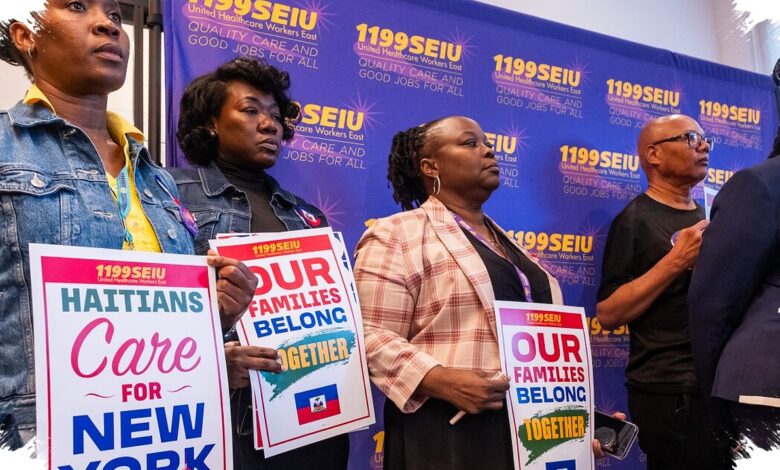
The Supreme Court’s latest decision on temporary protected status is sending a new wave of concern through U.S. healthcare, where employers already struggle to fill critical roles. The ruling cleared the way for the Trump administration to cancel TPS for Haitians and Syrians, and healthcare experts say the fallout could reach hospitals, nursing homes, and home care agencies nationwide.
That warning matters because the healthcare system depends heavily on immigrant labor. The sharpest pressure is expected in long-term care, where staffing gaps already make it harder to admit patients, keep beds open, and move people through the continuum of care.
Why healthcare leaders are worried
Steffie Woolhandler, a distinguished professor of health policy at City University of New York at Hunter College and a faculty member at Harvard Medical School, said the greatest disruption will likely hit senior care facilities and home care. She told NPR that deporting Haitian TPS recipients would have a catastrophic impact on a workforce already under strain.
Woolhandler pointed to the Boston area as especially vulnerable because many nursing home and home care aides there are Haitian. She also said that if the United States becomes inhospitable to noncitizens, the healthcare system as a whole could face wider staffing problems.
| Workforce Group | Estimate Mentioned | Why It Matters |
|---|---|---|
| Physicians who are noncitizens | Roughly 50,000 | About 9% of all doctors in the U.S. |
| Registered nurses | 145,000 | Part of the immigrant-dependent healthcare workforce |
| Haitian TPS holders in hard-to-fill jobs | 21,000 | Includes nursing assistants and caregivers |
Woolhandler is one of three authors of a 2025 report examining the impact of mass deportation plans, including the possible loss of TPS protections for people from 17 countries. The status is meant to protect people living in the U.S. from returning to places where armed conflict, natural disasters, or other dangerous conditions make life unsafe.
The strain is already visible
Woolhandler said two-thirds of hospitals report closing beds because they do not have enough staff, while about half of nursing homes say they cannot accept new admissions for the same reason. If families cannot find nursing home beds or home care support, she said, some patients end up stuck in hospitals or emergency rooms.
Katie Smith Sloan, president and CEO of LeadingAge, called the ruling a direct threat to care delivery. In a statement, she said it puts older adults and the providers who care for them in an untenable position, and warned that legal employees in some communities can represent 8% or more of the entire workforce.
Community anxiety is rising
The uncertainty is also spreading through Haitian communities, especially in Springfield, Ohio, where 1 in 4 residents is of Haitian descent. Hours after the ruling, Viles Dorsainvil, co-founder and executive director of the Haitian Support Center, said dozens of worried TPS holders were calling for advice.
Dorsainvil said people were asking whether they could keep their money in the bank, whether they could still go to work, and what the ruling meant for their driver’s licenses. He said the community is devastated.
The Trump administration has released little information about how it will carry out the withdrawal of protections for more than 330,000 Haitian and 4,000 Syrian TPS holders. On Wednesday, the Department of Homeland Security said existing Employment Authorization Documents for TPS recipients will expire on July 10.
Dorsainvil said he is advising people to sign a power of attorney with someone they trust. He also said parents with American-born children should consider signing over guardianship in case family separations become an issue.
He is a TPS recipient himself, though he came to the U.S. in 2020 on a visitor visa. Dorsainvil said he did not plan to stay long, but Haiti’s political collapse and violence made returning impossible.
The immediate concern for hospitals, nursing homes, and home care agencies is that the healthcare system could lose workers it cannot easily replace. If that happens, the effect could spread well beyond immigrant communities and into the care access problems already facing patients across the country.